
Instacart acquires shelf-scanning technology startup Arpalus
Instacart announced on Thursday that it has acquired Arpalus, a startup developing an AI-powered shelf-scanning system, with deal terms undisclosed. The system uses computer vision to help employees record inventory with smartphones, aiming to reduce customer dissatisfaction caused by out-of-stock items and improve order fulfillment efficiency.
Key Points
- Instacart announced on Thursdaythe acquisition of Arpalus, a startup that develops artificial intelligence systems allowing employees to record in-store product inventory levels via a smartphone app. Terms of the deal were not disclosed.
- Arpalus's system uses computer vision to display shelf inventory in real time, and Instacart says this will enable employees to fulfill e-commerce orders more accurately.
- Instacart plans to combine data generated by Arpalus's technology with other information collected by its employees in stores to track product availability and improve customer service.
Deep Insights
Instacart noted that unnoticed out-of-stocks and missing product availability information are among the main reasons online grocery customers are dissatisfied with the experience. The company says that by putting the Arpalus system in the hands of its in-store shoppers, it aims to fill these information gaps.
According to Instacart, Arpalus's technology can identify specific products on shelves with an average accuracy of 95%. The company's system uses computer vision models optimized for grocery stores, where products are often tightly packed, lighting is uneven, and data connections are sometimes unstable.
Instacart says the capabilities gained from Arpalus will integrate seamlessly with its existing order processing app. The e-commerce company says its approximately 600,000 employees visit large retail stores more than 15 times a day on average and transmit over 10 million data points about products on shelves.
According to Arpalus's website, the company has offices in Netanya, Israel, and Tenafly, New Jersey.
Instacart says that by integrating Arpalus's technology into existing operations, the expected efficiency gains will lead to a better experience for online grocery customers, increase income potential for employees, and give food suppliers and retailers clearer visibility into inventory levels.
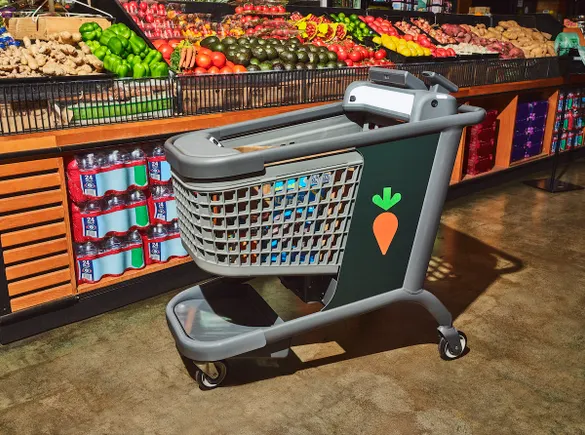
Instacart says that in addition to running on mobile devices, Arpalus's system is also compatible with Instacart's Caper Cart smart shopping carts. Caper Carts equipped with external cameras can capture images as customers move products, providing another source of information about in-store conditions.
The acquisition of Arpalus puts Instacart in the same arena as Simbe Robotics, which also offers computer vision technology that scans shelves to track inventory. However, a key difference is that Simbe's solution usescameras mounted on robotsthat autonomously navigate aisles, while Arpalus relies on humans to move its devices through stores.