
AI in Grocery Retail: Easy to Adopt, Hard to Trust
Toast conducted a blind test from April 3 to 20, 2026, with decision-makers at small and medium-sized U.S. grocery stores. Results show that 93% of respondents feel comfortable using AI, and 90% of businesses are actively experimenting with AI. The report indicates that grocers' expectations for AI focus on operational improvements, such as better decision-making (45%), increased sales (39%), and optimized inventory (36%). Regarding application preferences, 54% of respondents favor integrating AI features into a single platform, and 38% trust existing retail technology providers to guide AI strategy. The report emphasizes that trust is an accelerator for AI adoption, integration is better than fragmentation, and human oversight remains a current expectation.
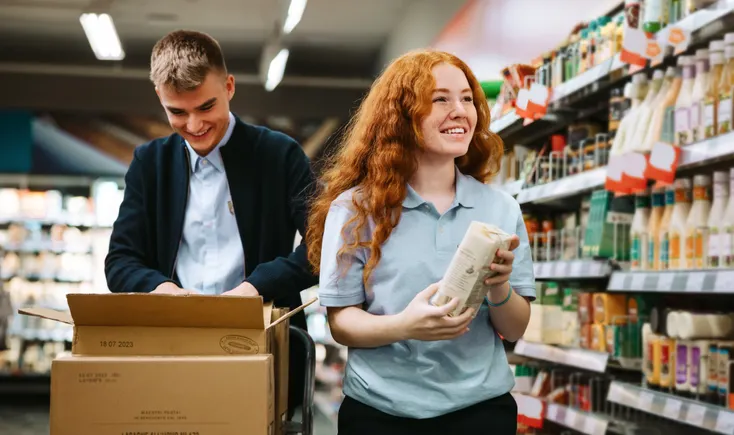
In the grocery retail space, the adoption of artificial intelligence is no longer new, but building trust remains a key challenge. According to a blind survey conducted by Toast from April 3 to 20, 2026, 90% of grocery retailers are already experimenting with AI in some form, and nearly all respondents expect to increase usage in the coming year. This report outlines the current state of AI adoption: which use cases are gaining traction, what outcomes operators are pursuing, and under what conditions they are willing to let AI operate autonomously.
Toast conducted a blind surveyof decision-makers at small and mid-sized U.S. grocery stores (16 or fewer locations). Respondents were not informed in advance that Toast was the sponsor of the survey.
Key findings
- 93% of grocery respondents are comfortable using AI
- 90% of grocery businesses are actively experimenting with AI
- 45% of grocery respondents rank "improved decision-making" as the top expected outcome of AI
- 54% of grocery respondents prefer using one platform for most AI needs
Here is a detailed breakdown of these findings.
How grocery retailers are currently using AI, and who they trust for guidance
Grocery operators' comfort with AI is not new, but it is deepening. 45% of respondents say they strongly trust AI to handle business needs, while 47% say they partially trust it. Regarding future use, 93% strongly or somewhat agree they will increase their use of AI.
By 2026, the question for most grocers is how to use AI. This "how" is largely determined by existing vendor relationships. 38% of grocers trust the retail technology vendors they already work with most to guide their AI strategy. AI adoption appears to spread through trust, rather than independent research.
This is exactlyToast IQand similar tools' value. The key is finding AI that is already embedded directly into the grocers' existing operating platform, eliminating the need for new vendor relationships or learning costs.
Outcomes grocery retailers expect from AI
Grocers' expectations for AI are clearly focused on operational levels. 45% rank "better decision-making" as the top expected outcome, followed by increasing sales or revenue (39%), and improving inventory management and cost control (36%).
The pain points grocers are targeting remain consistent. Toast IQ can provide insights that make these decisions faster and smarter. With the Toast Go® 3 handheld device, employees can directly scan product barcodes to instantly add items to a purchase list, without manual searching or additional equipment, enabling fast checkout.
Fastest-growing AI use cases in grocery retail
Inventory and ordering lead in adoption, with 76% of grocers using or planning to implement AI for this function. This is followed by customer and store analytics (74%), real-time operational insights (73%), and forecasting and demand planning (70%). What these four use cases have in common is that they transform the vast amounts of data generated by grocery operations into actionable steps.
Toast IQis a conversational AI assistant built into the platform that understands inventory and pricing processes as naturally as a store manager. Just ask a question to get the actions you need.
AI preferences of grocery retailers
Grocers seek simplicity. 54% of respondents prefer using one platform for most AI needs; another 37% prefer a small set of tightly integrated tools. This means 90% of operators choose consolidation over fragmentation.
This preference may reflect fatigue with vendor proliferation. Grocery operators are already managing relationships with vendors, distributors, and software tools; the last thing they want is another new vendor. They value trusted technology partners who can work deeply with them, leveraging existing data to provide AI capabilities without starting from scratch.
Grocers already operating on Toast are not "adopting" AI, but "unlocking" it. Toast IQ, AI invoice scanning, and the broader retail tools are not add-ons from a new vendor, but part of the same platform that already handles POS, inventory, reporting, and payments. The data is already there; the only change is what Toast can now do with that data.
What AI adoption means for grocers in 2026
Three takeaways can be drawn from the grocery AI data:
- Vendor trust is an accelerator of adoption.Grocers are evaluating whether existing platforms can take them further. Start with the tools you already use.
- Consolidation beats fragmentation.The preference for integrated solutions is real. Isolated tools disconnected from broader workflows struggle to justify their cost.
- Human oversight is the current expectation, not a barrier.Grocers want AI to make them better operators, not to replace their judgment.
Toast Retail for grocers
Toast Retail is built for grocers who want smarter operations without added complexity. From AI invoice scanning to real-time insights from Toast IQ, Toast embeds AI into the workflows you already rely on. ExploreToast grocery solutions。
Footnotes:
Toast conducted a blind survey from April 3 to April 20, 2026, with a valid sample of 127 decision-makers at small and mid-sized U.S. grocery stores (16 or fewer locations). Respondents were not informed in advance that Toast was the survey sponsor. The sample provider offered incentives to participants. Weighting was applied based on POS technology usage to achieve the expected distribution, which may increase variability. Based on standard error calculations, at a 95% confidence level, the margin of error for the grocery operator subgroup is approximately ±9%.