
Can Lidl Usher in a Turning Point in the U.S. Market?
Lidl entered the U.S. market in 2015 and currently operates only about 170 stores, far fewer than Aldi's 2,400. Facing competitive pressure and its own challenges, Lidl is seeking growth in the U.S. market through strategies such as product adjustments and executive reshuffles.
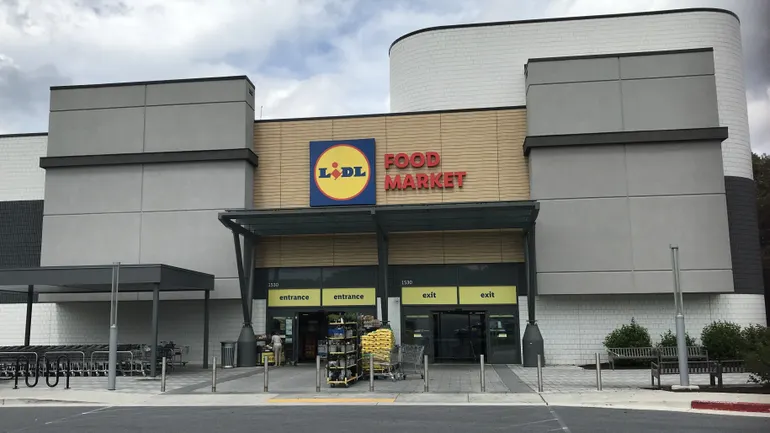
In 2015, when Lidl was preparing to enter the U.S. grocery market, the German retail giant seemed to have timing and opportunity on its side. Lidl had built a strong reputation in Europe for its combination of low prices and high-quality products, with thousands of stores featuring vibrant colors that resonated with customers. As it entered the U.S. market, Lidl had ample financial resources, a mature private-label strategy, and discipline in efficiently operating complex businesses in highly competitive environments.
However, Lidl's U.S. operations did not expand steadily as initially envisioned, but rather progressed slowly and intermittently, raising questions about why its value-oriented business model has struggled to gain traction in the United States.
To date, Lidl operates only about 170 stores in the U.S., spread across nine states and Washington, D.C. In contrast, its German competitor Aldi, which entered the U.S. market in 1976, has accelerated its expansion and now operates nearly 2,400 stores in the country.
While Aldi continues to grow, Lidl U.S. has laid off hundreds of corporate employees and closed some stores over the past two years.
"During the pandemic, when people were losing jobs, seeking value, and dealing with inflation over the past few years, they missed a lot of opportunities," said Michael Infranco, assistant vice president at retail intelligence firm RetailStat, referring to Lidl's U.S. journey. "These people seem to have missed that boat, so they have to catch another one." Now might be the right time—consumers across all income levels are flocking to discount stores and mass retailers in search of more affordable grocery options.
Frank Kerr, chief customer officer at Lidl U.S., said the company is undergoing a series of changes, including a comprehensive overhaul of its product assortment to better cater to American consumers.

Focusing on 'untapped potential'
In its initial years in the U.S. market, Lidl experienced multiple changes in leadership. Last summer, Lidl U.S. appointed its first American CEO—Joel Rampoldt, a former consultant and the company's fifth CEO in a decade. In March, the company brought in four new executives, including a new chief commercial officer and Kerr, its first chief customer officer.
Kerr acknowledged in an interview that Lidl has faced a considerable learning curve in adapting to the U.S. market, and said the company is carefully studying its next moves in the United States, a region that "is truly untapped potential for us." Kerr said Lidl believes it can cater to both shoppers seeking limited-assortment discount stores and those who frequent traditional supermarkets.
"We really see an opportunity to disrupt any market we enter because, frankly, we can attract customers from all demographics and... truly deliver on the value proposition, regardless of where they typically shopped before we arrived," Kerr said.
Kerr was part of the executive team that founded Lidl's U.S. operations. Before the opening of the first U.S. store in 2017, he worked for the retailer in Germany and the UK. In 2018, Kerr left Lidl to join Save A Lot, serving as regional director and later vice president of retail operations and wholesale sales, until returning to Lidl International in 2022.
Lidl is comprehensively updating its product assortment to deepen connections with American shoppers. Adjustments underway include introducing freshly baked bagels in its signature in-store bakery and a meat department overhaul tied to Independence Day.
Kerr said Lidl is particularly proud of its low-cost baked goods, noting that its 79-cent in-store baked croissant serves as an example of strengthening ties with American shoppers.
John Clear, senior director in the consumer and retail group at consulting firm Alvarez & Marsal and a former Lidl executive, said Lidl's simultaneous focus on low prices and fresh food is a clear differentiator for building a stronger presence in the U.S., especially among discounters, which often place less emphasis on fresh items.
Lidl U.S. timeline
- June 2015: Lidl establishes its U.S. headquarters in Arlington, Virginia.
- June 2015: Lidl appoints Brendan Proctor as U.S. CEO, succeeding Kenneth McGrath, who had become Lidl U.S.'s first CEO in 2013.
- June 2017: Lidl opens its first stores in the U.S., with plans for 20 locations on the East Coast during the summer.
- May 2018: Former Lidl Sweden CEO Johannes Fieber becomes president and CEO of Lidl U.S., succeeding Proctor.
- November 2018: Lidl U.S. acquires Best Market grocery stores in New York and New Jersey, adding 27 locations.
- May 2019: Lidl U.S. announces plans to open 25 new stores across seven states by spring 2020.
- December 2019: Lidl agrees to acquire six Shoppers Food & Pharmacy stores from United Natural Foods, Inc.
- August 2020: Lidl says it aims to add 50 new stores by the end of 2021.
- June 2021: Former Lidl Poland head Michal Lagunionek becomes new CEO of Lidl U.S., succeeding Fieber.
- February 2023: Lidl U.S. lays off about 200 employees, primarily at its Arlington headquarters.
- July 2023: Lidl reportedly closes 11 stores across six states.
- August 2023: Joel Rampoldt (formerly of consulting firm AlixPartners) becomes Lidl U.S.'s fifth CEO in a decade, succeeding Lagunionek.
- March 2024: Lidl U.S. appoints four new executives, including its first chief customer officer.
- March 2024: Lidl U.S. cuts corporate positions across three business divisions.

Merchandising adjustments
Kerr said Lidl is also adjusting how it displays products to accommodate differences between American grocery shoppers and European consumers. He noted that even differences such as U.S. consumers typically having larger freezers have prompted Lidl to make changes. "We have to really dig into how we adjust pack sizes, as well as the overall assortment," he said.
Lidl U.S. has also recently launched garden centers at about 75 stores, with the last batch opening in late May. According to Kerr, these centers helped Lidl achieve strong plant and flower sales during Mother's Day. "They really value the discovery experience, and things like garden centers amplify that," Kerr said.
Kerr added that while Lidl U.S. fine-tunes store offerings based on local tastes, the retailer standardizes operations as much as possible to leverage economies of scale. "Focusing on our organizational DNA is crucial, and that manifests throughout the system through vertical integration and efficiency, ultimately delivering savings to customers," he said.
Kerr also said that although Lidl is a private-label-focused discounter, the company believes its value proposition extends beyond offering low prices and high-quality products to include providing a convenient shopping experience. "Shoppers' perception of value has truly shifted. It's not just a simple comparison of price and quality," he said. "There's a more complex matrix involved in the value equation."
This approach mirrors Lidl's strategy in its home market of Germany, where the company must find ways to compete with Aldi, which "still has the price leader image," said Sebastian Rennack, an international retail analyst and head of Aletos Retail Advisory. "If you put them side by side, I think Lidl does a better job communicating quality while trying to keep pace with Aldi on price," Rennack said.
Kerr also said he intends to draw attention to how quickly shoppers can move through its stores. "Based on our latest research in stores, we know our customers complete a full shopping trip in our stores 17 minutes faster than at competitors," he said.
Lidl is also increasingly leveraging its loyalty program, myLidl, to strengthen relationships with American shoppers through personalized recommendations and recipe suggestions based on items in their carts, Kerr said.
Navigating barriers to entry
Clear said that while Lidl's approach to grocery retail has the potential to resonate broadly with U.S. consumers, the company faces multiple challenges as it works to establish a foothold. These obstacles include high costs in the most promising markets, suppliers' perception of Lidl as a startup, and comparisons to Aldi.
Clear noted that Lidl is performing reasonably well in areas where it has store clusters, such as New York City and Washington, D.C., but said high real estate costs in those markets hinder the company's growth. Additionally, while Lidl faces lower costs in other regions like North Carolina, South Carolina, and Georgia, convincing shoppers in those areas to try an unfamiliar brand may be more difficult than in more northern regions. He said many of Lidl's U.S. stores are built in "areas where people may be skeptical of international brands entering their space and have strong ties to local traditional brands," citing The Fresh Market, Harris Teeter, Lowes Foods, and Food Lion as examples.
"The cheaper real estate is in markets where it's harder to convince customers to shop regularly," Clear said.
Infranco pointed out that Lidl has been hampered by opening stores across multiple regions rather than building its brand in specific areas. "They're too spread out," Infranco said. "They can't concentrate on building word-of-mouth in one area, getting people to say, 'Hey, this is great.'" To address this, Infranco suggested Lidl should focus on expanding more aggressively in regions where it already has a presence, especially suburbs, rather than trying to enter new markets.
Kerr declined to provide specific details about Lidl's plans for opening new stores or remodeling its store network. "We see tremendous opportunity in many of our core markets on the East Coast," including New York City, Atlanta, and Washington, D.C., "but for now, we want to deliver on all the expectations customers have when they walk into our stores," he said.
Lidl recently opened a new store in Harrisburg, Pennsylvania, on June 12.

Clear said that beyond developing a strategy for choosing the best store locations, Lidl must also convince U.S. suppliers of its lasting impact in the U.S. market. "For many U.S. suppliers, they'll say, 'You have these plans to be a chain with a thousand stores, that's great, but right now you only have 170, which puts you in the category of our small regional players, so you only get the attention of a small regional player,'" said Clear, who previously worked as a buyer for Lidl U.S.
Clear said compounding these issues is that Lidl operates in the shadow of Aldi in the U.S., and although the two companies have vastly different trajectories, they are often linked. He noted that Lidl's growth in store count and sales may seem insignificant compared to Aldi U.S., but given that Lidl has been operating in the U.S. for a much shorter period, directly comparing the two chains may be a stretch. "There's extra pressure on them to be a game-changing market disruptor that transforms the entire food retail landscape, which may not have been realistic from the start," Clear said. "There's been ongoing discussion about the comparative performance of Aldi and Lidl in Germany, which puts pressure on U.S. leadership."
Although both Lidl and Aldi are discounters, data from Placer.ai shows that Lidl attracts U.S. shoppers with a higher median household income than Aldi.
Rennack said there are high expectations for Lidl's success in the U.S.—and in competing with Aldi—partly because Lidl's operations in multiple countries support one another. "Even if from an operational standpoint it doesn't make sense for Lidl to stay in the U.S.," he said, "the company also cannot leave."
Correction: A previous version of this article incorrectly stated that Lidl opened an additional distribution center. That information has been removed.