
Inflation eases, but consumer focus on prices remains high
Although official data shows inflation has fallen from its peak, consumer sensitivity to food prices has not diminished. High interest rates, debt pressure, and rising costs of necessities are forcing consumers to budget carefully, while retailers are competing for price-sensitive customers through promotions, membership programs, and other means. Experts point out that consumer perception of inflation lags behind actual data, and price competition will remain a core issue in the grocery industry in 2024.
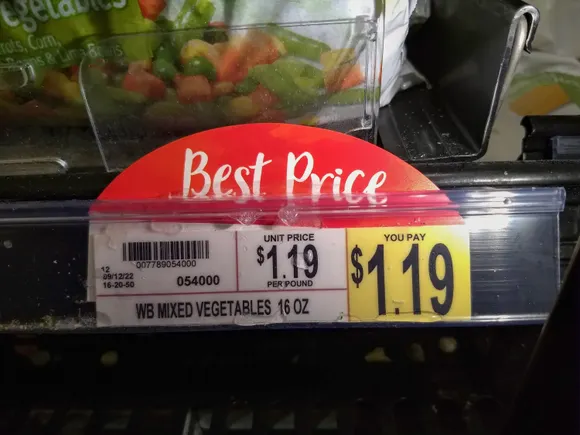
A year ago, COVID-19 was still a major focus, grocery inflation was soaring, and consumers were busy coping with rising supermarket bills. Now, as the pandemic's impact fades and food prices are no longer climbing rapidly, grocery prices remain a top concern for shoppers navigating an economy still marked by uncertainty.
Industry analysts point out that under the combined pressures of high interest rates, rising debt, and increasing costs for essentials like housing, consumers feel constrained by expenses and are inclined to save wherever possible. Add to that the resumption of student loan payments and cuts to Supplemental Nutrition Assistance Program (SNAP) benefits last year, and many people's financial buffers have largely been depleted, says Ross Steinman, a Widener University professor focused on consumer psychology.
"People are still spending, but they are trying to spend less whenever they can," Steinman said.
Steinman added that many are coming to terms with soaring prices for items like insurance, which often don't draw attention until the bill arrives. "That makes them more sensitive to every other purchase they make," Steinman said, "and what do they buy most frequently? Groceries."
Michael Snipes, an instructional associate professor of economics at the University of South Florida Sarasota-Manatee, said the conditions pushing consumers to curb spending have been building for decades.
"Now it's finally coming to a head because people can't afford necessities anymore, or they're having to make tough choices," Snipes said. He added that as consumers have faced significant increases in the cost of essentials over time, they have become acutely aware that their purchasing power has declined.

Retailers have moved quickly to show they recognize consumers are under financial pressure and want to find value at the supermarket. For example, grocers are posting in-store signage emphasizing value propositions and offering personalized deals through loyalty rewards programs.
Southeastern Grocers, which owns banners including Winn-Dixie, Harveys Supermarket, and Fresco y Más, recently launched a campaign highlighting its desire to help customers "reach their savings goals" despite economic headwinds. Meanwhile, e-grocer Hungryroot has promised to refund the difference if customers find an item priced lower elsewhere under its "Best Price" program.
Although grocery inflation has slowed significantly over the past year—from over 11% in early 2023 to just above 1% in December—consumers have become accustomed to dealing with rising supermarket prices, so it will take time to convince them that conditions have actually improved, said Ernest Baskin, an associate professor at Saint Joseph's University.
"Consumer sentiment is hard to shift, and given how long we experienced inflation at the macro level, I think consumers' perceptions will stay as they are until they see a longer period of low inflation or potential deflation," Baskin said.
Snipes noted that even though official statistics show price increases have slowed, people still tend to believe inflation is higher than it actually is—partly because the inflation data compiled by the federal government represents an average of a representative basket of goods and services, which doesn't necessarily reflect what consumers actually buy.
"You have to understand what inflation actually measures and, more importantly, what it doesn't measure," he said.
Debt pressures are catching up with consumers
In recent years, people have kept pace with inflation to some extent by tapping into savings accounts and credit lines, but with financial resources running low and debt repayment pressures mounting, many now feel stretched thin, said Cassandra Happe, an analyst at consumer finance website WalletHub.
"Especially over the past year, people have really relied on credit cards to make ends meet," Happe said, noting that some shoppers have also turned to buy-now-pay-later services. "So, carrying that debt, people are now more focused on prices than they have been in the past."
According to a November 2023 report from the Federal Reserve Bank of New York's Center for Microeconomic Data, credit card balances grew nearly 5% in the third quarter of 2023, crossing the $1 trillion mark. The bank reported that total household debt increased by $228 billion that quarter, reaching $17.3 trillion.
In addition to taking on more debt, consumers are also facing higher borrowing costs. Data released by Bankrate in October showed that the average retail credit card rate in 2023 was nearly 29%, up 2 percentage points from 2022.
Data released by Deloitte in early January shows that consumers' heightened sensitivity to grocery prices is influencing how retailers negotiate with suppliers.
In the consultancy's survey, 40% of consumer goods company executives said they believe retailers will be less willing to accept significant price increases in 2024, and few think they can continue raising prices without dampening demand. Most consumer goods executives surveyed by Deloitte said they plan instead to boost volumes, change pack sizes, or shift to higher-margin products.

David Ortega, a food economist and associate professor at Michigan State University, said that while supply-side issues have driven up grocery prices in recent years, rising consumer demand for supermarket goods has also played a role.
"Over the past year and a half, consumers have been spending significantly more on food than before the pandemic, even after accounting for inflation," Ortega said. "That shows consumers are spending more on food, which puts upward pressure on prices because food demand is increasing."
Baskin noted that while people may be seeking value when buying groceries, their definition of a "good deal" depends on individual circumstances. He added that people don't always equate value with price, but rather tend to look for retailers that make them feel good about the deal across multiple factors.
"Value is getting something positive for your money. The definition of value can be based entirely on price, entirely on experience, entirely on quality, or some combination of those factors," Baskin said. "As prices stop rising as quickly as they once were, you might see different components of value start to shift, and consumers may adjust the categories they're willing to trade off."
Researchers at Kroger's data science arm, 84.51°, have found that as consumers reach a tipping point on affordability, cost has become the primary criterion in their decision to try new grocery products.
"If you're a consumer packaged goods brand, or even a Kroger private label, and you want to launch something innovative, the pricing has to be right, or you could face a huge barrier to entry," said Alex Trott, director of insights at 84.51°.