
Good Food Holdings Envisions the Next Generation of Premium Grocery Stores
Good Food Holdings, headquartered in Carson, California, is dedicated to bringing a premium, personalized shopping experience into the digital age. The company, which owns premium brands such as Bristol Farms, Lazy Acres, and New Seasons Market, is currently testing innovative technologies like smart shopping carts and electronic shelf labels to create 'connected stores.' Despite facing capital and labor constraints, the company is gradually realizing its digital vision through multi-brand collaborative testing.
When customers shop at any of the grocery brands under Good Food Holdings, the parent company wants them to feel that their shopping journey—whether online, in-store, or a combination of both—is tailored to them.
The Carson, California-based holding company has built its reputation operating premium brands such as Bristol Farms, Lazy Acres, New Seasons Market, New Leaf Community Markets, and Metropolitan Market. Going forward, management sees an opportunity to bring that high-touch, personalized experience into the digital age.
"We're thinking about how we can create a scenario where a customer walks into a store, and I know what they've bought, what their shopping list is, what their dietary restrictions are, and then I can make it easier for them to find what they really want among the 40,000 items in the store," said Neil Stern, CEO of Good Food Holdings.
Good Food Holdings, owned by South Korean retailer E-Mart, has begun testing cutting-edge innovations such as "connected stores," smart carts, and electronic shelf labels to bring this personalized digital shopping vision to life. Management believes its unique structure as a consortium of small regional chains gives it a distinct advantage in testing, learning, and scaling new opportunities.
But like many other grocery companies, Good Food Holdings is still in the early stages of realizing this vision, and it remains unclear what form the personalized shopping experience will ultimately take. Will it include the high-tech carts, digital shelf labels, and backend technology the company and its brands are currently testing? Or perhaps none of them?
Like most regional grocers, capital and labor constraints are also challenging Good Food Holdings and its digital innovation journey. The company must carefully choose which projects to test and scale, and has partnered with several third parties to support its omnichannel efforts.
"As a smaller retailer, we have to be very careful about how we place our bets," Stern said.
Building connected stores
Although high-touch stores still attract in-store shoppers, Good Food Holdings also sees the convenience of online shopping changing consumer behavior, said Scott DeGraeve, the company's chief digital officer.
"Customers don't particularly care about the channel. So we have to treat it that way—however they want to shop, we should be able to offer that method," said DeGraeve, a former executive at AutoStore and Ahold Delhaize.
The company and its brand chains are working to adapt to this shift. For example, at the Metropolitan Market store in Mercer Island, Washington, signage in the aisles recently encouraged customers to try the company's curbside pickup service. "Let us shop for you," read a sign in the grocery section.
DeGraeve said Good Food Holdings is implementing new websites for its five brands and installing Instacart's white-label e-commerce platform, Storefront Pro. The company also offers delivery through the Instacart and DoorDash marketplaces, partnerships that bring "incremental value" to its e-commerce operations.
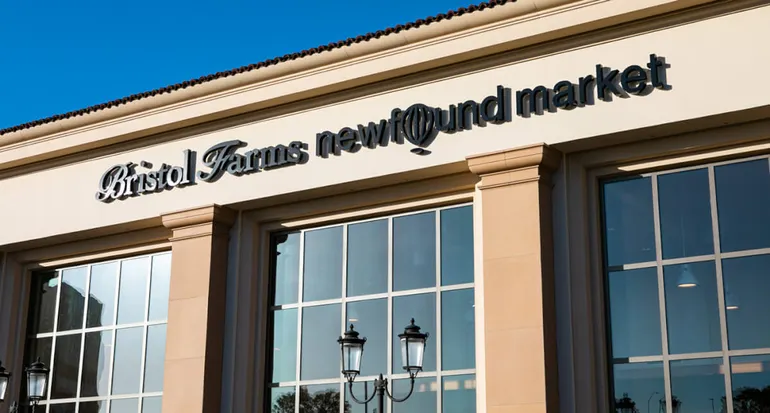
Inside stores, Good Food Holdings is testing new systems that promise to make the shopping journey more convenient and connected. Its Bristol Farms Newfound Market store in Irvine, California, which opened last March, has been a testing ground for several digital components of Instacart's "Connected Stores" program, including the company's Caper smart carts, Food Storm deli ordering software, and electronic shelf labels called Carrot Tags.

Good Food Holdings plans to expand its Caper cart test to two additional stores in the coming quarter to better determine "how to best utilize them in-store and to what extent." DeGraeve said the company will look at metrics such as customer penetration and average basket size.
One of the stores slated to receive Caper carts will be a high-traffic, high-density store, Stern said.
"Will that cart prove—whether from a pure ROI business perspective or from a customer satisfaction standpoint—that it's worth scaling? It's too early to tell," Stern said.
DeGraeve said Good Food Holdings envisions customers linking their loyalty programs and purchase data through the smart carts, and then lights on digital labels would mark specific items, such as products they've ordered before or items on promotion. DeGraeve added that these flashing electronic shelf label lights could also aid e-commerce fulfillment.
Stern said Good Food Holdings sees potential in using smart carts to offer promotional games and personalized offers, as well as to display brand advertising.
"I'm really excited about ChatGPT on the smart cart," Stern said. "A store customer says, 'Hey, I have chicken, onions, and tomatoes—what can I do?' The answer is, 'Hey, let's give you this great chicken recipe.'"
Good Food Holdings is also adding Instacart's Scan & Pay solution, which allows customers to scan and pay for items using a mobile browser, including bulk items like weighed produce. Meanwhile, Bristol Farms' new online catering menu makes the ordering process more efficient for consumers, DeGraeve said.
DeGraeve said Good Food Holdings ultimately plans to integrate the online catering system (offered through Instacart's FoodStorm service) with its regular online grocery shopping experience, enabling customers to purchase custom items along with their regular groceries.
The Bristol Farms store in California is not the only location in the Good Food Holdings ecosystem testing cutting-edge technology. At the Metropolitan Market in Mercer Island, electronic shelf labels are deployed throughout the store. In certain locations, larger digital shelf labels provide additional product information—for example, a label beneath a box of store-brand cookies noted they "pair beautifully with flavorful cheeses, deli meats, and dips."
Ultimately, the grocer hopes to use digital tools to offer "curated product assortments" around individual preferences, dietary restrictions, and more, DeGraeve said.
"A lot of people have certain elements in their diet, whether it's things they want to avoid or things they want more of. So how do we use these tools to ensure that during their shopping trip, they can shop their way—whether that's buying less of certain things or more of others?" DeGraeve said.

Behind the scenes
DeGraeve describes Good Food Holdings as "half company, half holding company"—an entity designed to provide strategic support to its brands, each of which has its own executive team.
Good Food Holdings' strength lies in its ability to scale solutions across its stores after testing them with a single brand or specific customer group. The goal is to create common tools and overhaul backend systems, DeGraeve said.
Good Food Holdings communicates with each brand's leadership team to understand which areas they want to address. When a brand-wide change is needed, such as a new website or merchandise management system, DeGraeve said Good Food Holdings works with teams composed of central and brand leaders to evaluate solutions.
Cross-brand teams help ensure everyone is aligned and resources are coordinated, DeGraeve said.
This corporate structure loosely resembles the model Ahold Delhaize has built over the years to stay ahead in the supermarket industry—with a portfolio of East Coast banners and centralized technology and supply chain resources—though on a much smaller scale.
Project proposals go through an internal vetting process involving questions such as: What problem am I solving? What does implementation require? What is the impact on capital and human resources? How will I measure it?
Good Food Holdings went through this process when it decided to begin adding self-checkout stations early in the pandemic. Stern said the company first piloted the checkout method in the Seattle market, then expanded it to more stores, noting that by August, all brands will offer self-checkout.

Good Food Holdings typically tests one tool or technology at one brand and another at a different brand, allowing multiple pilots to run simultaneously, DeGraeve said: "That's the advantage of having these five brands under one umbrella."
Although each brand's customers are slightly different, they share common traits of being more upscale, educated, and health-focused, Stern and DeGraeve said.
DeGraeve added that brands with a passion for a particular innovation or technology typically take the lead in trying it. For example, Bristol Farms CEO Adam Caldecott has made it his goal to eliminate all lines, Stern said.
"If they're not waiting in line, they can shop, right? They can do other things, or order elsewhere in the store," Stern said.
"Customers don't particularly care about the channel. So we have to treat it that way—however they want to shop, we should be able to offer that method."
—Scott DeGraeve, Chief Digital Officer, Good Food Holdings
Obstacles and headwinds
Stern said Good Food Holdings recognizes it will never be able to tackle every item on its long wish list of digital tools.
"At some point, you have to go through a filtering process: what do we prioritize?" Stern said, noting that addressing customer needs, achieving return on investment, and reducing labor costs are top considerations.
Good Food Holdings has also had to contend with economic and brand-specific challenges. In recent months, high inflation has prompted many shoppers to trade down from premium grocery stores, putting pressure on chains like Bristol Farms and Metropolitan Market to prove their value. Good Food Holdings has also had to stabilize New Seasons Market (which it acquired in 2019) after that chain overexpanded and had to scale back its growth plans in recent years.
Good Food Holdings is also undergoing some legacy system transitions in its merchandise management system and data warehouse—changes DeGraeve described as "backbone" initiatives rather than digital innovations. Stern said Good Food Holdings has upgraded its stores to increase network bandwidth to support more digital innovations.
Some innovations underpinning Good Food Holdings' long-term vision are still on hold.
Good Food Holdings wants to "go deeper" into diet and nutrition data, moving beyond labels like "low-fat" to understand the relationship between diet and health—for example, how a dietitian could tailor products for someone with high blood pressure or other health needs. But DeGraeve said such services are still in their early stages.
Another example: Good Food Holdings is keeping an eye on delivery robots that travel on sidewalks, but has not yet determined whether such technology is worth piloting, DeGraeve said. Stern said Good Food Holdings is also "trying" Simbe's aisle-scanning robots, which are used by grocers such as Schnuck Markets and SpartanNash.

Metrics are another challenge, DeGraeve and Stern noted. Having "good, clean, centralized" data is a challenge, Stern said.
"A bag of Oreos might appear three different ways in our system—same product," Stern said.
As online sales continue to grow, DeGraeve said Good Food Holdings and the grocery industry as a whole will face the challenge of finding ways to improve e-commerce profitability.
"As e-commerce becomes a larger percentage of sales, finding ways to reduce costs is also important," DeGraeve said. "Fulfilling orders and getting them to customers incurs additional costs."
While linking data and information is easy in an online environment—for example, letting customers buy gluten-free products through filters and lists—translating that into an in-store service remains a challenge to overcome, Stern said.
"We want to inspire customers and give them the same tools they have in the online world when they're shopping in our stores," Stern said.
He continued: "All of this is to achieve: when you walk into my store, I want you to get what you want when you need it."
Jeff Wells contributed reporting to this article.