
How Black-Owned Grocery Stores Are Filling Industry Gaps
Across the United States, a wave of Black-owned grocery stores is emerging, focusing on healthy organic foods, introducing cashierless technology, or building ethnic food e-commerce platforms to respond to community needs and drive industry innovation. These entrepreneurs often start as micro-enterprises and, lacking generational succession, are reshaping the food retail landscape through community collaboration and differentiated positioning.
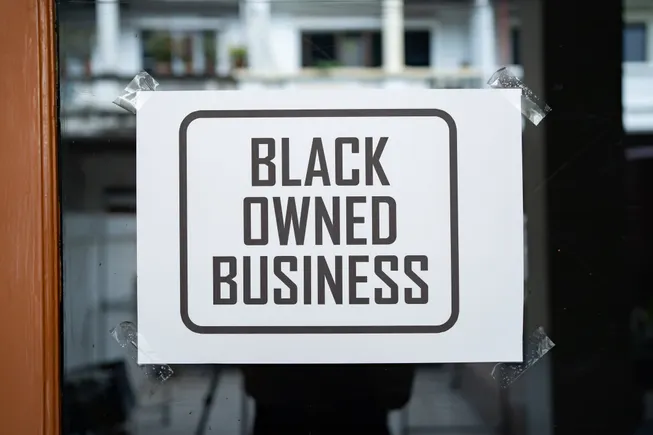
In Houston, Texas, Robert Thomas is now serving wheatgrass juice from his club-turned-grocery store. After the pandemic forced him to close his club of five years, he used his savings and unemployment benefits to transform the space into District Market Green Grocer—a grocery store and juice bar specializing in natural and organic products.
Since opening last November, the store has gradually become known for supporting Black-owned and locally sourced brands. "It still surprises a lot of people... 'He has so many different Black suppliers,' that's what impresses people the most," Thomas said.
District Market Green Grocer is one of many Black-owned grocery stores across the United States—many of which are independent small shops or small chains—that aim to meet community needs and push the boundaries of innovation in the grocery industry. Some Black-owned grocery stores focus on areas such as checkout-free payment and ethnic food markets, while others are dedicated to providing nutritious and affordable food. Some stores have opened or plan to open in areas where supermarkets are scarce or large chains have withdrawn.
Although the grocery industry is not without family-run supermarkets passed down through generations, Liz Abunaw, founder of Forty Acres Fresh Market in Chicago, points out that this is not the case for Black-owned grocery stores. She noted that since the 1970s, the number of Black-owned grocery stores has continued to shrink, and Black farmers lost large amounts of land between the 1940s and 2000s, leading to a steady decline in their equity in food processing, transportation, and wholesale. Walmart's expansion into suburban and rural areas further squeezed small businesses, while the post-World War II migration of many white residents away from cities also took away customers. Due to the lack of generational succession, Black entrepreneurs are starting from "micro-businesses" and gradually accumulating industry experience.
"Now people are saying 'enough is enough.' We need food in our communities because we see the connection between food and health, and we want to have some ownership. We're tired of waiting for corporate giants to acknowledge our value as consumers and serve us where we live," Abunaw said. She added: "This is more like a renaissance. It's like we're rediscovering—'Look, we had these things before. We can do it again.'"

Focusing on quality food
Many entrepreneurs of color in the grocery sector are working to address the scarcity of healthy and affordable food options—a problem that numerous studies show disproportionately affects low-income and high-minority communities.
Thomas said he hopes to bring the District Market Green Grocer concept (which is currently not located in a food desert) to food desert areas, with a vision of opening a store "the size of a CVS or Walgreens" with a wide selection of organic products. The Houston store focuses on health and wellness, selling natural and organic products such as "all-natural" seaweed juice in various flavors with no added sugar, and hosting "Wellness Fridays" with discounted juice bar drinks.
Olympia Auset, founder of Süprmarkt, an organic grocery pop-up in Los Angeles, said the inspiration for opening the store came from personal need. The store is about to open a brick-and-mortar location in the South Central community. "Every time I wanted to buy fresh food, I had to take a two-hour bus ride. I wanted my friends and family to eat healthier, but their complaints were always two things: price and distance," Auset told Create & Cultivate.
But simply offering quality food in areas lacking options is not always enough. Auset and Abunaw said that residents may have a deeply ingrained perception that they have to go to other neighborhoods to buy groceries. Abunaw said that Austin, a suburb on Chicago's West Side, like other predominantly Black communities, sees local grocery spending flowing to more affluent areas with better stores, because local stores often fail to meet quality or cleanliness standards.
"Don't underestimate the value of these consumers, these residents of underserved areas," Abunaw said, noting that she would say this to grocery industry executives. She continued: "I think Black working-class communities are severely overlooked in this industry because there's a perception that there's no profit to be made here, and I disagree with that."
Abunaw worked at General Mills for ten years. When she moved to Chicago to pursue an MBA, she did not plan to return to the food industry. After discovering the grocery "gap" in Austin, she founded Forty Acres Fresh Market in 2018, bringing quality food options to the neighborhood's commercial corridor in the form of a mobile pop-up market. Now, she is seeking to open a permanent grocery store, but the process has taken longer than expected.
After the nearby Save A Lot closed, Abunab began hosting pop-up events at the site of her upcoming store, which not only helped people recognize the location (a former Salvation Army building) as a food destination, but also aimed to reverse the perception that "there's no quality food in the community." Because the building's HVAC system was not working, Abunaw moved the pop-up events when the weather turned warm, and shoppers can now find Forty Acres Fresh Market at the weekly Austin Town Hall City Market, where the store is the anchor tenant.

Driving innovation forward
Some Black-owned grocery stores are pushing boundaries in areas where the industry has been slow to advance. Nourish + Bloom Market aims to combine healthy food with a tech-forward shopping experience. The brand's store opened in January in Fayetteville, Georgia, uses frictionless checkout technology provider UST to operate an autonomous grocery concept similar to Amazon's Just Walk Out. Customers can also receive orders via temperature-controlled delivery robots.
Founders Jamie and Jilea Hemmings are no strangers to entrepreneurship and cutting-edge trends. They previously launched Greenie Tots—a line of frozen meatless meals for children that has since ceased operations—originally created to help their son establish a convenient and healthy diet after he was diagnosed with autism. Greenie Tots launched in the late 2000s, ahead of the later mass consumer demand for plant-based products.
In Chicago, two entrepreneurs are using technology and e-commerce to help address the accessibility of culturally relevant food for immigrant and ethnic communities. Fola Dada and Boyede Sobitan are first- and second-generation immigrants from Nigeria, respectively, who previously worked as a fintech engineer and in healthcare management. They founded OjaExpress in 2015. Through this online marketplace, customers can purchase ethnic foods from local stores, browsing a diverse range of cuisines including African, Caribbean, Hispanic, Asian, and European.
Although e-commerce and online marketplaces focused on ethnic foods are now relatively common (such as Weee, Umamicart, etc.), the rise of these players is a recent phenomenon. OjaExpress has also experienced what its founders describe as racial disparities in tech funding. "There's a huge gap in funding between Black tech founders and their non-Black counterparts. Many Black founders face the challenge of accessing social networks that provide guidance on product building and capital. Only 1% of venture capital-backed founders are Black," Sobitan told Forbes.
Seeking community support
Black-owned grocers are rallying community support, which not only helps them weather the financial challenges of the low-margin grocery business but also creates spaces that go beyond shopping, making food education and local events a key part of their identity.
Prosperity Market in Los Angeles, which calls itself a "farmers market on wheels and food truck," provides a platform for Black farmers and long-marginalized food producers. Its pop-up markets aim to create a space where people feel comfortable, safe, and joyful. Founders Carmen Dianne and Kara Still wrote in a letter to Los Angeles Times readers: "We have farmers, food producers, packaged foods, hot foods. We always have music. We have DJs. I'd say we're about 70% food and 30% artists. Sometimes we have children's activities. We do raffles. We bring in community partners."
In the same city, Süprmarkt offers scholarships for its juice cleanse program. On its website, people can find educational resources such as recipes, Netflix films, books, and research under the "Learn Food" section. Its nonprofit arm, Süprseed, provides workshops, events, and natural product giveaways. "People learn from each other how to eat. If we're going to re-teach people how to eat, we have to re-teach through each other," Auset told Create & Cultivate, adding that people in areas with limited food options can learn to move away from processed foods and regain healthy eating in a "culturally relevant way."
For help, Süprmarkt has called on social media for people to help paint and lay tiles at its upcoming store, and notes on its website that it is seeking volunteers in several areas, including driving, accounting, and event organization.

Community support can also take the form of supporting local Black-owned suppliers. Thomas said two different experiences prompted him to focus on Black suppliers: one was discovering high-end products from Black-owned businesses at local pop-ups and farmers markets; the other was seeing people lining up to enter grocery stores that did not highlight Black products. A monthly "open house" allows potential suppliers to bring products to District Market Green Grocer for consideration. Thomas finds suppliers by distributing business cards and flyers at pop-up markets: "It started generating buzz among suppliers. One supplier brings another."
For Forty Acres Fresh Market, Abunaw is working with community leaders to advance the process from pop-up market to brick-and-mortar store. She works with local elected officials to promote Forty Acres Fresh Market in their newsletters and on their websites. The executive director of the Austin African American Business Network Association alerted Abunaw in June 2020 that the Salvation Army site was for sale; Forty Acres Fresh Market's partner, Westside Health Authority, helped her purchase the property.
"This community deserves something that says, 'We spent money on you. We think you're special enough to have grand, beautiful buildings, open spaces, and windows,'" she said.
Intentional community building is a recurring theme among Black-owned grocers. In a recent post on the District Market Green Grocer Facebook page, Thomas summed it up: "For me, this isn't just a Black business or a grocery store. For me, we're building a community together. This is more than just a store."
Note: This article has been updated to clarify the location where Forty Acres Fresh Market hosts its pop-up markets.