
How Are Grocers Responding to the Dual Pressures of Inflation and Supply Chains?
U.S. grocers, under the dual pressures of inflation and supply chain disruptions, are adopting strategies such as increasing private labels, local sourcing, and selective price cuts. However, consumers have limited tolerance for price increases and out-of-stocks and may switch to other retailers. Experts advise retailers to remain agile, use technology to optimize pricing, and monitor shifts in consumer price sensitivity.
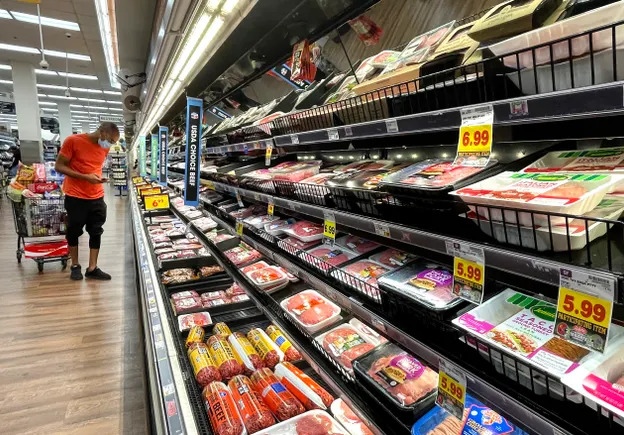
This article is the fourth in a series on key trends affecting grocers in 2022.
Like grocers across the United States, Karns Foods in Pennsylvania is struggling to cope with rising prices and an ever-changing supply chain shortage. For Scott Karns, CEO of the 10-store company, this feeling of being out of control is hard to accept.
"We order 2,000 cases of goods and might only receive 1,200," he said. "Explaining to customers why they can't get the specific flavors and sizes they want is very frustrating."
Karns said the company is doing its best to cope. To combat rising prices, Karns' stores have added more private label products to shelves, which are cheaper. To deal with supply shortages, managers are over-purchasing items like toilet paper and pasta sauce when possible and offering customers limited choices in categories that are in tight supply.
Karns also said the company is trying to source more locally, including pork—previously from Midwest suppliers, now from in-state suppliers. In May, the grocer will begin sourcing about two-thirds of its beef supply from a few local farms that supply Karns stores exclusively.

So far, Karns noted, customers have accepted these changes, but he is not sure how long this acceptance will last. "Over time, the shopping basket is getting more and more expensive," he said.
Retailers are nervously watching customers as rising prices and out-of-stocks continue to plague their shelves. According to recent news reports and interviews, the main impact of these prolonged disruptions so far is that customers are buying lower-priced items and complaining about empty shelves.
But companies worry that loyal consumers could reach a tipping point later this year and switch to stores with better prices or different products. On its third-quarter earnings call earlier this month, Albertsons executives noted that competitors are putting pressure on any pricing decisions the company makes, and said that while customer loyalty is currently "strong," the company remains vigilant.
In a survey of 1,000 consumers released by Ipsos in early December, 45% of respondents said they buy from stores other than their primary grocer at least monthly due to tight supply or poor online ordering experiences. 18% of households with children said they had switched their primary grocer because of these factors.
"Competition is fierce enough that if consumers can't find what they need, they will change their behavior," said Mike Murphy, vice president at Ipsos.
Krishnakumar Davey, president of client engagement at IRI, said the research firm is monitoring consumer elasticity—a measure of how sensitive consumers are to price changes—"extremely closely." He said that early in the pandemic, elasticity was lower due to stimulus checks, child tax credits, and stay-at-home orders driving higher spending, but it has since begun to return to pre-pandemic levels in many categories. As of early January, price sensitivity for breakfast meats and coffee was comparable to before the global health crisis, while elasticity for hot cereal and candy was higher than pre-pandemic, Davey said.
Davey said consumer elasticity remains below pre-pandemic levels in many categories, indicating retailers still have room to pass on price increases from suppliers—who are facing wage hikes, shipping disruptions, and other pressures. But retailers worry that the end of federal aid programs, such as the expanded child tax credit that expired at the end of 2021, combined with prices rising at a faster pace, could heighten consumer dissatisfaction.
According to the U.S. Bureau of Labor Statistics, prices for food at home rose 6.5% last year, and manufacturers began passing on additional increases this month. IRI expects prices to rise an average of 5% in the first half of this year.
"What (retailers) are worried about is that some of the stimulus is drying up, and the price increases this year are much bigger than last year," Davey said. "They know people like to eat at home, but people can substitute."
"We order 2,000 cases of goods and might only receive 1,200. Explaining to customers why they can't get the specific flavors and sizes they want is very frustrating."
—Scott Karns, CEO of Karns Foods
Staying 'agile' amid price hikes
Experts say that although the root causes of inflation are beyond retailers' control, there are still ways to effectively manage these price increases. Executives at Albertsons and other grocers have spoken in recent weeks about holding off on price increases on essentials and key items while letting increases show up more on non-essential purchases.
Davey said IRI's scan data shows grocers are holding down prices on fresh items like milk, eggs, and meat while raising prices in the center store (packaged food section). They are also reducing price promotions due to supply shortages and other challenges. On a percentage basis, discount stores, mass merchandisers, and traditional retailers appear to be raising prices in the center store relatively equally—which is somewhat surprising, Davey said, as he expected low-price retailers to hold off on increases to win over price-comparing customers. But that could change soon.
Davey said retailers that can push personalized coupons and other promotions to price-sensitive customers are doing so.
"Right now, I think the main strategy is to give discounts to shoppers who need them," he said.

Steve Bishop, managing partner and co-founder of consulting firm Brick Meets Click, said retailers are using technology to spot price gaps and identify high-value items that should remain price-competitive. He said companies need to be especially "agile" in 2022 because high demand for certain items combined with supply shortages could cause inflation to appear quickly anywhere in the store.
"Over the next year, quickly adjusting prices to minimize price leaks—whether high prices hurting sales or low prices hurting margins—will become more important," he wrote in an email.
Sources say that even as overall prices rise, a value price image can go a long way. Marco Di Marino, director of the retail and grocery practice at consulting firm AlixPartners, said retailers are selectively cutting prices and promoting key items where inflation has not yet penetrated. Earlier this month, Winn-Dixie announced it was cutting prices on more than 150 of its "most purchased" items by an average of 15%.
Di Marino said retailers are also adding private label and value-priced items.
Dennis Hickey, chief merchandising officer at Krasdale Foods, which provides distribution and marketing services to independent retailers in New York and New Jersey, said the retailers it serves have higher demand for private label. But Krasdale's private label suppliers are facing the same supply chain shortages as national brands—such as shortages of tin and other raw materials—meaning sometimes they don't have inventory.
Many of the retailers Krasdale works with are in the New York City area, where there aren't many discount stores like Walmart. He said this has helped stores retain customers, though the company is still closely monitoring consumer behavior in the coming months.
"We are closely watching shopping frequency," Hickey said.
Learning to do more with less
Retailers learned early in the pandemic how to handle supply shortages and communicate with customers. However, the Omicron variant has again accelerated out-of-stocks, which are often unpredictable as suppliers and distributors face employee absenteeism and other challenges.
Executives hope supply will begin to normalize in February as Omicron subsides. Until then, retailers like Go Grocer in Chicago have had to limit categories and shift items between stores to fill gaps. Gregory Stellatos, co-founder and co-owner of the Chicago-based chain, said all the supply shuffling during the pandemic has lowered consumer brand loyalty.
"During this time, I think private label and emerging brands are the two big winners," he said.

Meanwhile, Hickey said independent retailers have had to be very resourceful to get the supply they need. They have cut categories by nearly half in some areas. He said if Krasdale doesn't have the items they need, they find another way.
"They might no longer carry 25 flavors of Ocean Spray juice, but reduce to 15 or 16," he said. "They've diversified a bit, maybe changed allocations, but our retailers will go anywhere to get products to fill shelves."
Karns said customers at his stores have responded so well to limited assortments that he plans to continue the strategy long-term. "How many sizes of Hidden Valley ranch dressing do we really need?" he said.
The supply chain tightness of the past two years has prompted Karns to make other long-term changes. After considering it for years, the grocer finally launched its own beef supply line a year ago. It partnered with a local farm management organization and is now overseeing Angus cattle farming across 15 family farms spanning six counties.
The Karns Pennsylvania Preferred Beef line will hit shelves in May, Karns said, and will have a dedicated section. Overall, the business will meet about 70% of the grocer's beef needs, potentially approaching 80% after adding a few more farms. He said the new line will be priced in line with current beef products.
"I can go visit the cattle, which I've never been able to do in 40 years in the supermarket industry," Karns said.