
Instacart's M&A Spree: From Food Delivery App to Smart Shopping Carts, Opening a New Chapter in Retail Empowerment
Instacart broke its three-year M&A hiatus by first acquiring restaurant software company Foodstorm, then acquiring smart shopping cart company Caper for $350 million. This move highlights its determination to transform amid intensifying e-commerce competition. Experts believe Caper's data value is key, but they diverge on its long-term use, retailer acceptance, and potential competitive risks. Meanwhile, Instacart is increasing investments in advertising and automated fulfillment, paving the way for a possible IPO.
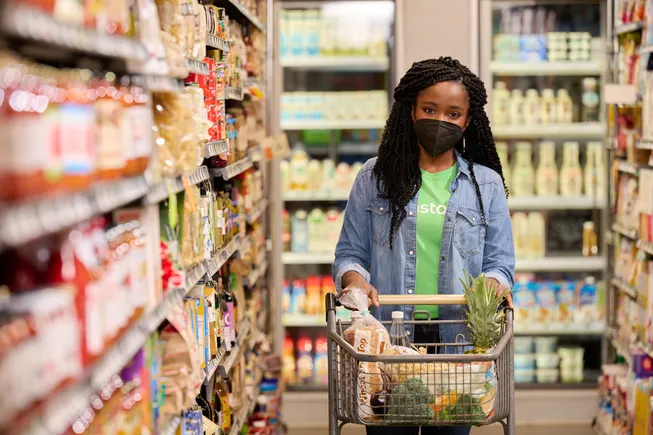
After more than three years of silence, Instacart broke its acquisition drought this month, first announcing the acquisition of restaurant software company Foodstorm, and less than two weeks later acquiring smart shopping cart maker Caper for $350 million. The two rapid deals highlight Instacart's determination to evolve in a rapidly changing industry.
As retailers seek greater control over e-commerce sales and competitors like DoorDash apply increasing pressure, Instacart is gradually moving beyond its traditional model of building websites, dispatching workers to pick items in stores, and delivering online orders. In addition to technology acquisitions, the company is investing in digital advertising and automated dark stores, and is preparing for an eventual public listing.
Industry experts say Instacart needs to adjust its strategy, but doubts remain about the specific direction of its long-term strategy. In the Caper acquisition, analysts noted that the data checkout technology can provide—especially consumer behavior data—may be the most attractive part for Instacart.
"This is a data war. Whoever has the data wins." — Ken Morris, Managing Partner at Cambridge Retail Advisors
However, analysts have not reached a consensus on how Instacart will use Caper (especially its smart shopping carts) and what the e-commerce company will do next on its path to becoming a self-described "retail enablement platform."
"The Caper acquisition completely baffles me." — Anne Mezzenga, former Target executive and co-CEO of retail blog Omni Talk
Why acquire Caper?
Instacart positions the Caper acquisition as its first major move in physical stores. The company says that beyond merging online and offline commerce, the checkout-free solution will speed up shopping for consumers and its gig workers, and unlock more personalized shopping experiences and product discovery.
Analysts believe Caper's technology allows Instacart to gain deeper insight into the dynamics of grocery shopping, including what consumers browse, the order in which they place items in the cart, how many items they add, and which items are placed in the cart but ultimately not purchased. This data will enhance its understanding of shopper behavior and provide a significant boost to its digital advertising business.
"Instacart is betting on scaling Caper Carts to accumulate enough data." — Anne Mezzenga

But the company faces multiple obstacles. Analysts point out that given the high cost of smart shopping carts, grocers may be reluctant to adopt them unless Instacart offers Caper Cart at a low price or for free. Meanwhile, collecting more data—which benefits Instacart—could strain its relationships with retailers.
"I think retailers will be more resistant to Instacart because Instacart is not just a pure technology company. It clearly has an interest in retail and may at some point in the future enter retail itself." — Neil Saunders, Managing Director at GlobalData Retail
Concerns over control of shopper data vary by retailer size, says Rick Watson, CEO and founder of RMW Commerce Consulting. Larger retailers are more likely to view Instacart as a threat, while smaller grocers may take a more positive view due to the services and resources it provides.
Instacart says it plans to integrate Caper's technology into its app and retailers' e-commerce sites, and its partners can access the "vast majority" of customer data depending on customer opt-in rates.
Although Instacart says smart shopping carts can simplify the shopping process for consumers and make it easier for its employees to fulfill orders, analysts question why it did not adopt simpler checkout-free solutions, such as scan-and-go on mobile phones.
"I don't think human in-store gig picking will last long enough to justify the Caper acquisition. I think that's a short-term solution." — Anne Mezzenga
Watson says Instacart employees may find the carts helpful for navigation and bypassing checkout, but customers may encounter issues, such as where to place children—the current model has no child seat—and what to do if the cart's cameras or sensor equipment are damaged.
"I don't think 80% of shoppers will use it." — Rick Watson
Becoming a one-stop technology store
Mezzenga says Instacart's recent acquisitions show it can offer retailers an increasingly rich array of services and features, becoming a one-stop technology provider—a view shared by Saunders and Watson.
"I think Instacart is saying: 'We know the relationship with grocers will remain tense. How do we continue to position ourselves: We are white label. We are trying to help you solve problems.'" — Anne Mezzenga
While Mezzenga once thought Instacart's mission was to become a retailer with dark stores, she now doubts whether that goal is feasible given its dependence on retailers.
"Based on the people they recently hired from Facebook, I think for them, the investment that will drive revenue most in the near term and even long term is the media network, and getting more revenue from consumer packaged goods companies (CPGs)." — Anne Mezzenga
This summer, Instacart hired two executives from the social media giant: CEO Fidji Simo, who previously oversaw Facebook app development and strategy; President Carolyn Everson, former vice president of global marketing solutions at Facebook; and Chief Operating Officer Asha Sharma, who joined in February and previously served as vice president of product and Messenger at Facebook.

Watson also believes Instacart will stick to its positioning as a retail enablement platform and views the Caper and FoodStorm acquisitions as a way to add more services, just like the acquisition of Unata in 2018.
"For Instacart, the most important thing is to prove they actually have a strategy and become a truly effective and reliable integrated service provider for retailers." — Rick Watson
Saunders says the Caper acquisition creates different revenue streams for Instacart, and selling or licensing Caper technology could become a path to profitability.
"I think Instacart will look to Ocado and see how it became a company that truly helps retailers and licenses technology." — Neil Saunders
Saunders adds that given Instacart's model can be replicated by retailers, who could launch their own delivery and pickup solutions, licensing technology may be a wise move.
Saunders says the question is whether Instacart will change its stance in a few years. "(More data) makes Instacart a potentially huge threat. However, if it alienates retail partners by becoming a competitor, the risk is enormous, so if Instacart chooses this path, it must go all in," the analyst notes.
Morris believes Instacart is gearing up to replace existing retailers on its path to becoming a retailer. "This is a 'Trojan horse' for retailers. They will come in, own the customers, and then compete. I think this will be very similar to Amazon," Morris says.
Morris notes that most grocers know little about shoppers unless they sign up for loyalty programs, which creates an opportunity for Instacart to obtain more valuable data and leverage it. The in-store presence brought by Caper, combined with plans to partner with Fabric for automated fulfillment services, enables Instacart to use its growing understanding of consumer behavior to run its own retail services.
Instacart says its focus is on supporting partners and it does not intend to become a retailer itself, noting that the Caper acquisition is just another tool in its technology toolbox for partners. ("We are focused on truly being the best partner for all retailers," Simo said in a recent interview with the Associated Press.)
What is the next big move?
Given industry concerns about the long-term profitability of online grocery, Saunders says Instacart should increase its automated fulfillment efforts.
"This is a very large growth area, and it is very smart because it solves a real problem." — Neil Saunders
Saunders believes fully automated picking and packing at in-store sites and dedicated fulfillment centers, along with autonomous vehicles—the "Achilles' heel" for grocers—will help make online fulfillment profitable.
Watson says Instacart could use micro-fulfillment centers (MFCs) to deepen its role in the grocery space, such as expanding direct-to-consumer offerings, selling emerging brands, or launching exclusive products, without becoming a direct competitor to retail partners. He cites Instacart's growing partnerships with digital brands like ButcherBox and Sunbasket on its marketplace.
"For Instacart, the most important thing is to prove they actually have a strategy and become a truly effective and reliable integrated service provider for retailers."

Rick Watson
CEO and founder, RMW Commerce Consulting
Watson says Instacart might consider offering a white-label curbside pickup solution and could also continue to grow its advertising business—a view shared by Saunders and Mezzenga.
Last spring, Instacart launched a self-service advertising platform that allows brands to promote products in search results, choose which products to promote, set budgets, and pay based on user engagement. The company's biggest personnel appointments this year—Simo and Everson—both have extensive advertising experience. When announcing Everson's hiring, Instacart noted she played a "key role" in transforming Facebook into the world's second-largest digital advertising platform, and said its advertising division is expected to be one of the company's fastest-growing segments in the coming year, with a goal of becoming one of the world's largest online grocery advertising platforms.
"I think—and many of my colleagues think so too—they will make some kind of national grocery acquisition." — Ken Morris
Morris notes that it makes sense for Instacart to have a physical presence, such as adding MFCs in stores to enhance the experience. (Instacart says it has no plans to sell or merge.)
As Instacart strengthens data collection, Mezzenga says it may need to invest in computer processing and data management tools. To go deeper into in-store automation, she believes the company could explore shelf-scanning robots and electronic shelf labels.
Mezzenga also envisions Instacart outsourcing its gig workers to retailers for work beyond e-commerce fulfillment, especially during the holiday season. This could give workers more flexibility in choosing shifts—for example, working for Instacart one day and for a grocer another—while helping retailers alleviate labor shortages.
Instacart, for its part, says helping retailers adopt and scale technology will continue to be a key differentiator for the company as it continues to build out its enterprise technology service suite. The company says it is focused on an omnichannel approach, including breaking down barriers between online and offline, and offering retailers a wide range of services to choose from.