
Albertsons' stock price doubled after listing; can the growth momentum continue?
Since its IPO in mid-2020, Albertsons' stock price has doubled, benefiting from the digital transformation and omnichannel capability improvements driven by CEO Vivek Sankaran. Although still lagging behind Kroger and Walmart, the company is rapidly catching up through initiatives such as technology partnerships and executive recruitment, but its high pricing strategy and reliance on third-party delivery pose potential risks.
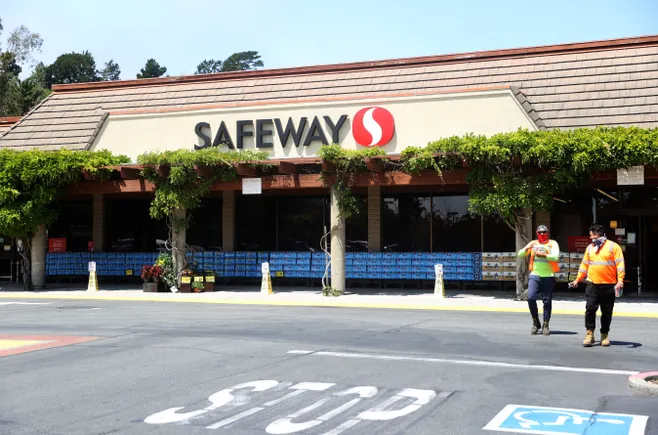
When Vivek Sankaran became president and CEO of Albertsons in March 2019, the Idaho-based food retailer was still a private company, online grocery shopping was not yet a major focus for most grocery executives, and the company was rarely seen as a digital trendsetter.
Thirty months later, however, Albertsons has rapidly transformed into a public company with solid stock performance, significantly enhanced omnichannel capabilities, and an emerging image as a leader in using technology to connect with consumers. Experts note that while Albertsons still trails Kroger and Walmart in scale and sales, the company has made significant progress since Sankaran took over.
"When Albertsons went public last year, we were concerned about its weak e-commerce growth and that it was falling behind larger peers," said Arun Sundaram, an analyst at CFRA Research who tracks publicly traded food retailers including Albertsons, Kroger, and Sprouts Farmers Market. "I think they are catching up quickly now."

Investors have rewarded the company's financial performance, helping push the stock to double since Albertsons went public in mid-2020initial public offeringThe IPO was sluggish at first, but began to accelerate earlier this year.
"Before 2020, this company was probably the most likely among the top five U.S. grocers to be left behind by the times. They deserve credit for investing heavily in new ways to serve customers."

Jordan Berke
CEO of Tomorrow Retail Consulting
Doubling down on technology
To be sure, Albertsons' recent boom is partly due to the unprecedented market forces of the pandemic, which continue to drive grocery performance. But analysts believe the company's fundamental rethinking of how it approaches food retail—especially through technology—is central to its transformation from a traditional supermarket owner to a retailer closely attuned to shifting consumer expectations and behaviors.
"Over the past 18 months, Albertsons has piloted the most new technologies among large retailers—they are the award winner," said Jordan Berke, a former Walmart China executive who is now CEO of Tomorrow Retail Consulting. "Before 2020, this company was probably the most likely among the top five U.S. grocers to be left behind by the times. They deserve credit for investing heavily in new ways to serve customers."

In just the past two weeks, Albertsons announced apartnershipwith online video startup Firework to develop shoppable short videos and livestreams on its website; reached anagreementwith Pinterest allowing users to add ingredients from recipes shared on the image platform directly to their carts in the grocer's app; and began working with DoorDashpartnershipto let online shoppers combine restaurant and grocery orders.
In March, Albertsons said it had partnered with Googlepartnershipto promote its e-commerce site through Google Search and Google Maps, and to offer predictive list-building. That same month, the company announced a partnership with Silicon Valley startup Tortoise totest remote-controlled delivery vehicles。
at two Safeway stores in California.
"Albertsons has definitely become very aggressive in terms of digital capabilities," said Gary Hawkins, CEO of the Center for Advancing Retail & Technology. "They understand they need to continue building a digital network across all shoppers and drive regular engagement, because as the network grows, there are more and more ways to create value."Beyond the recent spate of technology initiatives, Albertsons has also invested inbuilding out its pickup service, Drive Up & Go. Sankaran said on a July earnings call that by the end of the second quarter in September, the service would be available at 1,950 of the company's roughly 2,300 stores. While this still leaves Albertsons behind Kroger in e-commerce coverage, its rapid progress has eased earlier concerns about the gap being too wide, Sundaram said.
Under Sankaran, Albertsons has also improved picking efficiency and lowered fulfillment costs, Sundaram said, adding that he is impressed by the company'sdecision to increase investment in automated micro-fulfillment centers. "The metrics so far are very strong," he said.
Sundaram cautioned that Albertsons' use ofthird-party delivery servicesin some cases rather than its own resources to drive digital growth could eventually become a burden, because using these providers means giving up valuable customer data. "We tend to see retailers bring delivery in-house, and Kroger has done much more of that than Albertsons," he said.
Berke noted that even as Albertsons strengthens its omnichannel presence, it still has plenty of work to do in seeking to differentiate itself from competitors. "Are their private brands much better than they were two and a half years ago? Has fresh quality improved dramatically? Are the stores more compelling?" Berke said. "I still think there is vulnerability on the differentiation front."
Looking outside the grocery industry for leadership
Sankaran's efforts to reshape Albertsons' executive team sincebecoming the company's leaderhave also played a central role. The former CEO of PepsiCo Foods North America has sought to change the grocer's course.
Most notably, Albertsons in Augustnamed former Best Buy executive Sharon McCollamas president and chief financial officer, a move analysts said underscores Sankaran's belief that the company will benefit from bringing in management talent from outside the grocery industry.
McCollam, who served as executive vice president, chief administrative officer, and CFO of consumer electronics chain Best Buy before retiring in 2016, is widely credited with helping the company successfully transform amid intense competition from online retailers like Amazon.
Burt Flickinger, managing director of supermarket consultancy Strategic Resource Group, said McCollam's ability at Best Buy to avoid the decline that befell other retailers that failed to effectively pivot to digital makes her a natural fit for a top role at Albertsons. "She killed Amazon... She will achieve similar or even greater success for Albertsons," Flickinger said, referring to McCollam's work helping Best Buy fend off the e-commerce giant.
Before joining Best Buy, McCollam worked with former CEO Hubert Joly, serving as CFO of kitchenware chain Williams-Sonoma. Earlier, she was an executive at Dole Fresh Vegetables.

Brian Yarbrough, a consumer research analyst at Edward Jones who tracked Best Buy during McCollam's tenure there and now covers Costco, Walmart, and Dollar General, said McCollam's experience makes her particularly well-suited for a role requiring both financial acumen and technological expertise. "Typically a CFO is either more finance-driven or maybe strong on the technology side, but she is unique in that she has both backgrounds," Yarbrough said.
Flickinger said Sankaran's decision to hand the president title to McCollam underscores the confidence Albertsons' management has in her and suggests they view her as a potential future CEO.
Under Sankaran, Albertsons has alsohired its first chief data officerDanielle Crop, who held the same position at American Express and joined the grocery chain in April. In late 2019, Albertsons recruited former Microsoft and Amazon executive Chris Rupp aschief customer and digital officer。
Flickinger said Albertsons' focus on bringing in executives with experience in data-intensive operations from other industries is paying off as the grocer uses customer insights to cut costs. "Albertsons has gone from being a high-cost operator—which led to higher prices than Kroger and independent chains before the pandemic—to now being a digital leader," Flickinger said. "During a period when the pandemic has driven up operating costs, Albertsons is achieving savings."
Flickinger said the additional customer insights Albertsons is gaining through its increased technology investments are helping the company optimize categories, design more effective promotions, and win back shoppers who had defected to competitors like Target.
Another advantage for Albertsons is that co-chairman James Donald also sits on the board of Nordstrom, which has recentlydoubled downon e-commerce and is a standout in online performance in retail, Flickinger said. This gives Donald—who briefly served as Albertsons' president and CEO before Sankaran's appointment—a useful perspective to apply to his role at the grocer.
Despite the customization capabilities Sankaran and his team have improved, the company still needs to overcome a reputation for selling at relatively high prices and relying on promotions to help customers achieve discounts, Sundaram said. This could put Albertsons at a disadvantage against competitors like Kroger and Walmart, which use an everyday low price (EDLP) strategy.
Given that inflation is pushing up food prices, government stimulus is fading, and consumers are more price-sensitive, this difference could become a significant obstacle for Albertsons, Sundaram said. "We believe food retailers using an EDLP strategy will benefit more than those using a high-low strategy, so that is one of our concerns about Albertsons right now," Sundaram said.