
Five Key Questions Employers Should Weigh Before Implementing COVID-19 Vaccination Policies
As the U.S. COVID-19 vaccine emergency use authorization advances, employers face decisions on whether to mandate employee vaccination. While EEOC guidance permits mandatory requirements, employers must handle exemptions for disabilities, religious beliefs, pregnancy, and minor employees. Based on analyses from multiple labor attorneys, this article proposes five key questions to help employers carefully develop policies.
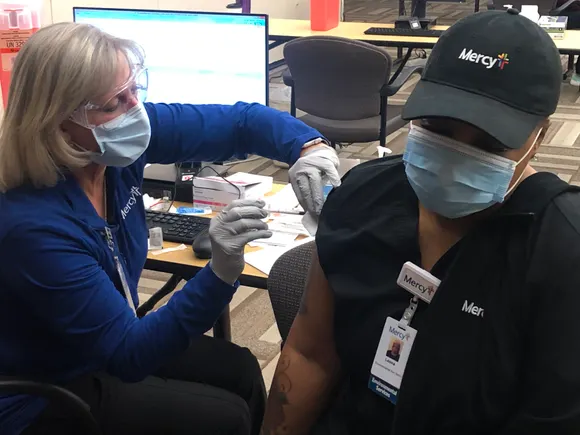
Last week, the human resources department gained a clearer understanding of one of the most important workplace issues of 2021.
On December 16, the U.S. Equal Employment Opportunity Commission (EEOC) virtually confirmed thatemployers can require employees to provide proof of COVID-19 vaccination, and that doing so does not violate anti-discrimination laws such as the Americans with Disabilities Act (ADA), noting that such a requirement itself does not constitute a medical examination as defined by the ADA. Although the agency listed some exceptions, multiple labor attorneys said in interviews that they believe the guidance has practical value for employers.
At the same time, the EEOC did not fully approve employer mandatory vaccination policies. Jason Habinsky, a partner at Haynes and Boone and chair of the firm's labor and employment practice group, said of the guidance: "It's not as clear as you might expect." Habinsky's understanding is that the EEOC is saying, "You can require it in certain circumstances, but if you do, here are some things to keep in mind."
The guidance also omitted information about how mandatory vaccination might affect specific categories of employees, including pregnant employees and employees under 18. As grocers review their employee vaccination policies after the Centers for Disease Control and Prevention (CDC) advisory panelmade new recommendations, they may find they have more questions than answers.
#1: Will exemption clauses for mandatory vaccination "swallow the rule"?
The EEOC's guidance details the intersection of mandatory vaccination with the ADA, Title VII of the Civil Rights Act of 1964, and the Genetic Information Nondiscrimination Act. The guidance makes clear that employers may need to exempt employees who cannot be vaccinated due to a disability or a sincerely held religious belief—although according to the guidance, in some cases, these employees may be excluded from the workplace. However, employers also need to consider at least two other categories of employees when developing vaccination policies.
Pregnant employees are one such group, protected by the federal Pregnancy Discrimination Act as well as state and local laws, Habinsky said. He noted that EEO laws require employers to provide reasonable accommodations to employees who need them due to pregnancy-related disabilities or medical issues.
"If a pregnant employee states that, due to her pregnancy, her healthcare provider has advised her not to receive the vaccine, the employer should treat this like any other request for accommodation based on a medical condition," Brett Coburn, a partner at Alston & Bird, said in an email. He added that the employer can consider the request and conduct an individualized assessment to determine how to respond.
Younger employees are another group that may be exempt. This is because the COVID-19 vaccine developed by Pfizer and BioNTech has beenrecommended by the CDC for individuals aged 16 and older. On December 18, the CDC announced that a second vaccine, developed by Moderna, receivedemergency use authorization for individuals aged 18 and older。
Barry Hartstein, a shareholder at Littler Mendelson and co-chair of the firm's EEO and Diversity practice group, said employers can expect to see clinical studies involving individuals under 16. But in the meantime, employers that hire such employees "need to be mindful" of continuing to enforce existing protocols and conducting frequent COVID-19 testing for such employees, Hartstein said.
Taken together, it is clear that many broad groups may be exempt from direct mandatory vaccination. This alone may prompt employers to reconsider whether to implement such policies.
"Right now, the question you have to ask yourself is, will the exemption clause swallow the rule? As an employer, our goal should be to do everything we can to limit the spread of the virus and keep people safe," Hartstein said.
#2: Is the current vaccination phase suitable for mandatory requirements?
The current vaccination program operates under theemergency use authorizationof the U.S. Food and Drug Administration (FDA). To date, two vaccines—the Pfizer-BioNTech vaccine and the Moderna vaccine—have received emergency use authorization.
Hartstein said that this authorization essentially means both vaccines are still in the trial phase and have not yet received full FDA approval. He added that vaccines are being rolled out in phases at the state level, initially primarily to healthcare facilities, many of which have indicated they will not mandate vaccination until full FDA approval.
Additionally, the fact sheets provided to vaccinated patients disclose that they may have allergic reactions to the vaccine, which employers may need to note in their planning, Hartstein said. Asample fact sheetfor the Pfizer-BioNTech vaccine has been provided electronically by the company.
So far, early reports from state governors indicate that even employers operating in essential industries will face obstacles in adopting mandatory vaccination policies. During a December 17 U.S. Chamber of Commerce Foundation webinar, Arkansas Governor Asa Hutchinson said the state's first vaccines were prioritized for healthcare workers and sent to hospitals and pharmacies, with residents and staff of long-term care facilities following.
However, when asked about vaccination of essential workers, Hutchinson said it"could be more challenging", adding that Arkansas's current vaccine supply is insufficient to cover all essential workers in the state.
Hutchinson said determining how to allocate Arkansas's first batch of vaccines was "easy," but "as more vaccines come into the supply chain, the scrutiny and debate over how to allocate them will increase."
On Sunday, the CDC's Advisory Committee on Immunization Practices (ACIP) voted 13 to 1 to recommend that grocery workers beincluded in Phase 1b of the CDC's vaccine allocation plan, along with firefighters, police officers, teachers, public transit workers, and people aged at least 75.
Dr. Troyen Brennan, executive vice president and chief medical officer of CVS Health, said during the webinar that the U.S. has the capacity to complete 100 million to 150 million vaccinations per month, although most people will need more than one dose. He added that vaccination of essential workers could begin in mid-to-late February 2021. "There's no reason it can't be done relatively quickly," Brennan said.
This forecast comes amid reports that, according to Axios, hospitals in multiple states received25% to 40% fewer COVID-19 vaccine doses than expected。
during the week of December 20. Habinsky said that as the rollout progresses, employers considering mandatory vaccination need to pay attention to the availability and accessibility of the vaccine.
#3: Should employees be given paid time off to get vaccinated? Should incentives be offered?
Habinsky said that incentivizing employees to get vaccinated is "critical," and providing paid time off to get vaccinated could be one way to achieve that.
Coburn said that providing paid time off to address side effects "is certainly a good idea" and may be required under certain state and local laws. According to the CDC,side effects of the Pfizer-BioNTech vaccinemay include pain, swelling, and redness at the injection site, as well as chills, fatigue, and headache. Coburn added: "For employees who have exhausted their paid time off or paid sick leave, employers may want to consider providing additional paid time off for this purpose, but they must weigh this potential incentive against the risk of employee abuse—that is, employees getting vaccinated and then using it as an excuse to take a day or two of paid leave even if they don't experience side effects." Employers may also need to stagger employees' vaccination dates to ensure adequate staffing in the workplace.
Another option—and possibly a way to completely replace mandatory vaccination—is more direct incentives. Steven J. Friedman, a shareholder at Littler Mendelson, said in an email that employers have long used health plans to provide cash rewards to employees, focusing on health outcomes and health-related activities, but vaccination incentives "would not be outcome-based or activity-based rewards."
Instead, vaccination incentives "would be viewed as participation-based rewards offered outside of a health plan, so EEOC rules would apply," Friedman said. EEOC regulations on participation-based health plans state thatemployers must provide reasonable accommodations for employees with disabilitiesto ensure such employees can participate. If accommodation is not possible, the regulations require that a reasonable alternative activity be provided so that employees can still earn the reward without participating in the activity.
"In the context of vaccination, it is not yet clear what issues might arise in accommodating employees or finding reasonable alternatives for those who cannot be vaccinated," Friedman said. "However, it can be predicted that, based on preliminary findings, some people may be allergic to the vaccine and cannot safely receive it. In such cases, employers may need to allow these employees to participate in another activity to earn the health reward."
But according to Friedman, it is unclear how EEOC regulations would apply to employees who refuse vaccination based on religious practices or personal objections. "One could speculate that if the objection cannot be defined as related to a disability, no accommodation or alternative would be required," he said, referring to health plans with incentives.
Coburn said incentives may also appeal to employers concerned that a significant portion of their workforce might refuse to comply with a mandatory vaccination policy, as such mandates could put employers in a position of either terminating those employees or deviating from the policy.
Coburn added that employers could also encourage vaccination by conducting educational campaigns and covering the costs associated with getting vaccinated. Habinsky noted that employers may be able to work with their health plans to cover any related costs of vaccination.
Hartstein said that for employers looking to encourage vaccination, marketing may be just as important as incentives. For example, he suggested employers consider taking photos of their CEO getting vaccinated to encourage people to believe the vaccine is safe and effective.
#4: What if a group of employees refuses to get vaccinated? Is this protected activity under the National Labor Relations Act?
In aprevious interview with HR Dive, Hartstein noted that employers may face compliance issues under the National Labor Relations Act when issuing mandatory vaccination orders. He said that if a group of employees protests COVID-19 vaccination, this could fall within the scope of protected concerted activity.
On the other hand, employers operating in unionized workplaces may need to consider involving union representatives. "If you want a vaccination program to succeed, there is always the question of whether you need to bargain with the union before rolling it out," Hartstein said. "It is really important to involve union representatives in the conversation."
Employers may also need to be aware of any guidance issued by the Occupational Safety and Health Administration (OSHA) regarding vaccination. Thegeneral duty clause of the Occupational Safety and Health Act statesthat employers must provide "a workplace free from recognized hazards that are causing or are likely to cause death or serious physical harm to employees."
But Habinsky said whether employers should maintain a safe and healthy workplace by requiring COVID-19 vaccination remains a question, and OSHA has not yet issued specific guidance on this.
#5: How might the situation change as vaccines become more widely available?
Habinsky said that ultimately, vaccine availability will largely determine the extent to which employers can mandate vaccination.
Coburn said that if vaccines become widely available in the coming months, employers may need to prepare for a large number of employees trying to get vaccinated at the same time. If many employees need time off to deal with side effects, this could strain staffing levels.
Hartstein said the vaccine is not the "ultimate solution" for employers dealing with COVID-19. It is not yet clear whether vaccinated individuals may still asymptomatically transmit the virus in the workplace, meaning preventive measures such as mask-wearing and social distancing should continue.
The vaccine is just another arrow in the employer's quiver, Hartstein said. "It's one way to get back to normal as quickly as possible."