
Exploring the Future Prospects of the Gig Economy in Grocery Retail
The gig economy is becoming deeply embedded in e-commerce fulfillment and store operations in grocery retail, but faces uncertainties such as high turnover, legal compliance, and automation substitution. This article combines industry cases and expert opinions to analyze its sustainability.
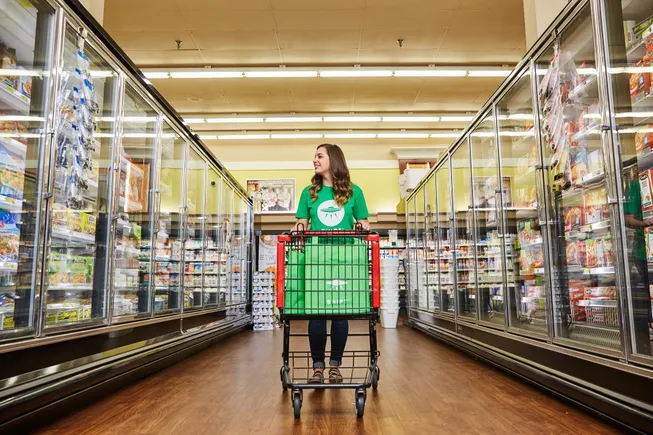
This article is the fourth in a four-part series focusing on labor issues in the grocery industry. For previous reports, seehere。
Earlier this year, e-commerce service provider Shipt invited its contract workers to its Birmingham, Alabama headquarters to meet with executives and discuss work. In April, a thousand workers arrived at the Southern city at their own expense for a day-and-a-half-longdevelopment event, including dialogues with company leaders, a headquarters tour, business updates, and feedback impact presentations. One lucky winner also won a car.
"To our knowledge, this is the first time gig economy workers have gathered for the platform they serve," said Kelly Caruso, a Target veteran who became CEO of Shipt earlier this year, in a speech at the Groceryshop conference in September.
Although the company positioned the gathering as team building, it also highlighted the importance of maintaining worker satisfaction and loyalty in an on-demand labor industry known forhigh turnover rates.
Gig labor has become inseparable from grocers' e-commerce operations: hundreds of thousands of workers pick items in stores, assemble orders, and deliver them to doorsteps. Experts say this model will fill even more roles in the coming years, spanning both e-commerce channels and store tasks such as restocking and display. But as it scales, the viability of gig labor in the grocery industry and the sustainability of its model face sharp questions.
In-store gig work
The grocery industry relies on gig labor to pick, pack, and deliver online orders, and this reliance will deepen as e-commerce demand accelerates. According to eMarketer data, online grocery sales are expected to approach $20 billion this year and willexceed $38 billionby 2023. The Food Marketing Institute and Nielsen predict that by 2025, the e-commerce grocery business will reach $100 billion.
Grocers are also beginning to bring on-demand labor into stores to perform tasks such as restocking, building displays, and running tasting stations. With unemployment at historic lows and grocers struggling to retain full-time and part-time employees, gig labor can fill labor gaps.
"Over the past three years, employee turnover has risen year over year," Bob Graybill, president and CEO of FMS Solutions, a consulting firm that studies industry labor and compensation, told Grocery Dive. "Part-time employee turnover is especially high, reaching 100% at regional and national chains."
Jyve, an on-demand labor company that emerged earlier this year, says retailers' demand for temporary tasks like restocking and shelf displays is growing. Anu Gupta, a former Target and Safeway executive who is now COO of Jyve, said Jyve provides grocery-specific training to its workers (called "Jyvers"), who typically focus on a single retail brand and move between stores to complete tasks. The company uses artificial intelligence to predict store demand and matches workers based on their skills.
Gupta said restocking, display, and organizing presentations are the most frequently requested tasks by retailers currently. She said the company's growth is driven mainly by the "massive movement" in retail, adding: "Although retailers and brands realize they need more staff during the holiday season, most are unprepared for fluctuations during the rest of the year."
Other retail sectors have already turned to gig labor through providers like Snag Work. Meanwhile, the restaurant industry (wheretriple-digit turnover ratesare common) has seen a surge in on-demand workers serving as waitstaff and short-order cooks, in addition to delivery services like DoorDash and Uber Eats. Specialized companies like 7shifts and Pared have emerged to recruit, train, and deploy networks of workers.
Micah Rowland, COO of Fountain, a recruiting and workforce management service that works closely with many gig companies, believes grocers are evaluating the viability of gig labor beyond online fulfillment. He predicts that food retailers already competing with gig companies for workers will increasingly bring these workers into stores.
"The grocery industry is less concentrated, so adoption will be later," Rowland told Grocery Dive. "But in a tight labor market, reducing costs by placing variable labor expenditures where (typically) fixed expenditures exist looks very attractive."
Others are less certain. Todd Wulffson, managing partner of California law firm Carothers, DiSante & Freudenberger, told Grocery Dive that gig workers may not meet the grooming standards or team culture that grocers have established. For example, Publix recently lifted its ban on facial hair but still requires employees to maintain neatly trimmed mustaches or beards.
"You present a certain image to the community, and employees need to fit that. There are liability issues," Wulffson said, who has worked closely with retailers like Kroger, Albertsons, and Sprouts Farmers Market.
He noted that even with training, on-demand workers may not be familiar with the layout of the store where they work, which can confuse shoppers seeking help. Providing high-touch, professional service is also more difficult for gig workers.
"Anyone can come in and put boxes on shelves, but someone who can come in and discuss different olive oils or 15 types of pumpkins and their uses with regular customers is unique," he said.
Anne-Marie Roerink, head and founder of 210 Analytics, which studies grocery labor, said departments requiring specialized training like meat and seafood are facing labor shortages. "Higher-skilled positions in grocery retail will be difficult to fill with temporary workers," she told Grocery Dive.
The 'existential' question of on-demand labor
At Jyve, Gupta said workers can access retailer training programs via their phones and must complete in-store tasks under the supervision of "Jyve mentors" to be certified for specific tasks. Workers are paid per task rather than per hour, and Gupta said the company encourages skill development to earn more. Additionally, Jyve mentors provide advice on how to document work and communicate with retail managers.
However, even with a steady workflow, gig labor companies may struggle to meet demand in the coming years. With low unemployment, many gig companies that emerged during the Great Recession are competing with higher-paying jobs that offer more benefits, including many grocers that have raised starting wages and offer health insurance, tuition reimbursement, and bonuses.
"From grocery competitors to restaurants to call centers, everyone is competing for labor, which drives up turnover rates and also hourly wages, salaries, benefits, bonuses, and overall employee investment," Graybill said.
"In a tight labor market, reducing costs by placing variable labor expenditures where (typically) fixed expenditures exist looks very attractive."
— Micah Rowland, COO of Fountain
For venture-backed companies providing on-demand workers in a highly competitive industry, significantly raising wages is often not feasible. Turnover rates at gig economy companies can also become unsustainable, Rowland said. For companies like Uber and Instacart, turnover is a side effect of offering flexible work models. But Rowland said companies may risk exhausting the entire available labor supply, especially in smaller markets. He recalled a conversation with a gig employer: "I asked them: 'Are you worried that one day you'll run out of available labor supply and be severely short of candidates?' They had no answer."
According to a study published earlier this year in the Academy of Management Journal, business disruptions and the costs of recruiting and training new workers can significantly cut into profits. Researchers estimated that if turnover rates at gig companies shift from "optimal" to "high," their profits couldlose 6%。
"They all know (retaining workers) is important, but it hasn't yet become existentially important," Rowland said.
Companies like Instacart and DoorDash have also faced criticism from workers claiming unfair pay policies. DoorDash actually withheld driver tips under arevisedpolicy, and Instacart faced anotherworker protestthis week demanding that the default tip be raised from 5% to 10% (Instacart responded that it takes all worker feedback seriously).
Instacart and competitor Shipt both say they have robust recruiting processes and ample applicant pipelines. Caruso said Shipt is "very selective," accepting only 8% to 10% of applicants as personal shoppers. They have also added benefits and held events, like Shipt's Birmingham conference, to boost morale. Instacart addedinstant pay toolsand allows shoppers to accept orders on demand rather than committing to specific time slots. Last year, Instacartsimplified its training process, making it easier for shoppers to learn the job.
"Our shopper community is very important to us, and while we know there is more work to be done, we are proud of the progress we've made," Instacart's Chief Business Officer Nilam Ganenthiran said in a recent interview with Grocery Dive.
A gig-ified workforce
The gig economy also faces other obstacles. California Assembly Bill 5 (AB5), which wassigned into law,in September, requires covered contract workers to be classified as employees, which could be a financial blow to gig companies, Wulffson said. Instacart, along with Uber, Lyft, and others, has proposed a2020 ballot measureaimed at exempting them from the law while guaranteeing on-demand workers pay above minimum wage and benefits like health insurance.
Wulffson said automation threatens both on-demand and traditional grocery employees. In e-commerce, automated warehouses of all sizes are expected to shift fulfillment away from store shelves, reducing the need for Instacart and Shipt workers to traverse stores, making delivery the primary focus of on-demand labor. Even there, autonomous vehicles and drone delivery could eventually replace drivers.
Some retailers are not waiting for automation to decide their e-commerce fulfillment approach. Lowes Foods, Walmart, and SpartanNash brands are just a few that insist onusing their own employeesto pick and pack orders. Walmart does this mainly for quality control purposes, while others do it to provide personalized service.
"Great employees are one of the retailer's biggest competitive advantages, and even in areas like click-and-collect and delivery, retailers have the opportunity to build loyal relationships between consumers and pickers, just like the relationship between in-store shoppers and cashiers or butchers," Graybill said. "Gig workers cannot do that."
Although the exact future of gig work remains uncertain, the impact of employers like Instacart and DoorDash on grocers' own labor management processes is clear, said Will Eadie, vice president of global sales and partnerships at workforce technology company WorkJam. Eadie's company works with Australian grocer Woolworths as well as Shell, Ulta Beauty, and Avis, and he said retailers can flexibly adopt the "open shift management" that on-demand companies implement. Grocers can cross-train employees across stores and distribution centers. If a store urgently needs restockers, Eadie said, they can post opportunities that distribution center workers wanting more hours can fill.
"Retailers don't realize that within their own four walls, they already have a gig economy," he told Grocery Dive.
