
A New Era of Food Recalls: Smarter, Faster, More Precise
Consumers are increasingly worried about the frequency of food recalls, but industry experts believe that the rise in recall numbers is not a sign of deteriorating food safety, but rather a reflection of enhanced detection and response capabilities. With electronic traceability and shared standards, the food industry is moving towards a more precise recall model, reducing waste and strengthening public trust.
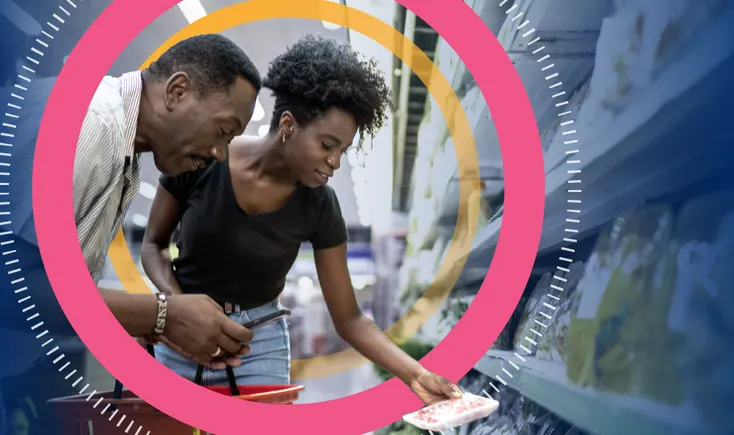
A consumer sees a news headline about the latest food recall on social media and heads to the kitchen.
She checks the refrigerator and pantry, scanning shelves for labels of the affected products.
If the affected product is not there, she continues her day without worry.
If she finds it, she gathers it up and throws it away, silently deciding to avoid that brand on her next shopping trip—or even the entire food category.
This experience is increasingly common, and perhaps you can relate. In fact, food recalls have become so frequent that many consumers worry the food supply is becoming less safe. A recent survey conducted byGS1 USfound that93% of adults are concerned about the frequency of food recalls。
But here's the twist...
The same survey shows that 85% of consumers believe food recalls are effective in protecting public health and safety.
At first glance, these numbers seem contradictory. But food safety experts see it differently.
The increasing visibility of recalls is not proof that the food safety system is failing, nor does it mean that shopping at the supermarket is risking your family's health. Instead, experts point out that it actually shows the food safety system is more effective than ever—it is identifying problems, communicating risks, and removing affected products faster and more precisely.
"The number of recalls does not necessarily reflect how unsafe the food supply chain is," said Liz Sertl, Senior Director of Supply Chain Visibility at GS1 US. "It is more a measure of how effective the system is at detecting problems."
Why More Recalls Might Be a Sign of Progress
Food recalls are not new. Most of us have never lived in a time without them.
Today, the number of recalls is rising. In 2025, the U.S. Department of Agriculture (USDA) and the Food and Drug Administration (FDA) issuedmore recalls than any year since 2020. However, these numbers may reveal a more encouraging reality: rather than food becoming less safe, food on shelves and in homes is safer than ever.
The reason is that the food industry has significantly improved its ability to identify potential problems and precisely target affected products, allowing for rapid action.
Years ago, recalls often involved broad categories because parties lacked the visibility to limit the scope.
Today, organizations can pinpoint the affected product, lot, or batch, and it is much rarer to pull entire product categories off the shelf out of caution.
This difference is crucial.
"In 2019, all romaine lettuce was pulled from shelves," Sertl recalled. "Now the idea is to achieve that surgical precision recall, taking only one brand, one lot, one field off the shelf."
Sertl attributes this progress to traceability technology, electronic records, and significant advances in communication between trading partners and consumers. The result is reflected in increased consumer trust in the recall process and a significant reduction in food waste—we no longer throw away nationwide romaine lettuce because of the vast majority of perfectly safe products.
Traceability Enables Precision
The success of any recall begins with traceability.
Before a product reaches the consumer's kitchen, it passes through growers, processors, distributors, logistics partners, and retailers.
When a food safety issue arises, organizations must understand where the product came from, its path, and where it went. This requires accurate data and the ability to share it efficiently.
Sertl's career spans more than two decades, and she has witnessed the industry's shift from manual paper records to electronic traceability.
"The discussion about digitizing these records has been very active," she said. "Conversations between trading partners about how to exchange data electronically in a timely manner have also made substantial progress."
Shared standards—such as those advocated by GS1 US, Sertl's organization—create a common language for identifying products and exchanging information. Consistency brings clarity and precision, accelerating decision-making and keeping affected products away from checkout counters.
Despite progress through enhanced precision and growing consumer confidence, the industry can continue to improve by making recalls even more precise and effectively communicating that precision to the public.
According to the GS1 US survey, 60% of consumers say they have avoided an entire food category after a recall. More than half report throwing away food even when it was not directly affected.
These reactions cause unnecessary waste and negatively impact consumers, retailers, and brands. Effectively communicated precision can maintain trust across the food industry.
FSMA 204 Raises the Bar for Food Safety
The FDA's Food Safety Modernization Act Section 204 ruleestablishes new requirements for products on the Food Traceability List, which includes high-risk foods such as cheese, eggs, butter, produce, and seafood. The goal is to more easily identify where products come from, track their path through the supply chain, and respond effectively when necessary.
The official date for organizations to achieve FSMA 204 compliance has been postponed from January 2026 to July 2028, but leading companies likeWegman's and Syscoare already working to meet this higher traceability standard. They are evaluating their records, the information they share, and the systems they use.
As companies approach FSMA 204 compliance, they are improving recall readiness, increasing visibility, and reducing waste, while often also building trust in the market.
However, the reality is that to achieve the best outcomes, companies and organizations need to rely on each other to reach full compliance.
"Food safety is a pre-competitive issue," Sertl said. "No single link in the supply chain can do it alone. We need the entire supply chain ecosystem to make FSMA 204 work well."
Preparing for the Future
Although the food industry might hope for a future without recalls, that is unlikely. However, through continued collaboration, organizations can ensure the food safety system becomes more sophisticated and efficient, identifying and responding to risks with speed and precision.
The organizations most likely to thrive will be those that invest in capabilities that promote precision.
For many businesses, this starts with assessing data quality and accessibility—product information, lot information, traceability records. When this information can be quickly accessed, shared, and acted upon, its value is greater.
Organizations should also consider how to effectively exchange information with supply chain partners. FSMA 204 is a strong driver for establishing processes, partnerships, and data-sharing frameworks that improve food safety outcomes across the industry.
In short, food safety is a shared responsibility. Success depends on a shared commitment.
andShared standards。