
Kroger's Acquisition of Giant Eagle: Regulatory Approval Prospects and Potential Obstacles Analysis
Kroger plans to acquire Giant Eagle for $1.65 billion. Antitrust experts believe this deal is more likely to be approved than the previous merger with Albertsons, due to limited store overlap and a shift toward a friendlier regulatory environment. However, the FTC may issue a second request for information, and state attorneys general may also intervene, leaving the deal uncertain.
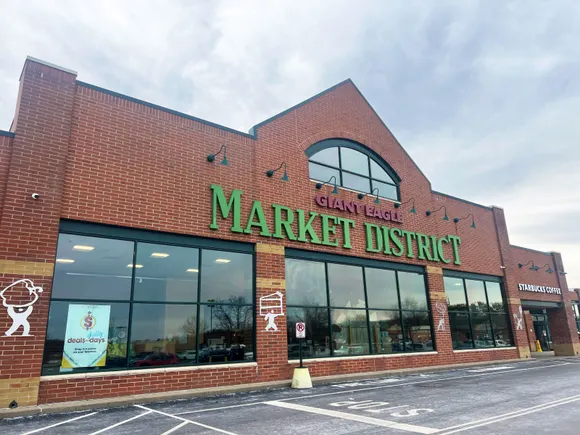
As Kroger seeks government approval for its acquisition of Giant Eagle, antitrust lawyers point out that the grocery retailer will likely face demands from regulators to conclusively prove the deal will not harm competition in the markets where it operates alongside the supermarket chain.
However, unlike Kroger's previous failed attempt to merge with Albertsons—which faced strong opposition from the Federal Trade Commission (FTC) and ultimately ended up in court—experts say Kroger's plan to absorb Giant Eagle should proceed more easily to completion.
Barry Barnett, a partner in the antitrust practice at Susman Godfrey law firm, noted that beyond the Giant Eagle deal involving far fewer stores than the much larger Albertsons transaction, the change in presidential administration since Kroger and Albertsons abandoned their merger plans has greatly altered the dynamics facing potential merger partners.
Barnett said a key factor is that the FTC—which experts say will likely handle Kroger's acquisition of Giant Eagle—currently operates in a political environment where independent agencies are more accountable to political considerations than during the Biden administration.
"I expect they will be much friendlier (to the merger), not because there is anything special about this merger, (but) simply because they are friendlier to mergers overall," Barnett said.
Through the $1.65 billion acquisition of Giant Eagle announced on July 1, Kroger aims to buy a chain operating nearly 200 stores across Pennsylvania, Ohio, West Virginia, Maryland, and Indiana. According to an analysis of the deal by Thomas Paulson, market insights director at location data company Advan Research, only about 7% of these supermarkets are located within 5 miles of Kroger stores.
"Advan's data shows that Giant Eagle's business is stable and performing well, making this a good bolt-on/expansion acquisition for Kroger," Paulson wrote in a report shared by the company. "The store footprint and customer profile match well with Kroger."
Kroger said it intends to "make limited divestitures of Giant Eagle stores," but did not specify how many stores it plans to sell, where those stores are located, or whether it has identified potential buyers.
Spencer Waller, a professor at Loyola University Chicago School of Law specializing in antitrust law, said that under the Trump administration, the FTC has shown a tendency to reach settlements with merging parties rather than filing lawsuits as it did in the past. Waller noted this indicates that as long as Kroger presents a strong divestiture plan to address stores in areas where it overlaps with Giant Eagle, the two companies likely have a good chance of alleviating concerns that their merger could harm consumers.
The two grocers could still face hurdles
Waller, who served as an FTC adviser during the Biden administration, added that Kroger could still face what the FTC calls a "second request" for information in its bid to win approval for the Giant Eagle deal, as the supermarket chain experienced during the Albertsons merger review.
Waller said the agency issues such requests only in a minority of cases—which pauses the approval clock so merging parties can gather and submit more details—but doing so can signal that regulators are taking a serious look at a deal, without necessarily meaning the deal is at risk.
Waller noted that a second request from regulators could still create problems for companies seeking to merge, because the extended review process gives competitors time to react while delaying the parties' efforts to coordinate operations.
Waller added that a potential complication for Kroger is that state attorneys general could oppose the merger or demand that the company present a more robust divestiture plan. He noted that state law officials in multiple states joined the FTC in suing to force Kroger and Albertsons to abandon their merger, while officials in Washington state and Colorado filed separate lawsuits to block that deal.
"Prices have gone up on everything, but where do people feel it? They feel it in rent, groceries, and gas," Waller said. "So even a fairly conservative attorney general or governor is certainly going to think hard about whether this makes consumers in their state worse off."
Jeffrey Cross, an antitrust lawyer and consultant at Smith, Gambrell & Russell, said Kroger's main challenge will be proving that its deal for Giant Eagle will not unduly distort competition. He said Kroger should submit a well-developed divestiture plan to the FTC, including detailed information about capable buyers who could compete effectively by taking over the stores.
Cross noted that Kroger has the ability to invest in Giant Eagle to make it more competitive, which he said would strengthen the company's ability to satisfy regulators' requirements.
If the two grocers divest in overlapping areas and Kroger shows it can strengthen Giant Eagle, "the deal should pass," Cross said.