
Kroger Acquires Giant Eagle: Five Key Takeaways
Kroger announced last week its plan to acquire regional supermarket chain Giant Eagle, a move that in some ways marks a return to a historical crossroads for the two food retailers. This article outlines five key takeaways from the deal: Kroger's financial capacity, the economies of scale gained at a relatively low price, both parties' recent price-cutting efforts, the shared focus on store improvements, and the continuity of the Giant Eagle brand and operations.
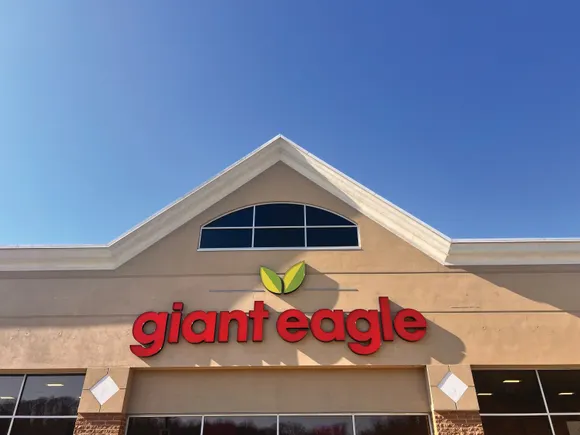
Kroger announced last week plans to acquire regional supermarket chain Giant Eagle, a move that in some ways marks a return to a historical crossroads for the two food retailers. In 1928, three of the five families that would later form Giant Eagle co-founded Eagle Grocery and agreed to sell it to Kroger, which had already been in business for over 40 years. After honoring a three-year non-compete agreement, these families joined with two others to open the first Giant Eagle store in June 1936 on Brownsville Road in Pittsburgh's Mount Oliver neighborhood.
According to the Heinz History Center, by mid-1938, Giant Eagle had 10 stores. The retailer continued to expand, pushing average store size to 15,000 square feet by the 1950s, and later purchased a former Kroger warehouse in Lawrenceville, Pennsylvania, more than doubling its distribution space.
Despite early success and rapid regional expansion, Giant Eagle has struggled in recent years to keep up with new competitors, especially Walmart. For example, in 2019, Giant Eagle controlled nearly 30% of the grocery market share in its hometown of Pittsburgh, but by 2022, it had ceded market leadership to Walmart, and the two have been vying for dominance ever since.
Kroger has also faced pressure to keep up in the evolving grocery market. After its attempted merger with competitor Albertsons to gain scale failed in 2024, Kroger has been readjusting. The planned acquisition of Giant Eagle marks Kroger's first attempt to buy another supermarket operator since its failed effort to acquire Albertsons.
Here are five key takeaways on Kroger's acquisition of Giant Eagle.
Kroger shows it can easily afford Giant Eagle acquisition
Kroger emphasized that acquiring Giant Eagle will not strain its finances. When announcing the deal, Kroger said it would finance the $1.65 billion transaction with cash and expects to maintain its target range for leverage ratio. The company also said it plans to continue its share repurchase program and maintain its dividend after the merger closes.
As of May 23, Kroger had approximately $2.9 billion in cash and temporary cash investments, down from about $3.3 billion at the end of January. In contrast, in 2022, Kroger said it intended to borrow to fund its merger with Albertsons and suspended its share repurchase program to control debt levels.
During Kroger's first-quarter earnings call on June 19 (before the Giant Eagle acquisition was announced), CFO David Kennerley emphasized the company's commitment to maintaining financial strength, noting that strong operating results generated ample cash flow. But he also said the retailer is prepared to take on more debt than it currently has on its books, without providing a timeline.
"We view this flexibility as a strategic asset. It provides us with the option to invest in high-return opportunities while maintaining our commitment to investment-grade credit," Kennerley said. "Our disciplined capital allocation continues to drive performance, balancing investments in growth opportunities while maintaining a strong financial foundation."
Deal boosts Kroger's scale at a moderate price
Kroger agreed to absorb Giant Eagle at a time when the company faces intense competition from other retailers, especially Walmart. Although Giant Eagle has lost market share, the pressure it faces also helped Kroger secure the acquisition at a relatively low price, R5 Capital analysts wrote in a research report.
One reason the deal benefits Kroger is that the proposed stores will help it better compete against large retailers. Kroger will need to invest to lower Giant Eagle's prices to boost its competitiveness, but "we see no reason why Giant Eagle cannot operate at EBITDA margins similar to the rest of Kroger, which strongly suggests Kroger is acquiring a substantial amount of long-term EBITDA at a relatively low price," R5 wrote in the report, with EBITDA being a key profitability metric.
R5 believes Giant Eagle also offers mature opportunities for cost savings, especially in procurement, distribution, and selling, general, and administrative expenses. These savings should be sufficient to offset the costs Kroger needs to lower prices. R5 added that it believes consumer packaged goods (CPG) companies will be willing to help Kroger lower Giant Eagle's prices, especially because Kroger will be able to leverage the Pittsburgh-based chain's consumer data to enhance its data analytics business.
Both grocers have recently focused on price cuts
Kroger's acquisition of Giant Eagle comes as both retailers have emphasized their price reduction efforts. Kroger's new CEO Greg Foran joined the company in February and quickly pointed out that the grocer aims to make pricing and store experience competitive advantages. Foran told investors in June that Kroger would work to simplify promotions and strengthen price positioning. He told Bloomberg that the supermarket chain is preparing to test large-scale price cuts to compete with Walmart and Aldi.
To show how Kroger might lower prices at Giant Eagle, Foran said Kroger plans to support initiatives to reduce consumer costs by focusing on lowering its own expenses. "We invest in price with discipline, fully funded by cost savings, while maintaining a strong focus on margin performance," he said on the earnings call.
Meanwhile, Giant Eagle last year announced a $100 million plan to support "newer, brighter stores and more everyday value and quality." As part of that campaign, Giant Eagle said it would launch seasonal pricing programs targeting customer inflation relief, starting with a one-week "$1 Deals" promotion covering 1,000 items, including pasta and baby food. The program followed the grocer's other price reduction efforts.
Shared focus on store improvements
Foran said on the June earnings call that the grocer has a "strong store footprint" and is working to expand store fulfillment scale to improve the economics of online orders, but he noted "the gap between our best stores and the rest of our fleet needs improvement." He also told investors that store expansion will unlock market share as Kroger looks to keep pace with competitors.
For its part, Giant Eagle last year said it would invest millions of dollars to renovate 12 supermarkets in Pennsylvania and Ohio and upgrade more than 60 in-store pharmacy departments. The grocer also said it plans to improve produce quality and expand employee training to provide better customer service.
In November, Giant Eagle opened a Market District store at The Meridian development in Pittsburgh. According to local news reports, the grocer closed stores in Lancaster and Columbus, Ohio earlier this year. As part of the deal, Kroger and Giant Eagle said they expect a limited number of store divestitures but did not provide details.
Giant Eagle retains its brand identity
While concerns about potential impacts on workers sometimes arise around large grocery M&A deals, Giant Eagle quickly told local media that the grocer does not expect significant labor changes from its deal with Kroger. Giant Eagle CEO Bill Artman told the Tribune-Review (serving the greater Pittsburgh metro area) that he does not expect the acquisition to affect frontline workers, a comment Giant Eagle confirmed to Grocery Dive. The grocer also told Grocery Dive it plans to keep its corporate office in Cranberry Township, Pennsylvania, and operate under the same leadership. The grocer moved to that headquarters in 2024, about 20 miles north of Pittsburgh.
"As for the corporate office and the work within the corporate office—the deal will close sometime in '27, subject to government regulatory approvals, and then we will evaluate strengths and opportunities between our team and Kroger's existing team," Artman told the Pittsburgh Post-Gazette.
R5 Capital noted that the deal could strengthen Giant Eagle's operations, which in turn would better support its employees. "A stronger Giant Eagle is good for the unionized workforce, so we believe unions may support it," R5 Capital wrote. Giant Eagle also made clear to its customers that they can continue to see its brand after the deal is expected to close in 2027: "Giant Eagle will keep our name," a banner on its website read.
