
SNAP Enrollment Declines: Which States Saw the Sharpest Drops
New federal data shows SNAP participation fell nearly 13% year-over-year in April, with Arizona experiencing the largest drop at over 50%. The declines follow policy changes from the One Big Beautiful Bill Act, which tightened work requirements and shifted more administrative burden to states.
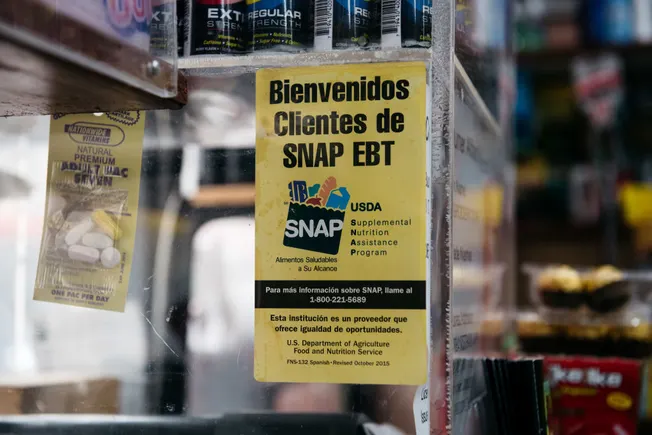
After several federal policy changes last summer tightened eligibility requirements for the Supplemental Nutrition Assistance Program (SNAP) and shifted more operational responsibility to states, the food assistance program has experienced a sharp reduction in enrollment numbers.
In April—the latest month for which federal data is available—overall SNAP participation fell nearly 13% year over year, to just over 37 million people, according to the U.S. Department of Agriculture (USDA). Every state except one posted an annual decline in the number of people enrolled that month, and half of the states saw participation dip by 10% or more, preliminary USDA data shows.
However, the enrollment decline has not been uniform across the country. Some states have seen significant impacts, while others have faced minimal disruption.
Arizona recorded the largest decrease, with its SNAP participant count dropping by more than half. Several Southeastern states also posted steep declines: Florida and Louisiana each saw year-over-year drops exceeding 20%, while Georgia recorded a nearly 28% decline.
California—the state with the highest number of SNAP participants—saw participation fall 6.6% in April compared with a year earlier. New Mexico, which has the highest percentage of its population receiving SNAP benefits, saw participation dip almost 4%.
Year-over-year SNAP participation changes in April varied widely by state
Half of U.S. states saw SNAP participation slide 10% or more
In contrast, Alaska—the only state that did not record a decline—saw SNAP enrollment increase just over 8%. In Guam, a U.S. territory, participation rose by nearly 7%, to 39,546 people. Guam and the Virgin Islands are the only two U.S. territories whose residents can participate in SNAP.
The enrollment drop follows the enactment of the “One Big Beautiful Bill Act,” signed into law by President Donald Trump last summer, which introduced stricter work requirements for SNAP participants. The Congressional Budget Office projects these new requirements will reduce SNAP participation by roughly 2.4 million people in an average month over the next decade.
The new work requirements “create a significant paperwork burden, as affected individuals must submit monthly documentation to the state, which must then review and process that information,” said Sara Bleich, professor of public health policy at the Harvard Chan School of Public Health, in a Q&A published last November by the Harvard Kennedy School, the university’s graduate school of public policy.
Under the law, states also face potentially higher program costs. States with high SNAP payment error rates must now cover a percentage of benefit costs for their residents starting next October. Additionally, states must shoulder a higher percentage of administrative costs beginning in fiscal year 2027.
Arizona’s Department of Economic Security said in a June blog post that the new federal requirements forced the state to “rapidly overhaul our process to administer” SNAP. Efforts included increasing documentation requirements, adding continuous income monitoring to cross-check SNAP caseload data against employer-reported information, introducing a review process to address application errors, and making technological investments.
The department noted that the state has made progress clearing backlogs and that “SNAP caseloads are finally stabilizing.” In May, 451,762 Arizonans received SNAP benefits—up 16,566 individuals since April, according to state figures.