
Will Congress Define Ultraprocessed Foods as FDA Delays?
The FDA's delay in defining ultraprocessed foods has opened the door for Congress and states to act, but conflicting definitions and industry opposition highlight the challenges ahead.
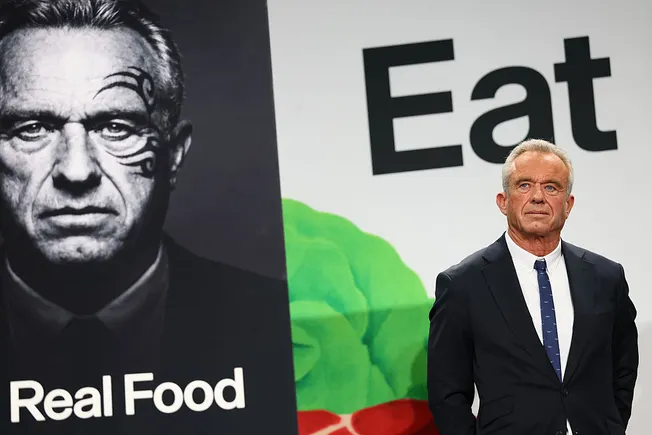
The U.S. Food and Drug Administration (FDA) has postponed its much-anticipated definition of ultraprocessed foods, leaving a regulatory vacuum that Congress may now fill. The agency was expected to release its definition on Monday but withdrew at the last minute, stating that details would be announced at a later date. Instead, the FDA only proposed measures to increase transparency in the Generally Recognized As Safe (GRAS) ingredient approval process.
Agency officials have submitted a proposed definition to the White House as a white paper for review. However, a white paper is not legally binding and should be interpreted as guidance rather than an enforceable rule.
There is no global standard for ultraprocessed foods, which typically refer to items made through industrial processing or containing additives—such as artificial flavors or added sugars—to make the product more appetizing.
Health and Human Services (HHS) Secretary Robert F. Kennedy Jr. has sought to formalize a definition of ultraprocessed foods, a move that could lay the groundwork for further regulation on chips, sodas, and other packaged offerings. Last month, the FDA’s acting head of food admitted that creating a definition has proved “quite challenging,” though added it remains a “priority” for the agency.
In a statement, HHS encouraged Congress to build on its efforts around ultraprocessed foods and ingredients transparency “through legislation that further strengthens the safety of the American food supply.”
In the absence of federal guidance, Congress has moved on two food label bills that could set up clashing definitions of ultraprocessed foods.
A proposal from Sen. Bernie Sanders that would require warning labels for ultraprocessed foods advanced through committee in July. That proposal defined the term as a food or beverage containing one or more industrial ingredients, with exemptions for items considered “healthy” under FDA rules.
Another proposal from Sens. Richard Blumenthal and Cory Booker would require the FDA to come up with its own definition of terms including “ultraprocessed,” “not ultraprocessed,” and “natural.” Ultraprocessed foods cannot include “healthy” items under FDA rules, and dietary supplements, while “natural,” at a minimum cannot include any artificial ingredient, including colors.
States have also charged ahead with creating their own interpretations. California enacted the first legal definition of ultraprocessed foods in the U.S. last year. Under the law, the state defines ultraprocessed foods as items containing at least one additive, or high amounts of saturated fat, sodium, or added sugar.
The food industry has vigorously fought against a definition of ultraprocessed foods. The Consumer Brands Association, which represents some of the largest manufacturers in the country, said in a statement this week that any definition “lacks a sound scientific foundation” and will create consumer confusion and higher grocery costs.
“America’s packaged food supply is safe and has been a staple in American households for decades,” Rhonda Bentz, executive vice president of public affairs, said in a statement. “That’s something that a guidance document, crafted without credible experts, cannot change.”
Many of the proposed definitions in the U.S. focus on the presence of additives or the degree of industrial processing. However, in both cases, items like yogurt, tofu, and whole grain bread would be included in many of those definitions.
Instead, some in the food science community are pushing for regulators to focus on nutritional quality. The Institute of Food Technologists (IFT) said ingredients should be evaluated in context of their function and nutrition content.
“Processing plays a vital role in ensuring food safety, extending shelf life, enhancing nutrient availability, improving taste and texture, increasing accessibility, and supporting food security,” IFT Vice President of Science and Policy Anna Rosales said in a statement last year. “The focus should be on nutritional imbalances rather than processing alone.”