
Whole Foods Market Withdraws from Chicago's Englewood Community: Lessons for Food Retailers
Whole Foods Market closed in early 2022 after operating for six years in Chicago's Englewood community, sparking strong community backlash. This article reviews its entry background, operational controversies, and exit impact, providing references for food retailers on site suitability, community integration, and exit communication.
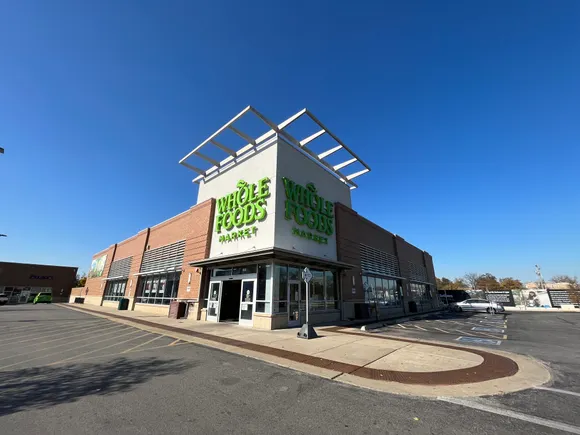
For residents of the Englewood neighborhood on Chicago's South Side, Whole Foods Market means far more than just a grocery store.
Six years ago, this specialty food retailer opened with great fanfare as the anchor tenant of the Englewood Square retail development project. It was seen as a potential game-changer for one of the city's most economically challenged communities. At the groundbreaking ceremony, Walter Robb, then co-CEO of Whole Foods, said the store would be "one of the most meaningful things we do as a company."
By mid-2017, among Whole Foods' more than 460 stores nationwide, the Englewood location was one of four situated in impoverished neighborhoods.
However, several years later, the store closed at the end of 2022, sparking strong backlash from city officials and community leaders. Whole Foods remained silent about the closure, which was announced alongside plans to close five other stores.
A Whole Foods spokesperson told Bloomberg at the time of the announcement: "As we continue to position Whole Foods Market for long-term success, we regularly evaluate the performance and growth potential of each of our stores, and we have made the difficult decision to close six stores." When asked for specific reasons regarding the Englewood closure, a Whole Foods spokesperson declined to provide further information to Grocery Dive.
According to sources interviewed by Grocery Dive, Whole Foods' presence in Englewood—and its eventual closure—deeply affected local residents who worked and shopped there. Sources said that after the store closed, questions about why Whole Foods left remain unanswered.
For some, this closure evokes the phenomenon of large supermarket chains pulling out of low-income communities of color after several years—or even just months. Within the broader issue of addressing inequality in access to healthy food, here are lessons food retailers can learn from Whole Foods' operation and closure of its Englewood store.
Whole Foods confirmed to Grocery Dive that it worked "closely" with the property owner to find the next tenant for the location. According to an agreement between the developer and the city, the location must be operated by a full-service grocery store until the end of 2027. Last week, local media reported that a Save A Lot sign appeared at the vacant storefront, further angering residents who had opposed the store becoming a Save A Lot.
Examining Fit
The Englewood store, located at 832 W. 63rd St., deviated from Whole Foods' typical pattern of locating in affluent areas. Chicago Mayor Lori Lightfoot once called the store a "fascinating experiment" from former Mayor Rahm Emanuel's tenure, saying Emanuel championed a supermarket that was too expensive for the community and lacked sufficient patronage from residents.
Jeanette Taylor, the Chicago 20th Ward alderperson representing the surrounding area, said the store did generate "a lot of attention" when it first opened. However, over the years, the chain faced questions about whether it was a good fit for the area.
Whole Foods' attempt to open a store in an impoverished area parallels retailers' efforts to embrace experimental initiatives, such as Target trying different store formats or Fareway piloting small-format stores in rural Iowa. However, experiments can backfire, especially when they affect a community that already lacks food access.

For communities with few or no grocery options, determining whether a supermarket is a good fit and tailoring the store to local residents' needs and shopping habits can help avoid future negative impacts and lay the groundwork for success.
According to a survey of more than 300 Englewood residents conducted this summer by Teamwork Englewood, a community nonprofit, price and product selection were the two biggest issues with Whole Foods. Brianna Hobbs, the organization's health and wellness program manager, noted that the store's limited product variety hindered one-stop shopping—likely related to its relatively small size of only 18,000 square feet. According to Whole Foods' website, it typically seeks retail spaces of 25,000 to 50,000 square feet.
Taylor also heard complaints about high prices. She believes that instead of bringing in a national chain, local businesses might better align with residents' needs: "I wish we had a grocer from Chicago. I wish we grew our own grocer. I'm tired of the big-box stores... I want to see us grow a crop of grocers that look like us and reflect our community."
Supporting the Community
Sources noted that Whole Foods did show a commitment to the community in its early days in Englewood. The store hosted social gatherings and offered an in-store meeting room for people to hold events, such as the "5 After 5" wine tasting—starting at 5 p.m., featuring five wines at $5 per glass including tax.
"It was almost like a big community party... The community loved it, people really came out," Hobbs said.
Hobbs also emphasized that the store showcased Black-owned businesses and local products. According to the Chicago Tribune, to make items more affordable, Whole Foods initially priced about 30 items—such as milk, bread, eggs, and some produce—lower at the Englewood store than at its other Chicago locations.
The chain also hired a community liaison for the store—a position posted a year before the store opened. Researchers noted that such roles can help strengthen the connection between a business and the local community it serves.
Whole Foods also supported the Englewood Community Kitchens at the Primo Center, creating a space for the greater Englewood community to participate in cooking demonstrations, classes, and hold meetings.
Taylor said support was a two-way street. She noted that if Whole Foods was under financial pressure with the store, the company should have sought help and input from the community.
"(You) should communicate with the community, 'Hey, we need more sales. We're not even making enough to pay the employees here,'" Taylor shared as a hypothetical conversation starter. "The reason things don't work is because we don't talk to each other, we don't work together."
Dealing with the Impact of Departure
The closure of Whole Foods did not stop Englewood residents from buying groceries. At roughly the same distance from the original store, there is an Aldi and a Go Green Community Fresh Market. But the closure still affected food access for residents in the area.
"(Residents) would rather not have to drive outside their community to get healthy food, but they're doing what they have to do, which is really disappointing," Hobbs said regarding the Whole Foods closure.
Whole Foods faced widespread condemnation from residents and state and local politicians—including the current mayor—for leaving Englewood, and its PR strategy exacerbated some of the criticism.

The timing of two announcements also intensified the sting of the closure. Just days before Amazon announced plans to close the Englewood store (as one of six Whole Foods closures), Whole Foods had prominently promoted its new store in a new high-rise on the border of Chicago's affluent River North and Gold Coast neighborhoods, saying the design was "inspired by the historic homes, storefronts, and upscale restaurants of the surrounding neighborhood, featuring elements such as elegant arches, reclaimed handmade tiles, and glazed brick."
At the same time, pulling out of a predominantly Black community while announcing a store in an affluent, predominantly white neighborhood provided an unflattering narrative for the company, which the media covered extensively. As one headline summarized: "As Whole Foods prepares to leave Englewood, company plans new store in River North."

Hobbs said Teamwork Englewood's survey showed that one of residents' top expectations for the next supermarket is prioritizing local hiring.
When Whole Foods opened its Englewood store, it hired 40 of its approximately 100 employees from the local area. A company spokesperson said all eligible employees were offered the opportunity to transfer to other Whole Foods locations. Employees who did not accept transfers received severance packages.
Whole Foods' stores in Hyde Park and Evergreen Park, near the South Side, are approximately 16 and 22 minutes' drive from the now-closed store, respectively.
Speculation continues about why the supermarket left Englewood.
Hobbs said Stephanie Coleman, the alderperson for the area where Whole Foods was located, held a community town hall in the fall about the impending closure, but the chain did not attend, leaving questions unanswered. According to Block Club Chicago, at that meeting, neighbors and community leaders emphasized the need for accountability from supermarket operators and expressed a desire for a local business to occupy the space. Coleman did not respond to Grocery Dive's interview request.
Similar transparency issues have plagued other supermarkets, such as when Aldi abruptly left Auburn Gresham, another South Side community, last June.
Yellow Banana, a Black-owned company operating dozens of grocery stores under the Save A Lot brand, took over Whole Foods' lease in Englewood in December and plans to open a supermarket at the site. Michael Nance, co-owner of Yellow Banana, told Block Club Chicago that the company plans to hire South Side merchants to operate the store's hot food bar, bakery, coffee bar, and juice bar, and said Yellow Banana will "engage with the community" to meet local needs. It is unclear when the store will open.
Hobbs said she would tell anyone moving into the space: "Come into the community humbly, eager to learn, show us your commitment, because residents really want someone who is dedicated to putting down roots, uplifting and supporting us."
Hobbs added: "We don't need someone to come for a few years and then leave, and then we have to start all over again."