
U.S. Grocers Weigh the Pros and Cons of Scan-and-Go Technology
Scan-and-go technology has sparked a polarized response in the U.S. grocery retail industry: Wegmans halted the service due to shrinkage issues, while retailers like Meijer and Walmart continue to implement it. This article analyzes the technology's loss prevention challenges, consumer trust issues, and future direction.
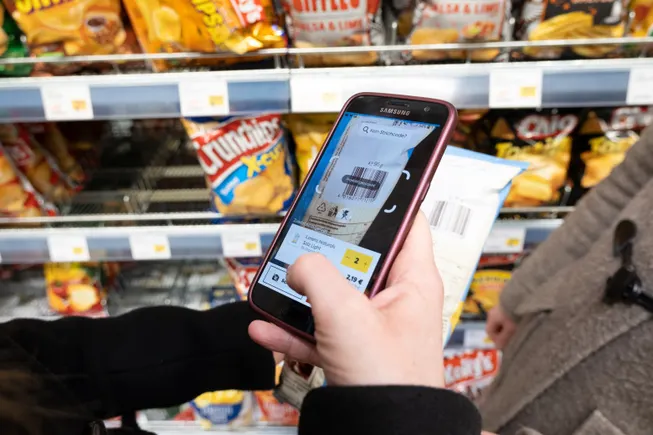
Last September, Wegmans, an East Coast grocery chain in the U.S., announced it would no longer allow customers to use smartphones to scan and pay for items in stores, sparking an uproar on social media as many customers expressed disappointment over losing this convenience. The company attributed this sudden shift to unspecified "losses" caused by the scan-and-pay service. When Wegmans launched the service in 2019, it had promoted it as a way to empower people to "shop on their own terms." The company hinted it might restore the service if it could "make improvements that satisfy customers and business needs," but provided no further details.
Although Wegmans found it too costly to let customers shop quickly with self-checkout technology, many other grocers, including Meijer, Hy-Vee, Giant Food, Kowalski's Markets, and Walmart, still offer scan-and-go shopping as an option for customers who want to bypass traditional checkout lanes. Additionally, according to industry officials, other U.S. food retailers are in talks with suppliers to explore adopting the technology.
Randy Crimmins, chief strategy officer at Stor.ai, a company providing digital engagement technology for regional retailers, said one reason for this interest is that many shoppers have become accustomed to using their phones to buy groceries online and search for product information, so using phones for in-store purchases is a natural next step.

Crimmins added that Stor.ai also views convenient solutions like scan-and-go shopping as a way for smaller retailers to stand out against larger competitors. "The consumer market today is very fragmented, and you have to make sure you're offering every possible service to attract shoppers, not only to expand your customer base but also to retain existing customers, because everyone is eating into your share," he said.
Crimmins's company, previously named Relationshop, acquired Israeli e-commerce company Stor.ai a few weeks ago and adopted its name. The company has been developing a scan-and-go system over the past year and is currently testing the technology with an unidentified retailer. Crimmins said Stor.ai plans to deploy the system in real-world settings later this year and believes scan-and-go technology can reach more shoppers by offering features such as personalized nutrition information.
Nico Müller, chief commercial officer at Austrian scan-and-go technology provider Shopreme, said his company has also seen interest from U.S. retailers in the service. Müller said the company has held talks with a "large international retailer" with a significant U.S. presence about rolling out its system. Shopreme has offered scan-and-go systems since 2016, and its technology currently runs in about 1,000 stores across Europe. Its clients include German grocery chain Rewe, which began using it last year, and Penny, which adopted it in 2021.
"There are other more interesting parts of the experience worth focusing on, but loss prevention is certainly a big topic, and it's always the first question asked when talking to retailers about mobile scan-and-go."

Nico Müller
Chief Commercial Officer at Shopreme
Mining shopping patterns to curb shrinkage
While promoting the benefits of scan-and-go shopping to retailers, Shopreme and Stor.ai are also closely monitoring the technology's drawbacks. Müller said that although the inherent risk of scan-and-go is that shoppers may unintentionally or deliberately fail to scan items, Shopreme's system is designed to reduce shrinkage risk by analyzing shopping patterns to identify individuals who should be flagged for audit. Factors the system considers include whether a shopper has used scan-and-go at a particular retailer, their purchase history, and their current items, with the goal of minimizing random checks to avoid unnecessarily disturbing consumers.
Müller said Shopreme's experience working with European retailers proves that retailers can find a balance between deterring theft and offering the convenience of bypassing checkout. "If they saw huge losses, they wouldn't do it," he said.
Crimmins said Stor.ai is also focused on developing methods to limit audits to those most likely to pose a theft risk, avoiding inconvenience for scan-and-go shoppers. The company's loss prevention approach centers on retailers initially offering the service only to regular customers, then gradually expanding access based on the retailer's risk tolerance. This approach is similar to how Walmart handles its scan-and-go program. Walmart requires shoppers to sign up for its Walmart+ membership plan ($12.95 per month or $98 per year) to use the service.
"Most of the feedback we get from testing and from other retailers with scan-and-go apps is that the benefits of scan-and-go outweigh the risks or the actual amount lost to fraud," Crimmins said.
Instacart, which offers scan-and-go as part of its Connected Stores technology suite, is also focused on developing strategies to minimize shrinkage without undermining the speed and convenience of scan-and-go, said David McIntosh, vice president overseeing the project. Connected Stores also includes Instacart's next-generation Caper smart carts, electronic shelf labels called Carrot Tags, out-of-stock alert technology, shopping list features, and FoodStorm, which allows consumers to order deli items through in-store kiosks.
McIntosh said in a September interview that Instacart's scan-and-go technology, called Scan & Pay, includes software that identifies shoppers who should be flagged for audit, based on factors such as shopping habits, scanning speed, and whether they are regular customers of the retailer. Instacart's scan-and-go approach also involves equipping store staff with tablets to monitor customer behavior in stores. McIntosh spoke at the time Instacart unveiled its Connected Stores initiative.
Trust is the core issue
While checking some customers' orders may help prevent shoppers from leaving with unpaid items, making shoppers scan items again could be seen as offensive. Neil Stern, CEO of West Coast grocery chain Good Food Holdings, said his company was the first to sign on to bring Instacart's Connected Stores program to supermarkets. Stern said Good Food Holdings has not yet committed to adding scan-and-go to stores piloting other technologies in the suite. "We don't have scan-and-go, and I have no immediate plans to try it. That doesn't mean I'm negative about it; it's just not in my 2023 IT plan," he said.
Stern said his caution about scan-and-go stems partly from the audit component inherent in the concept. "It undermines the customer experience you're trying to provide. Either it's a waste of time, or it's like saying 'I don't trust you,' and neither is what you want to convey when using the product," he said.

Gary Hawkins, founder and CEO of the Center for Advancing Retail & Technology, said it remains unclear whether consumer demand for scan-and-go is sufficient to justify its cost. "It was developed because technology made it possible, not because of huge shopper demand," he said. Hawkins added that he views scan-and-go technology as a stepping stone toward frictionless checkout solutions that use AI-driven cameras to automatically identify and record items customers take from shelves. Currently, only Amazon has deployed this technology, known as computer vision, in large supermarkets, but Hawkins expects more retailers to adopt it in the future as they seek to enhance convenience without bearing the risk of customers not paying. "I think the whole space will eventually move there because it transforms the shopping experience and brings multiple benefits to retailers," he said.
However, Müller said he doesn't think computer vision will replace scan-and-go anytime soon, given the high cost and complexity of installing cameras and other equipment. "For retailers, equipping a store with a computer vision-based checkout system is a huge investment. We believe that mobile scan-and-go, if done well, is an excellent technology today, and I think it will last for quite a while," he said.
Jeff Wells contributed reporting to this article.