
Kroger and Albertsons Merger: Will It Pass Regulatory Scrutiny?
Kroger plans to acquire Albertsons for $24.6 billion, but the deal must pass strict review by the U.S. Federal Trade Commission (FTC). Experts note that the review will focus on whether the transaction truly benefits consumers, whether it suppresses market competition, and whether the proposed efficiency gains can be realized. The definition of market competition, the inclusion of rivals like Walmart, the feasibility of divestiture plans, and FTC Chair Lina Khan's skepticism toward large mergers may all influence the outcome of the deal.
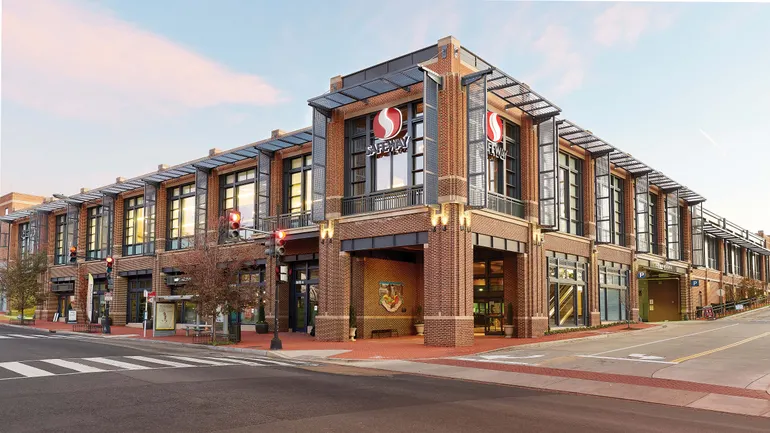
Before Kroger can complete its $24.6 billion acquisition of Albertsons, it must successfully navigate an intensive regulatory review process for major mergers, which experts say is being closely scrutinized by regulators.
The review, likely led by the U.S. Federal Trade Commission (FTC), will examine whether the deal truly delivers favorable prices for consumers as executives have promised, and whether it will stifle competition in markets across the country. The agency will also assess whether Kroger's proposed efficiency improvements can be realized.
Large supermarket mergers, such as Albertsons' 2015 acquisition of Safeway and the merger of Ahold and Delhaize a year later, passed regulatory review—in both cases, the companies agreed to divest a significant number of stores in overlapping markets. However, given the size of both companies and the numerous markets where they compete, the Kroger-Albertsons merger is unprecedented for the industry.
Experts ultimately say the key to this case may lie in how regulators define the competitive market, and whether Kroger and Albertsons can appease the FTC through their divestiture plan and other store sales—an agency that is now scrutinizing store divestitures more strictly.
"The Biden administration, especially the FTC under Biden, has been very aggressive and very eager to show that it is addressing consumer concerns," said Jim Burns, an antitrust attorney at Williams Mullen, a law firm based in Richmond, Virginia.

Defining competition
Kroger and Albertsons are the first and second largest supermarket chains in the U.S., respectively. If the FTC considers only this competitive arena, the merger would likely be challenged because it would effectively mean the two companies monopolize the market, said Daniel Rubinfeld, a law professor at New York University and former Deputy Assistant Attorney General for Antitrust at the U.S. Department of Justice.
But he noted that the types of stores selling groceries today are not limited to supermarkets. Walmart is the leading grocery retailer in the U.S., with nearly 21% of sales, according to Numerator; warehouse retailer Costco ranks third with a 7% share. Amazon is the leading online grocer, while discounters such as Aldi, Dollar General, and Grocery Outlet have also gained considerable strength in recent years.
"If this were 20 years ago when I was in government, I would expect the FTC to try to block this deal," Rubinfeld said.
Morgan Stanley equity analyst Simeon Gutman noted in a recent client report that a broader consideration of the food retail market will be key—especially given Walmart, which according to Numerator data holds a larger market share than Kroger and Albertsons combined.
"Including Walmart in the competitive consideration could be a key swing factor," Gutman wrote, as reported byBloomberg。
Kroger and Albertsons together hold a 15.6% share of the grocery market, trailing Walmart
A relevant case in recent history is the merger of Whole Foods Market with fellow specialty grocer Wild Oats, proposed in 2007. The FTCinitially ruledthat the deal would eliminate substantial competition among natural and organic grocers, violating federal antitrust laws.
Burns said that was a narrow definition of the competitive arena. The FTC ultimatelyapproved the dealin 2009, on the condition that Whole Foods agreed to sell 32 stores and related assets.
"In the end, the resolution was: organic food is not a separate market; anywhere you can buy food counts," Burns said.
Burns believes this broad perspective will apply to the Kroger-Albertsons deal: "I think ultimately the better outcome will be to include Walmart and those other stores in the same market as these companies."
However, viewing Walmart and Amazon as competitors may not be the decisive factor for regulators approving the Kroger-Albertsons merger, said Christine Bartholomew, a law professor at the University at Buffalo School of Law and an expert on corporate monopolies.
"Regulators should not approve a merger simply because two competitors want to compete more effectively with dominant big-box or online retailers," she wrote in an email comment. "Inflation is also not a sufficient reason to lose one of the top three market players. If regulators view these reasons as sufficient grounds to approve the merger, the long-term implications would be significant."
Stricter scrutiny of divestitures
Kroger and Albertsons have hundreds of stores located in close proximity to each other. According to Credintell, a consulting firm that measures retailers' financial health, as of mid-June, 48% of Albertsons' stores were within three miles of a Kroger store. The markets with the most overlap include Phoenix, Dallas-Fort Worth, Chicago, and the Seattle area, as well as numerous markets in Southern California.
This means the two companies may have to divest a significant number of stores to appease regulators. Aware of this, Kroger and Albertsons said last week they are willing to divest these stores by spinning off 100 to 375 stores into a separate company called SpinCo, which would be controlled by Albertsons shareholders.
"Any stores we need to divest, we intend to fully bring to market, and we will treat SpinCo as an option in that plan," Kroger CFO Gary Millerchip said on a call with analysts last week.
This preemptive move could give the companies a strong opening in negotiations with the FTC by offering a pre-arranged store divestiture solution, according to Reuters and Bloomberg. The move would also allow the grocers to quickly divest stores if they cannot find buyers—a concern given that Albertsons' stores are unionized, Reuters noted, citing sources familiar with the matter.
But the initial proposal may be a lowball offer.
"We think this number could easily rise," Creditntell wrote in its analysis of the merger plan.
Rubinfeld said preemptive divestiture proposals are becoming more popular among companies seeking mergers. But he noted that regulators will consider the health of the spun-off company and the likelihood that any store buyer can compete effectively. He referenced Kroger's argument that it needs to scale up to improve its business.
"If that's really where they get their efficiencies, my question is, how will this new company operate? Because scale does matter in this industry," he said.
FTC Chair Lina Khan has expressed skepticism about the benefits of large mergers to consumers. She has also criticized the agency's remedies in the Albertsons-Safeway acquisition, which involved selling nearly 150 stores to Haggen, a small Northwest grocery chain that had only 18 stores at the time. Haggen went bankrupt within months and sold most of its stores back to Albertsons.
"Even a casual observer could predict that Haggen would face enormous difficulties in expanding its store count nearly tenfold in a very short period," Khan wrote in a 2017 article published in the Harvard Law & Policy Review.
Burns said that case is one reason the FTC now scrutinizes divestiture proposals more strictly.
"It's a good example of why regulators started saying, 'We won't be satisfied if divestiture remedies aren't given to someone who can actually replace the competition,'" he noted.
The FTC declined to comment.
Even if the FTC decides to sue to block the merger, the deal could still go through if the presiding judge sides with the companies. Last month, that happened when a federal judge sided with UnitedHealthcare in its acquisition of Change Healthcare after the DOJ filed a lawsuit.
"The judge specifically analyzed whether the proposed divestitures by both parties were sufficient to maintain competition and found they were—which was largely why the government lost," Burns said.
The merger agreement between Kroger and Albertsons allows Kroger to walk away and pay a $600 million breakup fee if the number of store divestitures exceeds 650. This indicates the bottom line of the deal. However, Creditntell noted in its report that Albertsons' top five shareholders, including Cerberus Capital Management, are eager to exit their investment in the company, whose stock has underperformed since it went public in 2020.
Jose Tamez, managing partner at executive search firm Austin-Michael, who has worked with both grocers, said he also believes the companies are eager to complete the merger.
"I think both Kroger and Cerberus feel they have to and are willing to do whatever it takes to ensure this deal gets done," he said.
Catherine Douglas Moran contributed to this article.
Correction: An earlier version of this article incorrectly stated the headquarters location of the law firm Williams Mullen.