
Grocery Retailers Chase E-commerce Personalization Promises: From Loyalty Programs to AI-Driven Shopping Experiences
Amid the impact of e-commerce, grocery retailers are strengthening customer relationships through personalization strategies. Giant Food draws on hospitality industry experience, using loyalty programs to offer customized deals; pure-play e-commerce companies like Misfits Market and Farmstead rely on machine learning to create tailored shopping experiences. Industry surveys show that only 9% of consumers use local grocery e-commerce services to purchase center-store items, while nearly 70% turn to platforms like Amazon and Walmart. Experts emphasize that personalization must balance technology with a human touch to address competition and rising consumer price transparency.
Editor's note: This is the third article in a four-part series exploring the opportunities and challenges facing retailers in the center store. On Thursday, Grocery Dive will explore several ways retailers are updating their center store layouts. The full series has been published.here。
Grocery stores and hotels may seem to have little in common at first glance, but in Ryan Draude's view, the similarities are clear. Just as hotels reward frequent guests and recognize them when they walk in, Draude — Giant Food's head of loyalty and digital business — believes that one of the most effective ways for food retailers to connect with customers is to turn grocery shopping into a personalized experience built around their needs and preferences.
To achieve this, Draude, at the Ahold Delhaize-owned grocer, is drawing inspiration from his past experience — he previously oversaw Choice Hotels International's frequent guest program. A key takeaway from his time in that role: customers want to feel that businesses value them and are committed to helping them get what they need; if they find a better option, they will not hesitate to leave, Draude said.
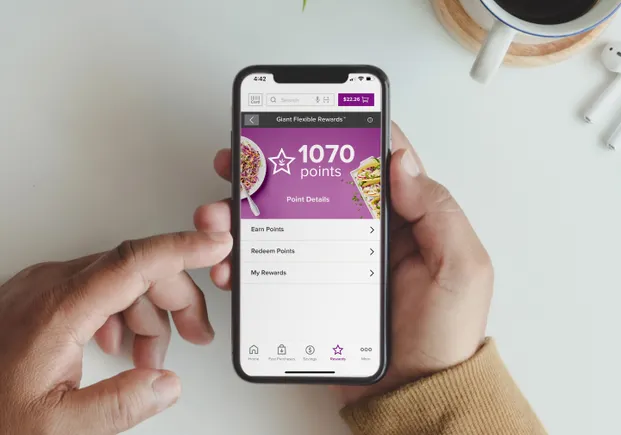
Currently, Draude is focused on using Giant Food's e-commerce program, "Giant Flexible Rewards," to offer customers personalized pricing, product recommendations, and rewards that also tie into the in-store experience. He revealed that the company may add technology in stores in the future that allows customers to signal their presence via smartphone and immediately receive location-based promotions.
"My biggest fear is, if a grocery store opens within half a mile of one of my members' homes and Giant isn't there, what have we done to differentiate ourselves so they'll continue to drive that extra half mile to our store?" Draude said.

Personalizing the center store
Giant Food's focus on personalized shopping experiences comes as grocers seek strategies to maintain the momentum of connections built with consumers during the pandemic. A recent survey of 1,000 consumers by Grocery Dive and market research firm Inmar Intelligencepollfound that the grocery industry faces obstacles in translating in-store customer relationships to online ones — especially when it comes to center store sales, which are critical to grocers' margins.
In the survey, three-quarters of participants said the center store is "absolutely" or "mostly" relevant to their shopping habits. But only 9% of respondents said they use their local grocer's e-commerce services to buy items from that department, while nearly 70% said they turn to Amazon, Walmart, Sam's Club, or Costco for their desired center store staples.
Experts say that customization strategies built on loyalty programs like the one Giant Food operates could provide at least part of the answer for grocers looking to retain customers drawn to e-commerce. Grocers now have access to a variety of personalization tools, including customized coupons and promotions, shoppable recipes based on customers' nutritional preferences, and discounts tied to consumption. But sources note that retailers need to carefully test options and prioritize those that make it easy for shoppers to find preferred products while also discovering new items, in order to navigate the potentially overwhelming center store assortment.
Offering shoppers a selection of center store items they might be interested in is crucial for maintaining their online loyalty and alleviating the "click and scroll fatigue" shoppers experience when buying online, said Spencer Price, co-founder and CEO of Halla, a startup focused on grocery personalization technology.
"In a way, exclusion is one of the most important parts of personalization because you don't want to be overwhelmed by a ton of products you'd never try or buy," Price said.

Using analytics to offer smart substitutions when items are out of stock is also crucial for building consumer relationships, said Sean Turner, co-founder and CTO of Swiftly, a startup focused on digital loyalty technology. Earlier this year, Walmart launched AI-poweredonline shopping substitutes, which increased customer acceptance of these items to over 95%.
"In the past, personalization was just about 'how do I offer shoppers products they're interested in at a good price?'" But that has changed as retailers seek deeper relationships with customers, Turner said. He said grocers now face a tougher challenge: convincing people they understand their needs and are ready to meet them — without making them feel like just another customer.
Another factor driving grocers' growing interest in developing personalized customer relationships is that shoppers now have unprecedented ability to track prices, putting pressure on retailers to closely monitor competitors to ensure their customization strategies remain relevant, experts said.
"Whatever you do in response — whether it's price adjustments, assortment changes, or new promotion cadence or methods — you need to track competitors in a more granular way because shoppers can now ultimately do that," said Ben Reich, founder and CEO of Datasembly, a California-based company that uses web scraping to gather e-commerce site information for clients including grocers.
Building a personalized grocery store for every customer
Although brick-and-mortar grocers have added shortcuts to help shoppers find relevant products in the center store and other departments, they are just beginning to scratch the surface of truly personalized shopping experiences, according to online grocers that specialize in this approach.
Without established brands and physical stores to build awareness, e-commerce grocers are focusing on offering new types of customized shopping platforms based on advanced technologies like machine learning.
"Based on what I know about you, based on what I know you'll buy and won't buy, I can build a personalized grocery store for every customer," said Abhi Ramesh, founder and CEO of e-commerce grocer Misfits Market. "That power exists in the digital world and can never be achieved in the physical world."
Ramesh's company started three years ago selling cosmetically imperfect produce and has since raised hundreds of millions of dollars to fuel its ambition of becominga full-service online grocer. Every customer who opens the Misfits Market app sees a personalized food selection determined by the company's in-house machine learning technology, and Ramesh wants to take that personalization to an even higher level.
"You're taking the time a customer is willing to spend on your website and maximizing the relevance of the products shown to that customer, thereby maximizing the basket they might build with you."

Pradeep Elankumaran
Co-founder and CEO of Farmstead
Ramesh said the company's goal is to show customers only items they might be interested in and remove all products they are unlikely to buy. In addition to offering a shopping experience that reduces "mental fatigue," this high level of personalization also helps prevent food waste, allowing Misfits Market to precisely determine how much inventory to keep and when to ship items to facilities, he said.
"The technology and software available today were designed for the old model — sourcing from distributors, shipping the same standard products into warehouses, and sending them out to grocery stores," Ramesh said. "There's almost no machine learning, and very few predictive algorithms built on it."
Given that a single online shopping trip might take only a few minutes, California-based e-commerce grocer Farmstead places a high priority on showing customers only products they are likely to be interested in, said co-founder and CEO Pradeep Elankumaran.
"You're taking the time a customer is willing to spend on your website and maximizing the relevance of the products shown to that customer, thereby maximizing the basket they might build with you," Elankumaran said.
Farmstead also offers technology and dark store services to grocers. He said the company achieves this in part by encouraging customers to subscribe to the essentials they regularly buy, freeing up time spent on the website or app to discover new items.
"You can't achieve high baskets just by repeatedly showing people the same things," Elankumaran said. "It's important that you show people products that truly resonate, while also presenting things they might not see, but in a more relevant way, to capture that 'thrill of the hunt' — which is a very real feeling."
High touch doesn't have to mean high tech
Personalization strategies don't have to be high-tech, noted Gary Hawkins, CEO of the Center for Advancing Retail & Technology. For example, retailers could invite their best customers to bring knives to the meat department for sharpening, Hawkins said. Another option is offering registered loyalty program members an in-store tour led by a manager, he said.
"I've worked with retailers around the world... and I've found that no matter what country I'm in, no matter what culture, we as humans all like to be recognized," Hawkins said.

Bob LaBonne Jr., president and CEO of LaBonne's Markets, a four-store supermarket chain in Connecticut, said one of the most effective ways to connect with customers is to offer them a curated gift — accompanied by a personalized letter from the store manager — as a tangible expression of gratitude. LaBonne's runs a points-based loyalty program that automatically sends coupons when customers reach spending thresholds, but found that giving people things they might not buy for themselves is especially effective, LaBonne said.
LaBonne said he has found that distributing holiday gift baskets (filled with items like nuts, snacks, olive oil, and balsamic vinegar) to particularly loyal shoppers goes a long way in making them feel valued. "Customers feel like we gave them a trip to Hawaii," he said.