
Labor shortages force grocers to rethink employee benefits
U.S. grocers are facing severe labor shortage challenges, from salad bar closures to a surge in hiring bonuses, as the industry explores long-term strategies such as flexible scheduling and career development to attract and retain employees.
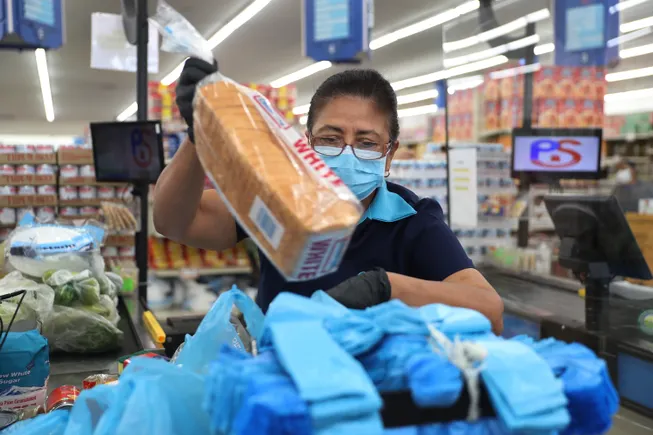
Salad bars across the country are reopening, but at one of Metcalfe's Market's three Wisconsin stores, the self-serve buffet remains closed. The reason is not pandemic restrictions, but the labor shortage plaguing retailers nationwide.
"I can guarantee customers want our salad bar," said Tim Metcalfe, co-owner and president of the grocery store. "They want the hot foods self-serve. Metcalfe's is not able to offer that right now."
The current labor shortage is driven by multiple factors, including childcare issues and competition from the reopening foodservice industry, which extends the hiring challenges Metcalfe's has faced for years. Metcalfe noted that fewer job applicants, coupled with increased federal and local government benefits during the pandemic, have contributed to unemployment.
Metcalfe's has been doing its best to cope. During the pandemic, the company reassigned employees from closed departments like coffee shops to high-demand areas. In recent months, the company has increased its employee care efforts, such as distributing "supermarket superhero" t-shirts and free food, and extending Employee Appreciation Week to a full month. The grocer has also doubled its referral bonus to $200 and offers signing bonuses ranging from $500 to $1,000 depending on the position.
Amanda Metcalfe, the company's director of employee development, said the care initiatives have helped improve retention rates, and signing bonuses have attracted some people. But the company is still working to offset employee losses caused by pandemic concerns, retirements, and competitors poaching workers with higher wages and bonuses.
The Metcalfes said their current priority is retaining employees in high-skilled positions such as the meat and deli departments.
"In this environment, you need to market to your employees as much as, or even more than, you market to your customers," Tim Metcalfe said.
Beyond signing bonuses
Similar to Metcalfe's, grocers nationwide are offering signing bonuses of up to $1,500—an incentive that is remarkably high for many entry-level positions.
However, experts say that in a labor market where fast-food restaurants, department stores, and other industries are offering similar temptations, simply throwing money at the problem is unlikely to make a company stand out.

This has prompted grocers to take a closer look at their unique corporate cultures and benefits. For example, PCC Community Markets, a Seattle cooperative, tries to attract people who might also be considering foodservice jobs by emphasizing its from-scratch food preparation, said Marissa Esteban, the cooperative's hiring and equity, diversity, and inclusion manager, in an email.
The chain, which currently operates 15 stores, plans to hold job fairs this summer to fill more than 100 positions, including meat cutters, cooks, bakers, and cashiers, Esteban said.
"Local grocers, restaurants, and other companies in the hospitality industry are all competing to build—and in some cases rebuild—a workforce that seemingly doesn't exist," Esteban said. "So we're often vying for service workers who are also being courted by restaurants. We're thinking creatively about our strategies and who we want to reach."
In March, PCC increased its referral bonus from $200 to $300 and currently offers a $500 bonus for new hires joining the deli or meat departments.
Françoise Carré, research director of the Center for Social Policy at the University of Massachusetts Boston, said the unemployment rate is not particularly low right now—it's currently 5.9% according to the Department of Labor—which suggests there may be deeper concerns keeping workers from taking grocery jobs.

The Washington Postrecently reportedthat many retail workers, dissatisfied with low pay and exhausted from working in stores and warehouses during the pandemic, are moving to less demanding, higher-paying positions.
Given this, Carré said retailers may be too focused on quickly hiring to meet immediate demand. "Are they building mechanisms for permanence, or are they just taking short-term measures to see if they can elicit some response?" she asked.
In addition to offering higher wages, grocers should position jobs as opportunities for growth and advancement, said Chris Tilly, a professor at the UCLA Luskin School of Public Affairs and a labor market expert.
"In the past, retail was a relatively desirable job, partly because you could actually have a retail career, not just a select few becoming supervisors and managers and rising to the top," he said.
Online grocer Misfits Market combines competitive pay with unique benefits and community-building opportunities. Its New Jersey fulfillment center offers an entry-level hourly wage of $16.50, and with extra shifts and weekend work, workers can earn up to $18.50 per hour. The center also provides paid 30-minute lunch breaks for full-time workdays, Chief Operating Officer Chris Nelson wrote in an email.
Across the United States, all Misfits workers can take home about $150 worth of groceries each month. The e-grocer also offers attendance bonuses, provides warm clothing for workers in cold storage facilities, and has several committees, including safety, employee engagement, and diversity, equity, and inclusion committees.
"Flexible shift scheduling is key, along with competitive pay and incentives," Nelson said.

SpartanNash CEO Tony Sarsam said the retailer/wholesaler is also seeking to provide employees with more flexible and predictable scheduling.
"Scheduling in this industry can be notoriously variable, and we'd prefer to make those schedules more consistent," he said in a recent interview.
Meanwhile, Hy-Vee credits new benefits implemented over the past year for a "very positive response" from applicants, spokesperson Christina Gayman wrote in an email.
Last year, the Midwest grocerintroduced a 10% employee grocery discount, extra pay for certain holidays, and part-time insurance and tuition assistance at Bellevue University for employees and their family members. The grocer also launched free Care.com memberships, PerkSpot special discounts, two weeks of paid parental leave, adoption reimbursement, and fertility reimbursement, as well as a higher 401(k) company match.
"Are they building mechanisms for permanence, or are they just taking short-term measures to see if they can elicit some response?"

Françoise Carré
Research Director, Center for Social Policy, University of Massachusetts Boston
Trying new things
Other chains are leveraging their operational scale to fund new incentives, such as tuition reimbursement and special training programs. Employees at Hannaford, a brand of Ahold Delhaize,are eligible for a 15% tuition discount at Husson University in Bangor, Maine, according to a recent press release. Last month, Walmart announced it woulddistribute smartphones to more than 740,000 employees。
In addition to adding popular incentives, grocers need to seriously examine the career development paths they offer employees and how they clearly communicate those opportunities, said Barb Renner, vice chairman of consumer products at management consulting firm Deloitte. She also advised grocers to survey employees regularly to gauge morale and gather feedback on areas where the company can improve.
"I think conducting surveys more regularly and understanding what has the most impact would be far more beneficial than a static annual survey," Renner said.
Similar to Metcalfe's, independent grocers struggle to compete with chain competitors on employee pay and incentives, said Greg Ferrara, president and CEO of the National Grocers Association. "There's a bidding war going on right now, and that brings many challenges," he said.
But smaller grocers still have the opportunity to "act faster and think more differently" when addressing issues, Ferrara noted.
"Maybe it's about flexibility on weekends, understanding childcare challenges, and thinking outside the box on how to make it a more attractive workplace," he said.
Metcalfe's is reviewing compensation studies to help set pay at or above market levels, especially for hard-to-fill positions, Tim Metcalfe said. The grocer's current benefits include a 401(k) plan for both full-time and part-time employees with a 3% company match, access to 200 online training courses, and a 20% employee discount, which the Metcalfes said has been a "huge draw" for the company in the past.
Currently, Metcalfe's is considering adding flexibility, such as shift swapping, four-day workweeks, and other benefits like pet insurance. To embrace the gig economy, the grocer plans to roll out a new HR system over the next year or so that allows employees to get paid immediately after completing their hours, Amanda Metcalfe said.

The grocer is also considering using gig workers for delivery and exploring how to reduce labor usage within its systems. "We're looking at every aspect of everything we do," Tim Metcalfe said, noting the company is looking at labor-saving technologies such as robots that clean floors at night andSally, a robot that makes salads。
Other grocers are also turning to gig workers. For example, Hy-Vee added flexible worker positions in late 2020, primarily for its online shopping service, and has since hired more than 1,000 workers for those roles serving multiple stores, according to the grocer.
Craig Boyan, president of Texas grocer H-E-B, predicted during arecent industry panel discussionthat the "labor crisis" would begin to ease in the fall. But Tim Metcalfe is not too hopeful that the labor shortage will end soon. If anything, he believes retail will fundamentally change by introducing more innovation to meet hiring needs.
"This environment we're in right now is going to last for a while, unless the economy changes... I think retaining the employees we have becomes even more important," Tim Metcalfe said.