
Grocers Help Seniors Bridge the Digital Shopping Gap
The pandemic has driven U.S. grocers to accelerate helping elderly consumers shift to online shopping. From free delivery and dedicated phone lines to accessible interface design, the industry is taking multiple measures to address the challenges and opportunities brought by the growing senior user base.
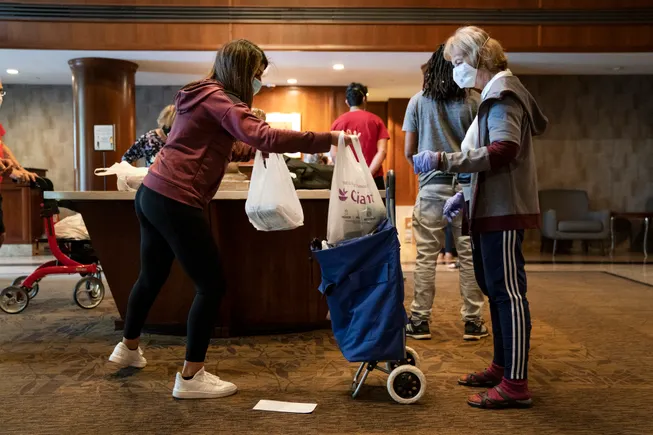
When the COVID-19 pandemic swept across the United States last spring, Community Foods Market in Oakland, California, launched free delivery services to encourage elderly customers to shop online. Brahm Ahmadi, the store's president and CEO, said, "Although we did our best to keep the store clean, disinfect daily, and limit in-store traffic, at the peak of the first wave, I was still reluctant to encourage seniors to go out." Ahmadi noted that the store is only a few blocks from two large senior apartment complexes, and a high proportion of its customers are low-income or families without cars.
With grant funding and support from GoFundMe campaigns, the grocery store listed free senior delivery as one of several initiatives to help vulnerable consumers. Ahmadi said, "Over time, some elderly customers who shop regularly have become quite proficient with the website."
Community Foods is one of many grocers focused on helping elderly customers use e-commerce to avoid COVID-19 exposure and cope with mobility challenges. Now, these businesses are investing resources to improve the online shopping experience for seniors—a goal that comes with a unique set of challenges.

A report released by Instacart earlier this month showed that from the first quarter to the fourth quarter of 2020, the number of users aged 60 and above on its service grew by 9%, the largest increase among all age groups. However, according to data from retail consulting firm Brick Meets Click, although the proportion of elderly shoppers shopping online surged in the early days of the pandemic, the latest data indicates that many senior customers are returning to physical stores.
David Bishop, a partner at Brick Meets Click, pointed out that the urgency for tech-oriented retailers to serve the elderly is increasing due to the large size of this demographic and the need to comply with accessibility standards under the Americans with Disabilities Act (ADA). Bishop said, "Consumers aged 65 and older are growing at nearly three times the rate of the rest of the population... In terms of consumer spending, those over 65 will capture a larger share of the market. If we are to win within five years, we must serve this segment better."
Designing with Accessibility at the Core
To gain deeper insight into how seniors use online shopping, Bishop recently turned to someone familiar—his mother, who is in her 70s. Last March, Bishop began observing his mother shop and filmed her placing an order for more than 20 items on Instacart. Bishop noticed that building a cart with a dozen items was quite tedious for her; she sometimes had difficulty finding what she wanted, and struggled with closing pop-ups, handling substitutions, and adding multiple quantities of the same item. At checkout, Bishop added his own phone number because his mother, though she had a phone, was reluctant to use it to receive order updates.
Since elderly consumers may face more difficulties with mobility and cognitive abilities, the learning curve for adapting to online shopping may be steeper. Bishop suggests the grocery industry invest more resources in researching how age affects technology use.
Sylvain Perrier, president and CEO of grocery e-commerce platform Mercatus Technologies, said, "The biggest challenges for elderly users when using e-commerce are, first, hand dexterity and quality of vision." Internet access and smartphone adoption can also be barriers. According to 2019 data from the Pew Research Center, among those aged 65 and older, 73% use the internet and 53% own a smartphone.
To better serve elderly customers, grocers and their technology partners may need to rethink design elements of e-commerce websites, such as adding screen readers (assistive technology that converts text and images into speech or Braille output) and increasing font sizes.
Perrier said, "Is the registration process simple? Is it easy to add items to the cart? Are quantity selections correct?" Mercatus has partnered with digital accessibility audit firm Accessible360 to ensure ADA compliance and uses tools like usertesting.com to conduct focus groups with specific demographics to gather feedback.
Perrier noted that grocers often integrate features like coupons, flyers, and recipes into e-commerce sites, but these extras can overwhelm and confuse elderly customers in the digital aisles. For seniors, "the biggest barrier is the first order." He suggests offering reorder features based on past orders or pre-packaged bundles to simplify cart building.
Perrier said, "From a web or even mobile perspective, this is not a difficult problem. But the question is, is there enough funding? Do retailers think it's worth the investment?"
In a UX case study by Megha Goyal, a product designer at GoFood (the instant food delivery service under Indonesia's Gojek), she designed an e-commerce grocery product for people aged 55-60, focusing on three key challenges: vision, motor control, and cognition. To improve button visibility, Goyal added icons to the "Cart" and "Search" buttons and replaced the hamburger menu icon with the text "MENU." The interface offers regular and large display options and adds a scrollbar on the right side for users unfamiliar with touchscreen scrolling gestures.
Goyal recommends that to improve visual accessibility, font sizes should be no smaller than 14 pixels, buttons at least 48x44 pixels, choose legible fonts, allow custom display sizes, and ensure sufficient contrast between background and text.

Dennis Acebo, vice president of customer success at grocery e-commerce platform provider Local Express, said some retail partners have requested larger product images so customers can see items clearly. "We've enlarged product images for some clients so they can understand and see the product, and click to view a larger view." Acebo also mentioned that allowing customers to add notes when adding items is particularly useful.
Online grocery shopping also provides a support channel for elderly consumers on a budget. Grocers can consider creating offers for specific age groups. For example, Local Express allows retailers to create essential sections designed for seniors and offer targeted discounts.
Senior Support Solutions
Bishop believes the key to engaging seniors in online shopping is helping them complete their first few orders, which are often the most challenging. One approach grocers and e-commerce companies are taking is setting up dedicated support hotlines.
Last spring, Texas grocer H-E-B and its on-demand delivery service Favor launched a senior support phone line that allowed customers aged 60 and older living within 8 miles of an H-E-B store to place same-day orders, with a curated list of essential groceries available by phone and online. Customers could choose items like milk, eggs, and bread from the list, and add up to 25 custom items per order.
To help seniors place orders, Favor created a YouTube video demonstrating how to order. While it's unclear how many people used the video tutorial, Bishop believes video tutorials and well-written FAQs can help demystify online shopping.
Instacart launched a senior support service for people aged 60 and older in the U.S. and Canada at the end of 2020. Through the phone service, support agents can have longer, more in-depth conversations with customers. Instacart said that shortly after the service launched, the average call duration for senior support was 20% longer than traditional customer service. The service aims to replicate the personalized, high-touch assistance seniors often receive from friends or family.

A spokesperson said that after completing one or two orders, senior customers need less support and shop 25% more frequently than younger customers. As of early April, Instacart said nearly 300,000 seniors had learned to use its service through the support center, which is growing at a rate of about 1,000 new senior users per day. The most concentrated areas include San Diego, Orange County, and West Los Angeles in California; Boca Raton, Florida; Brooklyn and Queens in New York City; and Philadelphia.
In-Store Experience Must Match Expectations
Experienced grocery shoppers may be less forgiving of e-commerce shortcomings. If product quality and delivery handoff don't meet expectations, the appeal of online shopping diminishes. When the pandemic hit, 67-year-old Jeanne Cope and her husband, being at high risk for severe COVID-19, turned to Instacart—first through Safeway, then switching to Raley's—for contactless delivery at their home in the Bay Area. Over the past year, the Copes encountered some order issues, such as a lost bag of groceries (resolved through customer service), a box of moldy grapes, and a milk carton with only a few days left before expiration. Cope said, "If I shopped myself, I would pick items with a longer shelf life."
"People over 65 will capture a larger share of consumer spending. If we are to win within five years, we must serve this segment better."

David Bishop
Partner, Brick Meets Click
On the other side of Brooklyn, 65-year-old Ellyn Toscano said she has stopped buying "perishable or delicate" items like avocados online due to ripeness and quality issues. She switched to Whole Foods, believing its produce quality is better. Toscano is a vegetarian, and produce quality is crucial to her. After adjusting her shopping habits, she found that online shopping largely met her dietary needs, sometimes inspired new recipes, and saved time that would have been spent on in-store shopping during her busy work schedule.
Bishop encourages grocers not to over-engineer solutions. "I almost think the simplest answer actually comes from seniors helping seniors." To that end, he suggests grocers could have seniors serve as brand ambassadors to promote e-commerce. "I think using peers as brand ambassadors is very important and cannot be underestimated, because they communicate and connect in very different ways, in terms of technology adoption tendencies and mutual empathy."
Local Express's Acebo said that when grocers market e-commerce services to seniors, they should also reach younger demographics, as elderly customers often receive help from friends and family. Acebo cited his 90-year-old father as an example: "My siblings take turns placing orders for him. He can browse online, but we know he would have difficulty completing the ordering process himself." Cross-generational promotion of services can also encourage those who help seniors to try online shopping themselves. Acebo said discussions with grocery partners show that many people who shop for seniors find pickup services attractive.
Acebo said Local Express has helped stores reach seniors through targeted email and SMS campaigns, as well as Facebook and Google Ads. Offline, Local Express assists stores in creating flyers, window stickers, shopping bag inserts, and banners to raise awareness of online services.
Word of mouth is also effective. For example, Toscano credits her daughter for introducing her to Misfits Market (a subscription e-commerce service selling "ugly" produce) about six months before the pandemic. Community Foods' Ahmadi relies on word of mouth, in-store signage, and partnerships with local community organizations and senior apartment operators for promotion. He plans to phase out free delivery in June unless a resurgence of the pandemic extends it. Looking ahead, he expects some seniors will continue shopping online while others will return to physical stores.
Although Cope says online shopping "runs very smoothly," she misses the social time of shopping with friends. After being fully vaccinated against COVID-19, she has resumed her regular shopping trips to Safeway, Sprouts Farmers Market, and Trader Joe's. For people like Toscano, grocery shopping has become a convenient blend of physical and online. Toscano said, "I still go to the grocery store, but mostly for convenience; when I don't have time, I order online from Whole Foods."