
U.S. Grocers Leverage Paid Subscriptions to Lock In Online Traffic
To lock in the surge in online demand seen during the pandemic, U.S. grocers such as Kroger, Albertsons, and SpartanNash have launched annual or monthly subscription plans for unlimited delivery or pickup. Analysts note that this move is both defensive and offensive, but it must compete with third-party membership programs like Instacart and avoid simply replicating Amazon Prime's model.
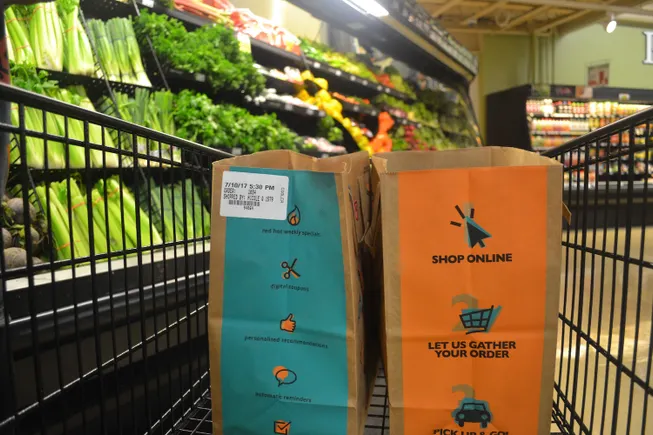
As retailers seek to lock in loyalty among a consumer base that has shifted heavily to digital shopping, many are turning to membership programs that offer unlimited delivery or pickup for a flat fee.
Kroger and Albertsons have both launched unlimited delivery subscriptions, while SpartanNash offers a no-fee pickup plan for under $50 a year. Last week, Ahold Delhaize announced it will roll out a subscription program next year at its Carlisle, Pennsylvania-based banner, The Giant Company.
These programs are designed to lock in customers who spend an average of$95 per order(source: Brick Meets Click). They are also a competitive response to Amazon, which is flexing its muscles in grocery with deep discounts through its Prime membership, and to Walmart, which earlier this yearlaunched Walmart+membership, offering unlimited free delivery, Scan & Go, and fuel discounts.
"The industry is being pushed in this direction," said James McCann, former CEO of Ahold USA, who now invests in and advises companies such as Takeoff Technologies and Afresh. "I think it will be a significant part of the strategic mix for all major grocers."
Kroger's annual subscription, Delivery Savings Pass, costs $79 a year and waives the company's usual $10 delivery fee, but only for orders of $35 or more. It is being tested at Kroger stores in Dallas and Ralphs locations in the Los Angeles area.

Meanwhile, Albertsons has launched Unlimited Delivery Club, at $99 a year or $15 a month, for orders over $30. The programlaunched last yearand is now available in markets where Albertsons operates its own delivery service, including Southern California, Phoenix, and Chicago. The subscription waives pickup fees and also applies to the two-hour delivery service the retailer is testing in the Chicago area.
"More customers are using the service, and we are featuring it more prominently when customers complete a delivery order to increase awareness," an Albertsons spokesperson said in an email.
SpartanNash, which operates 155 stores under multiple banners in the Midwest, offers a subscription option for its Fast Lane pickup program at $17 a month or $49 a year.
Ahold Delhaize, when announcing The Giant Company subscription, said the service would cost under $100 a year and offer "a better value proposition and priority delivery windows, driving loyalty and engagement." A company spokesperson declined to provide more details.
Riding the 'subscription culture'
One challenge for retailers is convincing consumers, many of whom already juggle multiple paid services, to shell out for another one. A 2018 survey of 2,500 consumers found they spent an average ofnearly $240 a monthon subscription services. But grocers have an advantage: they are essential services and have long-standing relationships with many customers, said Gary Hawkins, CEO of the Center for Advancing Retail & Technology, which provides education and advisory services to retailers.
Today's consumers also value the "set it and forget it" nature of paid membership programs, said Jordan Berke, founder of Tomorrow Retail Consulting and a former Walmart executive.
"I'm struck by what I call the 'subscription culture' among consumers, who increasingly prefer to use subscriptions to remove friction from their lives," said Berke, who has studied retailers' subscription models. "They are happy to pay to reduce mental load."
However, as more retailers join the online subscription fray, the offers are becoming less distinctive, appealing mainly to grocers' most loyal online customers, who may already be happily paying per order, McCann noted.
"It's a defensive move because it prevents existing loyal customers from defecting elsewhere," he said.

E-commerce subscriptions also compete with memberships from third-party partners such as Instacart, Shipt, Uber, and DoorDash. These services saw popularity surge during the pandemic and arguably offer consumers better value. Hawkins mentioned that his wife recently bought an Instacart annual membership and values the convenience of shopping from multiple retailers without extra fees.
"She can order and receive deliveries from a growing number of drugstores and other retailers through Instacart," he said. "It's become very convenient, and I've seen a significant shift in her shopping behavior."
Berke said that companies like Instacart, which provide ordering technology, picking, and delivery for hundreds of chains, present a "point of conflict" for retailers building their own membership programs.
Retail analyst Jason Goldberg, chief commerce strategy officer at advertising firm Publicis, specifically noted that Kroger's unlimited delivery program is misguided because it directly competes with Instacart's $99-a-year membership, and Instacart fulfills Delivery Savings Pass orders.
"This is not an acquisition strategy," Goldberg said. "It won't bring new customers to your brand, and it doesn't reach deep into your customer base."
Third-party conflicts intensifythe fierce debate over e-commerce ownership. While companies like Instacart and Shipt control a significant portion of customer ordering and fulfillment operations on behalf of retailers, the pandemic has prompted grocers to tighten control over back-end operations and push more customers to their own apps and websites.
When asked whether third-party memberships limit the growth of its delivery subscription, a Kroger spokesperson only confirmed that Instacart "powers" its service and pointed to the company's recent digital growth.
Albertsons' Unlimited Delivery Club does not rely on Instacart's platform and workers, but Instacart still operates in many of the same markets and fulfills orders from the grocer's stores. Albertsons downplayed the impact of Instacart memberships on its own program.
"We continue to see growth and will keep looking for ways to differentiate our service from other options in the market," the chain's spokesperson said.
Kroger 'Fresh Life'? Albertsons+?
For e-commerce memberships to succeed, grocers need to mine customer data carefully to target shoppers who are not fully brand loyal but could become loyal if enticed to sign up, McCann said. Retailers will likely lose money on delivery fees for online brand enthusiasts who sign up, but it almost guarantees their continued loyalty, he said.
Meanwhile, Hawkins noted that any grocer building an e-commerce membership must first ensure its delivery service, and possibly pickup, is strong enough.
"I don't think subscriptions are going to be miracle workers," he said. "They first have to have a strong core value proposition."
And that may still not be enough. Experts note that while memberships centered on delivery and pickup can be powerful, to reach down the customer ladder, capture semi-loyal shoppers, and attract new customers, grocers will need to add extra benefits to their membership programs.

Hawkins, who has designed loyalty programs for grocers, said for years companies have considered adding perks beyond points-based discount loyalty programs, such as free movie tickets, discounts at non-competing retailers, and access to cooking events. Given the impact of Walmart+ and Amazon Prime on customers' lives, not to mention retailers like Costco and BJ's Wholesale Club that require membership, companies at least need to study membership programs that leverage their unique assets, he said.
In doing so, grocers risk imitating Prime and Walmart+, Goldberg noted. "What won't work is trying to copy competitors' much broader membership services," he said.
But grocers can get creative, leveraging core assets from their stores and brand image. Berke said Kroger could turn its "Fresh for Everyone" marketing platform into a "Fresh Life" membership with live cooking classes and gym memberships. Sources said grocers could also offer free in-store produce cutting, free coffee refills, early access to exclusive products, and host a series of in-store events.
"I don't think subscriptions are going to be miracle workers. They first have to have a strong core value proposition."

Gary Hawkins
CEO, Center for Advancing Retail & Technology
Hawkins sees membership benefits falling into three categories: financial discounts, exclusive services, and experiences. The latter could include members-only tastings and trips to local wineries.
"This is where retailers can and should get creative," he said.
Regional and smaller grocers may be forced to adopt this platform model, Goldberg said, because online-only benefits may be too late and pale in comparison to larger competitors. However, smaller grocers often have loyal customers and community ties that can translate into attractive membership programs. For example, Heinen's, which operates 23 stores in Ohio and Illinois, is implementing a nutrition-focusedmembership programthat offers members access to a wellness center and personalized diet plans.
Hawkins said some regional grocers are developing membership programs that include discounts at non-competing retailers such as hardware stores and pharmacies. He declined to name them. He also noted that micro-fulfillment centers from companies like Fabric could stock inventory from complementary retailers, enabling customers to shop online across stores.
Membership models could eventually replace loyalty programs, or at least serve as an enhanced option under existing loyalty schemes, McCann said. He noted that he weighed membership models during his nearly four years leading Ahold USA before leaving the company following the 2016 merger with Delhaize Group.
"Prime came along, Walmart followed suit, and by the way Costco and BJ's were already doing it. That's already taken a big share of the U.S. grocery market, but I think you have to do it, both defensively for your most loyal customers and offensively to win more volume," McCann said.