
In-house or Outsourced? Fresh Grocers Revisit the Partnership Dilemma with Instacart
The surge in online grocery orders during the pandemic has forced retailers to choose between in-house delivery and relying on third-party platforms like Instacart. While outsourcing can quickly gain customers, it sacrifices customer experience and data control. Some retailers such as Sprouts, Kroger, and Giant Food have adopted hybrid models, seeking a balance between in-house operations and third-party services. Technology companies like Onfleet are lowering the barrier to in-house delivery through software, helping retailers take control of their delivery operations.
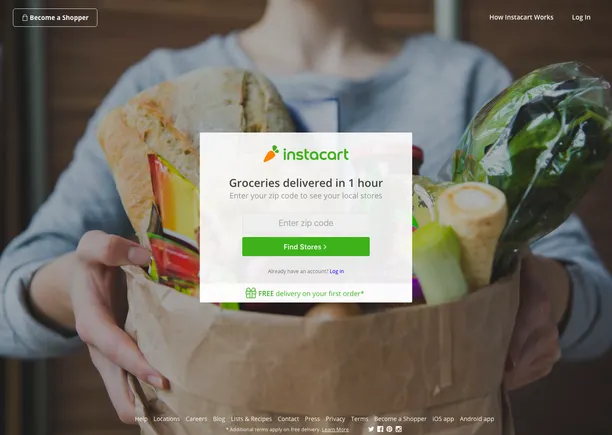
The surge in online grocery orders during the pandemic has brought a long-standing dilemma in the supermarket industry to the forefront: should grocers build their own delivery networks or continue to rely on third-party fulfillment platforms like Instacart? Hundreds of food retailers currently partner with e-commerce fulfillment companies such as Instacart and Shipt, which manage the logistics of delivery and pickup services. However, by outsourcing operations, retailers also surrender a significant amount of control over the customer experience, as well as valuable online shopping behavior data.
Industry observers note that retailers, facing a flood of orders, want more operational control. But even retailers capable of running their own e-commerce operations cannot ignore the profound impact of independent e-commerce service providers, especially Instacart, on the grocery industry, said Nick Shields, a retail analyst at investment research firm Third Bridge.
"Instacart brings massive traffic, and since online business has grown so rapidly since the pandemic, retailers must be on that platform to capture the customer base," Shields said. "Simply put, these grocers are willing to give up control over the customer experience and data just to acquire customers, because it's essential for them."

Instacart's ability to attract grocery customers and its rapid expansion of its gig-worker model have been key to its dominance in grocery e-commerce. During the pandemic, the company added millions of new customers and partnered with several chain retailers to help expand delivery and pickup services to more stores. Meanwhile, well-funded delivery companies Uber Eats and DoorDash, previously focused mainly on restaurants, have recently begun vying for a share of the grocery delivery market.
Uber entered the grocery e-commerce space earlier this year after acquiring Cornershop, an online grocery service in Chile. In July, the company launched its service in Dallas and Miami, and in September announced it would provide delivery for Winn-Dixie and Fresco y Más supermarkets in Florida under Southeastern Grocers. On October 28, Uber said it had begun delivering for grocers such as Gristedes, Westside Market, and D'Agostino in Manhattan, with plans to expand to other parts of New York in the coming months.
DoorDash announced in August that it was adding grocery delivery to its app, allowing consumers to get delivery from chains like Smart & Final, Meijer, and Fresh Thyme Market. DoorDash also delivers for convenience stores such as Casey's, 7-Eleven, Circle K, and Wawa.
"Instacart brings massive traffic, and online business has grown so fast since the pandemic that you have to be there to capture the customer base."
Nick Shields
Third Bridge Analyst
Outsourcing may be the best option
Beyond attracting customers, for retailers with limited resources, third-party e-commerce service providers may be the best or even only option for offering delivery, given the complexity of running an independent delivery operation, said Neil Saunders, managing director of GlobalData Retail.
"I think for smaller retailers, third-party partnerships are often very attractive because building your own delivery capabilities is costly," Saunders said. "The downside is that you lose control. Sometimes there are price discrepancies on the Instacart side, and you obviously can't control the level of customer service or the shoppers."
The costs associated with e-commerce are a particularly important reason why retailers choose to partner with fulfillment companies rather than build their own services, said Kurt Jetta, executive chairman and founder of TABS Analytics.
"There's no pricing model yet that covers the cost of the service, so someone is always subsidizing it. So as a retailer, I would think about how to limit downside risk, and that's using a third-party service like Instacart," Jetta said.
Instacart grew rapidly in 2020. The company has added hundreds of thousands of shoppers and said in August that demand for its service was up 500% from the same period last year. Many smaller retailers have been forced to build online services over the past few months, using services like Mercato and Rosie that cater to independent grocers. These services provide backend software and can connect retailers with last-mile delivery companies.
In May, Target, which owns Shipt, said its sales through the service increased 300% year over year. Meanwhile, Rosie announced in July that the number of stores working with it had increased by 900% since the start of the pandemic.
Having it both ways
For some supermarket chains, the solution lies in controlling more of the operations and customer experience while still using third-party services where it makes sense.
For example, Sprouts Farmers Markets recently began accepting online orders directly through its website while continuing to attract business through the Instacart platform. The natural foods grocer uses Instacart's order management technology in its e-commerce platform but gains insight into and control over the customer experience.
This arrangement allows the retailer to "keep people who just want to experience Sprouts within our own ecosystem," Sprouts CFO Denise Paulonis said on a recent third-quarter earnings call. "But we also don't lose the great partnership with Instacart and the quality traffic that comes from the Instacart site, where people are looking for convenience every day. So what we can really offer now is letting customers choose between the two, and we don't have to decide for them."
Sprouts also differentiates itself by using its own store employees to pick and pack orders rather than delegating the task to Instacart's gig workers, although it still relies on those workers for delivery.
Kroger also takes a hybrid approach, attracting consumers through Instacart while also driving e-commerce business through its own website.
"We think that's important because we really see the value in having the overall relationship and creating a seamless experience," Kroger CFO Gary Millerchip said during an investor update last week. Millerchip noted that the majority of Kroger's online sales come from its own app and website.
For its part, Instacart says it has no intention of hindering partner grocers but rather wants to help them thrive.
"We don't want sales to only happen on Instacart. We want to build websites and develop apps for grocers, and you wouldn't do that if you were planning to compete with partners," company president Nilam Ganenthiran said in a recent interview. "We serve this specific industry for the long term, and we believe the best way is to cooperate rather than compete."
Gregg Dorazio, head of e-commerce at Giant Food, said the 164-store grocer works with Instacart alongside its own delivery service, using the relationship to serve customers with the most urgent needs, but believes internal e-commerce operations are crucial to maintaining the brand.
"Instacart provides us with an important piece of the channel puzzle, which is the true on-demand delivery need. Their strength is in one- to two-hour turnaround times, which I think is more of a premium service... Their app and technology are built for that," Dorazio said.
Working with Instacart also allows Giant to reach customers who tend to use e-commerce companies to order groceries—customers they might otherwise miss, Dorazio said.
"The real benefit of them as part of our overall offering is that they are a marketplace. They market themselves as a portal for many retailers, and I almost compare it to how a hotel or airline might sell on Tripadvisor, Expedia, or Hotels.com," he said. "They do have the eyeballs and the scale to bring customers to that marketplace. So I think it's an important part of our ability to offer our products and brand in that channel."

However, when it comes to leveraging the brand equity Giant has built in the mid-Atlantic market, where it has operated for over 80 years, the company's own delivery service, Giant Delivers, is irreplaceable, Dorazio said. The service, formerly known as Peapod by Giant, is operated by Giant employees, allowing the company to differentiate its service through personalization and build customer loyalty.
"Drivers learn whether customers want deliveries to the front door, back door, or garage, whether they need extra services... or if it's someone's birthday, or if there are kids at home," Dorazio said. "Through this more personalized relationship, through our drivers, trained employees, and backend customer service, we gather and accumulate various insights."
Going it alone doesn't mean going it alone
Some retailers' interest in self-operated delivery services has fueled the growth of a technology market that helps streamline the management of driver fleets.
Onfleet, based in San Francisco, provides software designed to route orders, track drivers, and communicate with customers. Co-founder and CEO Khaled Naim said interest in the technology has been strong this year as retailers across industries choose to maintain control over their e-commerce operations.
"Through this more personalized relationship, through our drivers, trained employees, and backend customer service, we gather and accumulate various insights."

Gregg Dorazio
Head of E-commerce at Giant Food
Naim said retailers across industries have signed up to use Onfleet's software to maintain control over their delivery services. His company's clients include grocers such as Kroger, Foxtrot Market, United Supermarkets, and Imperfect Foods.
"We've lowered the barrier to entry, which has led many retailers to turn to Instacart and Shipt because building an internal operation is daunting," Naim said.
Thistle, a meal delivery company that uses Onfleet's technology to manage a fleet of hundreds of drivers in West Coast cities, chose to bring its delivery operations in-house after years of trying to work with external vendors, said CEO Ashwin Cheriyan.
Bringing delivery under the company's control has helped Thistle enhance its brand and collect statistics on driver performance—all drivers are on its payroll but use their own vehicles—enabling the company to improve its business, Cheriyan said.
"When we worked with third-party logistics companies, the quality of service was relatively inconsistent. That meant some customers had good experiences and some had poor ones. In our case, if a delivery is five minutes late, that's a bad experience," Cheriyan said. "We found that the only way to maintain consistency in service was to ensure we had our own fleet."
Jeff Wells contributed reporting to this article.