
Can digital platforms meet the growing e-commerce needs of grocery consumers?
The surge in online grocery shopping is driving retailers to explore digital marketplace strategies. Kroger partnered with Mirakl to launch over 50,000 third-party products, but experts question whether marketplaces can truly deliver value. This article analyzes the opportunities and challenges of marketplaces in the grocery sector, citing insights from multiple industry figures.
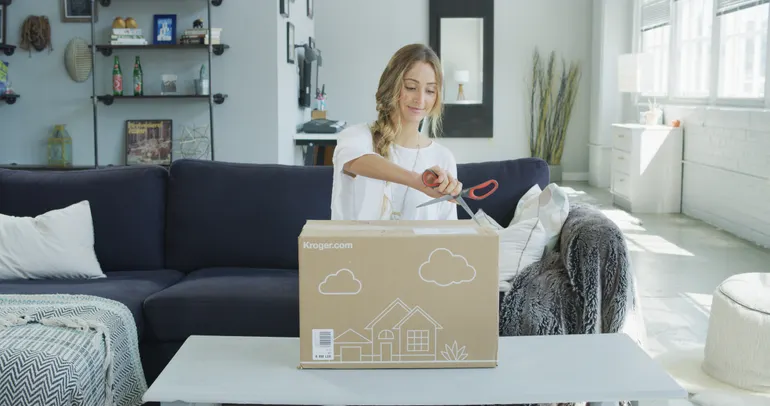
As online grocery shopping continues to expand in recent months, consumer demand for product selection and convenience is also rising in tandem. As retailers think about how to upgrade their online platforms and solidify customer loyalty, they are increasingly weighing the pros and cons of digital marketplace strategies—strategies that promise an "endless aisle" of products not available on store shelves.
Adrien Nussenbaum, CEO and co-founder of Mirakl, a software company that has built marketplaces for companies like Best Buy and Carrefour, said the company is working with several grocery retailers to develop marketplaces and plans to launch them in the near future. In August, Kroger partnered with Mirakl to launch a marketplace strategy on its ship-to-home platform, offering more than 50,000 products from third-party sellers, including specialty foods and toys.
Industry experts point out that offering an additional rich assortment of products without the need for costly backend infrastructure may seem beneficial to consumers and also opens up avenues for retailers to generate additional revenue and shopper data. Although Amazon has set the benchmark for marketplaces, retailers in the apparel, electronics, and home goods sectors have successfully built marketplaces in recent years, seemingly paving the way for grocery stores.
However, some question the value of marketplace strategies for grocers. They note that despite Amazon's and Walmart's success in the marketplace space, that doesn't mean competitors should follow suit. Juozas Kaziukenas, founder of retail marketplace data company Marketplace Pulse, said there is little evidence that marketplaces add value for retailers.
"The biggest difference between Kroger and any other company, especially Amazon, is the physical stores. Trying to imitate Amazon might be chasing your own tail," he said.
Grocers' new digital tool
Venturing into third-party marketplaces is not new for retailers, as many U.S. companies such as Walmart, Urban Outfitters, and Dick's Sporting Goods have tried similar approaches to offer a vast assortment comparable to Amazon's. But among grocery retailers, this practice is uncommon, with only a few recent cases.
Albertsons launched a third-party marketplace in 2018, focusing on hard-to-find natural and organic products, with the goal of expanding its assortment to 100,000 items. To date, the program has been paused, and Albertsons did not respond to Grocery Dive's request for comment or further inquiries about the platform's future.
Albertsons' marketplace website states: "Stay tuned for a new and improved marketplace experience coming soon."

Last November, Canadian supermarket chain Loblaw expanded into an online marketplace, selling non-traditional grocery items such as baby products, home goods, furniture, and pet supplies. Similar to Kroger, Loblaw said that while the assortment is expanding, new selections will be "curated" to complement existing products and shopper preferences.
"For example, when new parents are preparing diapers and formula for their baby, they might find it very convenient to order blankets, towels, or even a crib through us," Hesham Fahmy, vice president of Loblaw Digital, said in a statement at the time.
Experts say grocers' pace of entering marketplaces may accelerate. Tory Gundelach, senior vice president of retail insights at Kantar Consulting, said more retailers want to build marketplaces because it offers a dual benefit: expanding product assortment without taking on balance sheet risk. She believes marketplaces mainly appeal to large and mid-sized grocers with the resources and customer base.
"This is part of the overall evolution of the grocery industry."

Brendan Witcher
Principal Analyst, Digital Business Strategy, Forrester
Nussenbaum said Mirakl has signed agreements with several companies and expects to announce them in the coming months. "We definitely see interest from everyone," he said.
The question Brendan Witcher, principal analyst for digital business strategy at Forrester, raises is why more grocers haven't adopted this strategy yet. Given the surge in online shoppers and high expectations for product discovery and availability, the business case for grocers to offer customers any product they want, available at any time, naturally holds.
"This is part of the overall evolution of the grocery industry," Witcher said.
Evaluating Kroger's marketplace
Gundelach said Kroger has been at the forefront of adding alternative revenue streams, and the marketplace is part of its ecosystem-building beyond physical product margins. In addition to charging third-party sellers commissions—standard practice for marketplaces—Gundelach thinks it will be interesting to see how Kroger leverages its media business to connect the marketplace with various media channels and generate additional revenue.
"That's when you start thinking, okay, this could lead to some interesting and more substantial outcomes," she said.
Other analysts are not entirely convinced by Kroger's entry into the marketplace space. Kaziukenas said that just by scale, the move raises questions for him. Kaziukenas, who analyzes marketplaces including Amazon, Walmart, and Target, said 50,000 products is a very small number.
Although Kroger says this number is a starting point that will double its ship-to-home assortment, Kaziukenas believes the company will need to expand rapidly if it wants to succeed in terms of suppliers and product count.
"Marketplaces only have an advantage when they offer a massive product selection," Kaziukenas said, noting that Amazon adds thousands of sellers daily. He also mentioned Walmart as one retailer where the marketplace operates well. About 90% of Walmart's website products come from its marketplace, with the rest sold directly by the retailer. Walmart also adds thousands of new sellers monthly and has seen great success with branded products.
Meanwhile, Nussenbaum noted that retailers must take a focused approach to building marketplaces, carefully mining customer data to add products and categories. This is especially important at launch, as companies seek to establish shopping habits.
"If you don't launch in the right categories, if you don't invest in making the marketplace part of the experience, if you don't recruit enough sellers, your marketplace will fail," Nussenbaum said.
Jody Kalmbach, vice president of Kroger's product experience group, said the company is taking a "food-first" approach to operating its marketplace and curating products in a thoughtful manner. Shoppers can find a richer selection of natural, organic, and specialty foods, as well as additional categories like home goods and household products.

Does the marketplace benefit shoppers?
Kaziukenas said that before retailers increase product assortment through marketplaces, they need to ensure there is enough demand to sustain the model and support its numerous supplier relationships. If third-party sellers don't sell well, they may hesitate on commission fees or exit the partnership entirely.
"That's the magic of marketplaces—just adding product assortment doesn't mean there are customers looking for those products," he said.
In Kroger's case, Deb Gabor, CEO of Sol Marketing and author of "Irrational Loyalty," said it's important for the grocer to actively promote the service and make clear to customers what they can get from it.
"What is the 'Kroger specialty' of this marketplace? It's not clear to me. From a consumer perspective, why should I trust and participate in a marketplace like Kroger's?" Gabor said.
Historically, Kaziukenas said, he hasn't seen marketplaces launched by retailers drive significant growth. For Kroger, he believes the greater benefit to shoppers and profits lies in focusing on digitizing stores and improving store pickup and delivery services.
Kalmbach said Kroger will use its data-mining capabilities to personalize offers for marketplace customers and facilitate new product discovery. She said Kroger's marketplace expansion is part of building a seamless cross-channel experience. The company has been gathering insights and data to better understand how customers want to shop, and based on findings, people seek different options at different times.
"If you don't launch in the right categories, if you don't invest in making the marketplace part of the experience, if you don't recruit enough sellers, your marketplace will fail."
Adrien Nussenbaum
CEO of Mirakl
Another challenge Kroger and any retailer faces when launching a marketplace is the potential loss of control over its consumer-facing brand. Gundelach mentioned the scrutiny Amazon has faced over quality control, while Gabor highlighted issues with damaged or defective products and returns.
"While we know little about how Kroger plans to operate, anytime you get into a third-party marketplace, you face some of these risks," Gundelach said.
Gabor also said that from a brand perspective, marketplaces are dangerous. A retailer's name may appear on the marketplace, but they don't have full control over the customer experience.
"If I were Kroger, or more importantly, if I were a Kroger consumer, this might be one of the things I'd worry about," Gabor said.
Kalmbach said Kroger has taken steps to ensure transparency in its marketplace. When customers view products on the marketplace, third-party sellers will be clearly listed, along with profiles showing seller performance. Additionally, Kroger requires sellers to adhere to a set of standards, and if they don't meet them, they won't be allowed on the platform.
"Knowing who you're buying from is critical," Kalmbach said.

Kaziukenas noted that marketplaces can lead to consumer confusion because they have two experiences—one directly with the retailer and another through its marketplace. Without proper explanation of how it works, where products come from, and whether they can be returned in stores, customers may be dissatisfied or unsure how it all fits together.
Kroger's ship-to-home website explains how the service works and the categories it includes on its homepage. It emphasizes new product discovery with messages like "Explore more new finds" and provides links to categories such as home goods and toys. One more click connects consumers to its pickup, delivery, and in-store services, reinforcing the Kroger shopping ecosystem.
According to Kaziukenas, Kroger's marketplace will take time to mature. From setting up the technology to acquiring merchants to communicating the message to customers, there's still a lot of work to be done. Kaziukenas said that from the outside, creating a marketplace may seem simple, but it's far more than launching and trying to compete with Amazon or Walmart.
"This is just the first step," he said.
Jeff Wells contributed reporting to this article.