
Can Micro-Fulfillment Centers Disrupt Fresh E-commerce? Experts: Not All Retailers Are Suitable
As the pandemic drives a surge in fresh e-commerce orders, micro-fulfillment centers (MFCs) have become a focus of industry attention. However, experts believe that MFCs are not a one-size-fits-all solution, and their deployment requires weighing order volume, cost, technical limitations, and demand uncertainty. This article synthesizes views from multiple industry insiders to analyze the applicable scenarios and potential risks of MFCs.
This article is part of a series exploring the future of online grocery. Next week, Grocery Dive will look at the expansion of online marketplaces and their investment value for food retailers. The full series will be published atthis link。
Although the COVID-19 pandemic continues to bring a large number of consumers to online grocery, it has also highlighted the many challenges retailers face in determining the best fulfillment methods.
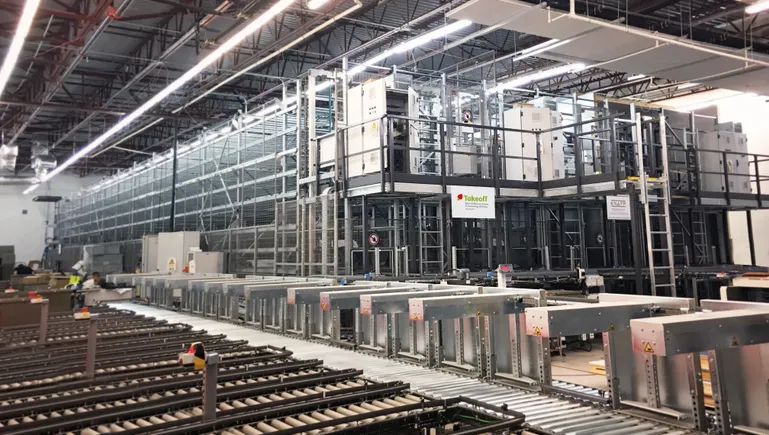
Industry executives are considering establishing dedicated fulfillment facilities within or near individual supermarkets, known as micro-fulfillment centers (MFCs), to improve efficiency and save on e-commerce operating costs. MFCs typically contain automated equipment to assemble and pack orders, and the interest in them has grown due to the surge in orders that has swept the online grocery industry this year.
However, e-commerce experts point out that while moving picking and packing tasks from store aisles to specially designed facilities may seem obvious, deciding when and how to deploy this strategy is not simple.

MFC is not the only answer
"I believe MFCs will definitely be part of the solution, but I don't see 100% of online grocery order volume being completely fulfilled through MFCs," said Narayan Iyengar, a former Albertsons e-commerce executive and now investor and industry consultant. "There will be store picking, dark stores, central fulfillment centers handling subscription-type orders, and then there are MFCs. These elements need to work together to make the whole system function."
MFCs are attractive to retailers because they can mechanize the tedious and time-consuming picking and packing process. Automation companies such as Alert Innovation, AutoStore, and Takeoff Technologies have introduced various robotic systems that can handle many order assembly tasks on a smaller scale than traditional warehouses.
Experts say that despite the attention on MFCs, retailers must consider whether it might be more suitable to establish dedicated in-store picking areas where human pickers assemble orders. In some cases, having a dedicated picking area at the back of the store may be sufficient to improve efficiency, as it avoids pickers competing with customers for products and space in the aisles.
It all depends on the expected e-commerce volume for the store, said Jordan Berke, a former Walmart executive, e-commerce expert, and head of Tomorrow Retail Consulting. A store with only 20 orders per day might just need employees to pick and pack manually, while a store with hundreds of e-commerce orders per day might need to allocate space for human pickers to handle the fastest-moving items.
"The equipment is very simple, just shelves," Berke said, adding that stores can also deploy technologies like handheld devices to help pickers find items faster.
Sarah McMullin, director of retail products at Tecsys, said that regardless of whether retailers invest in automation to fulfill store orders, they can improve fulfillment capabilities. She advised retailers to increase visibility of product locations in the supply chain, noting that simply equipping human pickers with better tools to help them locate items and plan picking routes can make a significant difference.
"People working in stores are often temporary or new employees, so the system must be very simple and easy to use so they can quickly complete order assembly," McMullin said.
Balancing order volume, cost, and capability
However, when store order volume truly starts to grow, and models show that orders will continue to increase, it becomes reasonable to explore using MFCs to automate picking tasks, Berke said. "The key is order volume. If a store has 50 orders a day, don't talk to me about picking areas or micro-fulfillment; if it's 1000 orders a day, don't try to pick from the store."
The cost of building an MFC can quickly add up. A single MFC handling 5000 orders per week could cost between $8 million and $10 million after considering site preparation, construction, equipment software integration, and other expenses, said supply chain expert Marc Wulfraat, who helps food retailers design fulfillment systems. Retrofitting the back of a store to optimize MFC space is often the largest expense, Iyengar said.
In addition to high upfront costs, retailers investing in MFCs may find that their e-commerce business trajectory does not match forecasts, leading to expensive infrastructure that does not meet demand in the future. Given the pandemic-driven interest in online grocery purchasesmay fade, retailers need to be wary of the risk of investing in infrastructure they may not need.
"Retailers may find that customers' digital purchases are not as high as expected, and micro-fulfillment centers are more expensive and less efficient than hoped," said Jason Goldberg, retail analyst and chief commerce strategy officer at Publicis.
Another risk is that MFC technology is evolving rapidly, and equipment installed today may become obsolete faster than expected.
"I have many stories at Walmart and other companies where we automated early but had to scrap it because the business evolved quickly. You may find that the design and automation are no longer applicable after a year," Berke said.
"What people overlook about automation is that it looks great in videos, but if an event like COVID causes order volume to exceed plans, you can't add more staff. The automation engine is designed to produce X amount, and you only get that much."

Marc Wulfraat
President and Founder of MWPVL International
Furthermore, once an automated system is installed, it is difficult to scale its capacity up or down, Wulfraat said, who is president and founder of supply chain consulting firm MWPVL International.
"What people overlook about automation is that it looks great in videos, but if an event like COVID causes order volume to exceed plans, you can't add more staff. The automation engine is designed to produce X amount, and you only get that much," Wulfraat said.
Wulfraat said that the return on investment for MFCs can be complicated by several limitations of automation technology in grocery scenarios.
One challenge is that MFCs typically can only handle a portion of the products in a typical store, meaning that when customers order less common items not stocked in the MFC, workers often need to pick them manually.
Wulfraat added that another issue is that MFC equipment is not suitable for handling items that need to be weighed and handled gently, such as bulk produce. Oversized items like toilet paper and pet food are also challenging for MFCs. Leak-prone items like meat also pose problems.
"People usually don't put those in MFCs because of the risk of blood dripping and contamination within the totes," Wulfraat said.
"In many real-world MFC operations, retailers try to have the automated system handle 50% of order line activity, and the other 50% must go through more manual methods, either from the store or from manual operations next to the automation," Wulfraat said.
Evaluating current and future capabilities
When deciding whether and where to build MFCs, Iyengar said retailers mainly need to look for areas with concentrated order volume. He said many retailers have seen high overall order volume due to the pandemic, but if demand is spread across a wide geographic area rather than concentrated in dense urban and suburban markets that ideally have multiple stores, the economics will be challenging.
Many retailers are weighing whether to build standalone MFCs or add them to existing stores, either in the back room or as attached standalone facilities. Iyengar said both models have advantages, but the lower-risk investment is building in stores because the system can integrate into existing delivery routes and store management operations.

Iyengar also emphasized that retailers must conduct detailed due diligence on MFC suppliers, evaluating not only their current capabilities but also their ability to evolve. Grocers should provide suppliers with expected fulfillment metrics and check the system's order throughput in terms of item picking and basket assembly. MFC systems can retrieve items quickly, but it is crucial to examine how the software system integrates automated and manually picked categories.
"How many items picked per minute is one factor, but how quickly you can turn around a basket is more important," Iyengar said.
Iyengar suggested grocers test two or more MFC suppliers, which may be more expensive but allows for close metric comparison. He said retailers should also review suppliers based on their ability to adapt and integrate new technologies in the coming years, noting that innovations like robotic picking arms are on the horizon.
"You want a platform that can scale with technological advances, but you also want it stable enough that you don't need a full-time mechanic to maintain it every day," Iyengar said.
Despite the need for caution, grocers should not underestimate the cost savings that installing MFCs can bring, said Andrew Benzinger, who handles grocer relations at AutoStore, which is working with H-E-B to install MFCs for the Texas-based supermarket chain.
"Over time, you can recoup your automation investment and gain more profit margin because you occupy less space and serve customers with fewer people," he said.
Curt Avallone, a veteran grocery executive and chief commercial officer at MFC supplier Takeoff Technologies, which works with supermarket companies like Ahold Delhaize, Albertsons, ShopRite, and Sedano's, said the sweet spot for micro-fulfillment is using automation in tandem with human labor, adjusting to the market conditions of each store.
MFCs can optimally handle a grocer's best-selling items, which can bring the productivity gains of a centralized warehouse to busy stores while staying close to customers, he said.
"Micro-fulfillment centers seem to have finally found their niche: you can place 14,000 or 15,000 items in a small area and pick at the speed of a large facility, sometimes even better," Avallone said. "In fact, the average customer buys only 340 unique items per year from a supermarket that offers 40,000 items."
As the automation systems used in MFCs become more powerful, reliable, and affordable, deploying them will become increasingly practical, said John Lert, CEO and founder of Alert Innovation. Alert is working withWalmartto develop robotic fulfillment technology and has built a 20,000-square-foot facility inside a Walmart store in Salem, New Hampshire, using automated guided vehicles to assemble grocery orders.
According to Lert, Alert's goal is to make robots economically viable even in smaller grocery stores where automation costs cannot be justified today.
"When it comes to automation technology, you hear suppliers talk about scale. Usually that means scaling up," Lert said. "The challenge is scaling down, creating automation solutions that are low enough in cost and small enough to fit in small spaces to achieve ROI at low order volumes and run efficiently."
Jeff Wells contributed reporting to this article.