
Amazon's Entry and the Pandemic Drive New Opportunities for Smart Shopping Carts
Driven by both the pandemic-induced demand for contactless checkout and Amazon's launch of the Dash Cart in physical supermarkets, smart shopping cart manufacturers report a notable rise in retailer interest. Companies such as Caper, Veeve, and Tracxpoint are advancing pilots, but high costs, theft risks, and consumer acceptance remain key tests for large-scale adoption.
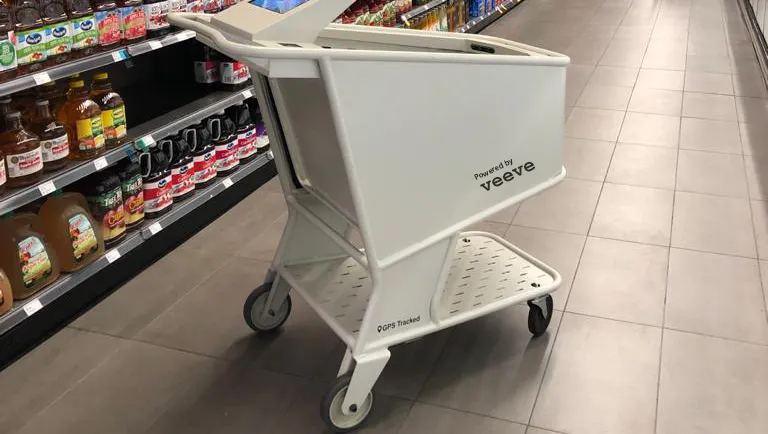
Retailer adoption of smart shopping carts was previously slow, and Canadian grocer Sobeys was the first chain in North America to publicly announce testing the technology. However, the COVID-19 pandemic has driven demand for checkout-free payment solutions, and combined with the Dash Cart featured in Amazon's newly opened physical supermarket in California, smart cart manufacturers say retailer interest in the technology is heating up significantly.
Lindon Gao, CEO of Caper, a pioneer in the smart shopping cart industry, noted: "The launch of Amazon's Dash Cart proves to retailers who have rejected smart carts that this is the right direction." Representatives from companies such as Veeve and Tracxpoint also said more retail pilots are coming. Companies are adapting their strategies to the times, with some beginning to promote smart carts for online order picking.
However, experts caution that given the high cost of smart carts, theft risks, and other potential issues, successfully navigating the pilot phase remains uncertain. Consumers may also not fully understand or use all the features of this upgraded shopping tool. Sylvain Charlebois, professor of food distribution, policy, and safety at Dalhousie University in Canada, said: "The average consumer may not fully understand the technology itself, or may not be familiar enough to use all its features."
Pandemic accelerates industry interest
The COVID-19 pandemic accelerated the deployment of solutions that help customers get in and out of stores quickly. Smart cart companies say the pandemic has significantly boosted interest in their technology. Gal Gavrieli, customer growth manager at Israel-based Tracxpoint, said its technology can reduce the time customers spend in stores by nearly 15 minutes. The company began marketing its carts to North American retailers this summer.
Although the technologies vary slightly among companies, smart carts let consumers skip checkout while relying on a familiar shopping tool. Through cameras and machine learning algorithms, the carts can identify items customers place inside, requiring less effort than the mobile checkout platforms many retailers have installed, which require scanning each item individually.
Customers can log in on the cart to start using it and complete order processing through a designated area after shopping. Smart cart manufacturers all emphasize that their technology can be retrofitted into existing stores, providing an Amazon Go-like experience in a supermarket setting.
Gao revealed that in addition to its partnership with Sobeys, Caper plans to expand to more stores for existing customers and is preparing further collaborations with "the largest retailers" in the grocery space. In September, the company will test its smart cart technology at a convenience store chain.
Veeve is currently running pilots at two grocers and plans to expand to another retailer in California. CEO Shariq Siddiqui said the company is also in talks with two other businesses. Tracxpoint partnered with Italian retailer Conad Del Tirreno in late 2018. Gavrieli said the company has received significant interest in Russia, Scandinavia, South America, and Australia, and plans to bring its technology to a major retailer on the U.S. West Coast later this year.
Although the pandemic has boosted demand for smart carts, Gavrieli said it has also hindered implementation. Travel restrictions in Israel prevented the Tracxpoint team from traveling to overseas grocery stores to install the systems. "This kind of system requires construction, infrastructure, and a lot of integration with the retailer—it can't be done remotely," Gavrieli said, adding that implementation requires installing 50 to 100 ultra-wide-angle cameras in stores to track customer movement. "Training has to happen physically in the store. We have the demand, but technically we can't deliver."
Veeve, founded by former Amazon and Google employees, encountered a similar situation. Siddiqui said that after the pandemic broke out, two retailers in Seattle paused pilots, saying they couldn't afford the technology costs and had other higher-priority projects. However, both companies have recently resumed testing due to consumer demand.
Siddiqui said Veeve has adjusted its strategy, positioning the carts as a tool to help employees pick online orders. The cart's sensors can connect to a customer app to notify them when items are ready. He said Veeve carts can also be used to fulfill part of an order before the customer arrives at the store. "Imagine you buy 20 items online, and when you walk into the store they're already in the cart, and you can go straight to the fresh food section," Siddiqui said. "Just as Dash Cart is designed to bring people into Amazon's online ecosystem, we're doing something similar, but in the opposite direction."
High costs and theft risks
Despite the appealing prospects of smart carts, cost remains the primary obstacle to adopting and scaling the technology. Charlebois noted that a typical smart cart usually costs more than $5,000, with high maintenance expenses, especially given the grocery industry's thin profit margins of just 1.5% to 2%.
Caper's Gao said that while its carts are expensive, they are still far cheaper than all the hardware and software required to implement an Amazon Go-style cashierless store. Gavrieli said Tracxpoint's hardware is designed to fit grocers' existing carts, allowing the company to use lower-cost hardware than other products on the market. The company uses a business model with a fixed fee per transaction. Gavrieli explained that depending on the partnership agreement and cart size, retailers pay between 50 cents and $1.20 each time a customer uses a cart. Larger carts may require six cameras, driving up implementation costs, while smaller carts may need only two. The company expects each cart to be used 5 to 10 times per day.
"Every time someone takes a cart, they're going to buy something," Gavrieli said. "The average ticket at Costco in the U.S. is $120, at Walmart it's about $80, and at Albertsons about $50. So it's reasonable for retailers to pay this fee per transaction, in exchange for all the benefits—data mining, fast checkout, autonomous activity, and so on."

Another concern is how the carts will withstand wear and tear and customer use. Traditional carts eventually need to be replaced after years of use. Charlebois said smart cart manufacturers must prove that their screens, cameras, and other systems can stand the test of time, and that replacement parts won't be prohibitively expensive. He also noted that given the high price of the hardware and the fact that it can be wheeled out of the store, there is a risk of cart theft.
To prevent theft, Gavrieli said Tracxpoint only allows customers to take a cart after logging in with a unique identifier, which can be a credit card, loyalty card, SMS verification code, driver's license, or the retailer's mobile app. "I think customers know the retailer is aware they've taken a cart, so they'll treat it differently and won't abuse it," Gavrieli said.
Promotional potential
Beyond reducing checkout friction by eliminating lines—which Charlebois said retailers have struggled to achieve with seamless checkout for years—smart carts can also help retailers influence shopping behavior in real time and promote specific products, a capability Amazon Go lacks. "For example, if a customer puts flour in the cart, you could encourage them to buy a higher-margin product," Charlebois added. Tracxpoint transfers customers' prepared shopping lists to the cart and customizes coupons accordingly. Veeve allows customers to view order history as well as personalized offers and coupons.
Chris Walton, former vice president at Target and now co-CEO of OmniTalk, said carts could also be used to restock shelves at the end of the day and track how employees replenish items and how inventory moves. Additionally, the technology could reduce the theft commonly seen in grocery self-checkout areas. Gavrieli said Tracxpoint has tracked more than 50 million cart transactions over the past year and has reduced one retail partner's annual theft rate from 50% to 2%.
But Walton still sees plenty of room for innovation, especially since many carts have demanding hardware requirements, including the ability to withstand extreme temperatures and the expected wear and tear of bumping into walls, cars, and other carts.

The Amazon effect on the smart cart landscape
When Amazon's Dash Cart entered the smart cart space in July, Gao said the news shook his team because they realized they would be competing with Amazon. "I think competition is inevitable," Gao said. "Imitation is the sincerest form of flattery. But Amazon's biggest Achilles' heel is precisely that it is Amazon."
Although Amazon has not explicitly said it will open up Dash Cart technology to other retailers, experts speculate it will eventually do so. The Wall Street Journal reported earlier this year that the company wants to sell its Go cashierless system to other retailers. "I don't see any retailer using Amazon's smart cart when there are other options on the market to test," Walton said. "Data is one concern, but also, it's just another revenue stream for Amazon."
"A lot of people tell us the cart is just a transitional step toward the ultimate Amazon Go experience, and I often tell people, 'That's not the case.' You can make technology that's right, interesting, and cool, but actually mass-producing it at scale is another matter."

Lindon Gao
CEO of Caper
Experts like Walton speculate that Amazon's entry into the smart cart space stems from its inability to scale the Amazon Go system. The largest store using the technology is Go Grocery, which opened in Seattle in February with just 7,700 square feet of selling space. Charlebois said Amazon Go's infrastructure is too massive—retailers would need to install millions of sensors and completely remodel stores to implement it.
"A lot of people tell us the cart is just a transitional step toward the ultimate Amazon Go experience, and I often tell people, 'That's not the case,'" Gao said. "You can make technology that's right, interesting, and cool, but actually mass-producing it at scale is another matter."
Walton explained that while pandemic-driven demand may spawn many new smart cart companies and technological advances, the broader implementation in grocery retail right now remains scan-and-go technology. He added that many questions remain unresolved, including the right design for carts and whether all items can be processed in-store in a way that is meaningful to customers. "There are some early pilots, but we haven't reached a scale where we can determine whether consumers will accept this or whether it's viable for them," Walton said.