
Pandemic Spurs Smart Grocery Apps: From 'New Storefront' to Omnichannel Experience
Since March, grocery app downloads have surged, with platforms like Instacart, Shipt, and Walmart growing over 100%. New demand has driven innovation in app features, from inventory forecasting and contactless delivery to recipe integration, reshaping the shopping experience. Startups like Choice Market, Farmstead, and Cheetah are accelerating their expansion, while Instacart has launched multiple new features to meet demand.
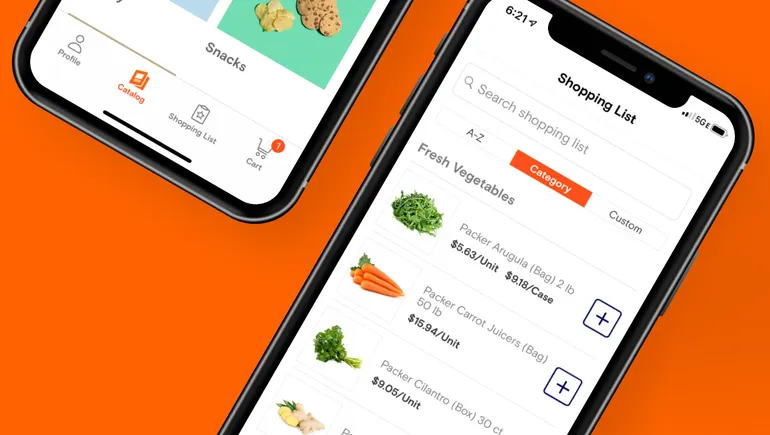
Since March of this year, the grocery industry has witnessed tens of millions of grocery app downloads, with growth on major platforms such as Instacart, Shipt, and Walmartexceeding 100%. New demand has given rise to new features aimed at enriching the user experience, making grocery shopping faster and more seamless than ever.
But today, app updates are no longer just a maintenance issue. For many consumers, grocery apps have become more than just an add-on; they are the embodiment of the entire store experience, and the demand for a convenient and delightful experience has never been higher.
Mike Fogarty, CEO of Choice Market in Denver, said the new app and accompanying digital tools, slated for launch in August, are designed to create a unifiedomnichannelexperience for customers, whether through advance ordering, delivery, or in-store self-service kiosks.
"This is not just an app—it's really the next phase of Choice," Fogarty said.
Pradeep Elankumaran, CEO of San Francisco-based Farmstead, shares this sentiment. Elankumaran, who is launching Farmstead's first app with his team this fall, told Grocery Dive that the app is the "new storefront." He noted that Farmstead is not just focusing on an app or mobile website, but building a fully unified system from marketing to the customer's doorstep.
Business during the pandemic
In recent months, grocery app usage has surged as consumers flocked to e-commerce platforms and major retailers rolled out updates. In April, the daily downloads of the Walmart Grocery app (which has since beenmerged with the main Walmart shopping app) grew compared to January by460%, according to data from App Annie. Target has expandedsame-day grocery pickupto over 1,000 stores across 47 states, and its app's daily downloads grew during the early days of the pandemic by98%。

The surge in downloads has provided retailers with a larger mobile user base to drive online sales and brand engagement.
In terms of app innovation, much of the activity comes from grocery startups and formats offering alternatives to traditional supermarkets. As the pandemic drove unprecedented demand for online groceries, many companies saw business boom and are working to roll out updates, while others are planning to launch entirely new apps.
Before the pandemic, Cheetah was the fifth-largest restaurant distributor in the San Francisco Bay Area, providing next-day ingredients and supplies to restaurant owners and chefs. When the pandemic hit, the company decided to open its app to consumers who were struggling to buy groceries from online providers like Amazon, Instacart, and San Francisco's Good Eggs.
As the restaurant industry slowed sharply, Cheetah's warehouses were filled with bulk supplies that restaurant customers had not ordered, ranging from meat and produce to hand sanitizer and toilet paper. The company focuses on a limited-SKU inventory, but consumers can still find all grocery essentials, dairy products, organic produce, various beverages, and household items from local and national brands.
Since the pivot, Cheetah has quickly integrated new features such as pickup and delivery into its app to serve grocery customers.

"We turned our trucks into mobile warehouses, operating at various pickup points across the Bay Area, giving customers a completely contactless experience," said founder and CEO Na'ama Moran.
Pickup is free, and Cheetah recently added a home delivery option to the app, charging $12 per order for orders of $250 or less.
Farmstead, also based in the San Francisco Bay Area, also saw a surge in business after California issued stay-at-home orders. Elankumaran said mobile demand grew nearly fivefold and has continued to rise since.
Now that Farmstead and other grocers have gained a foothold, they are refocusing on apps to drive "the growth and retention we seek," Elankumaran said.
"Demand has surged for every online grocery provider, and no one has been able to fully capture it," he noted.
Farmstead has seen more customers using its weekly plan, which sets a fixed weekly delivery time, and same-day delivery slots have also returned. Same-day and weekly delivery subscriptions will be integrated into Farmstead's upcoming app, along with advanced personalization features that go beyond what is seen on the website.
Elankumaran said the company took time to build the digital experience, integrate it with warehouse economics, and identify user flows and patterns that deliver results for consumers. Now, the company is confident enough in the customer experience to bring it to a native mobile app.
Additionally, as more people turn to mobile devices to order groceries, there are more discovery opportunities and the ability to incorporate digital-specific concepts.
"There are many things technology can do that physical stores can never do. Unfortunately, technology can also do well the things physical stores can do," Elankumaran said.
Instacart Chief Technology Officer Mark Schaaf told Grocery Dive via email that Instacart began studying the potential impact of COVID-19 on its business well before demand rose in March. To date, the company has launched more than 15 new products and features in its app to address customer safety and service.
"COVID-19 has completely changed the way people put food on the table, which has required us to redesign our products and systems to meet the 500% year-over-year demand growth we have observed," Schaaf said.
How apps are evolving
At Instacart, Schaaf said product availability has been one of the biggest challenges during the pandemic. Its machine learning team had to quickly adjust product availability models so that consumers get the latest information when they open the app to shop.
Since these behind-the-scenes updates, customers will see out-of-stock badges on the app while browsing, and low-stock or out-of-stock items will rank lower in search results.

"Leave at my Door" delivery is another update Instacart added to its app and website in the early days of the pandemic, allowing customers and Instacart shoppers to maintain physical distance. The feature had been in testing since late last year, and Schaaf said Instacart accelerated development to launch it in mid-March.
On the other hand, Instacart's"Fast and Flexible" order featuretook only two weeks from idea to testing. The option allows customers to select the first available delivery slot in their area instead of choosing a regular scheduled time. Instacart also recently launched "Order Ahead" to expand available delivery windows, allowing customers to plan grocery orders up to two weeks in advance.
"The improvements we have made to the app over the past few months, such as enhanced availability predictions and the new cart maximum capacity feature, have helped us set appropriate expectations and create a seamless experience for customers, shoppers, and retailers," Schaaf said.
Choice Market, which operates two hybrid convenience stores in the Denver metro area, is preparing to launch a new suite of digital tools when its third store opens in mid-August. In addition to the new app, Fogarty said the launch will include a new e-commerce website, a loyalty program, and an updated delivery program with an electric vehicle fleet.
Fogarty said plans for the updated tools were in place before COVID-19, and the company was well-positioned to serve customers during the pandemic because it had already established delivery, pickup, and off-premise consumption models.
"But it wasn't a fully integrated and cohesive user experience across the different channels," he said. "We know we are building a great in-store experience, and we want to make sure the digital experience reflects the in-store experience."
"We know we are building a great in-store experience, and we want to make sure the digital experience reflects the in-store experience."

Mike Fogarty
CEO, Choice Market
The new app will make it easier for Choice customers to purchase regular groceries (often natural, organic, or local products), as well as prepared meals like bowl meals or smoothies, and alcohol. Additionally, pickup and delivery will be available, with delivery arriving in as fast as 45 minutes.
"You can track your driver in real time, view customer ratings, and communicate with the driver. So it will be a truly on-demand experience," Fogarty said.
Another new tool that will be offered in the app is a recipe feature. Choice has partnered with local Denver food influencers and chefs who will write recipes, with ingredients purchasable through the app and website.
"If you want to make chicken parmesan one night, we have a great recipe. You just press a button, and the chicken, flour, and mozzarella cheese are all added to your cart," he said. "Then when it arrives at your door, you also have a great recipe. We will use this tool to truly integrate many great local brands."

Meal times were also a key consideration for Moran when updating Cheetah to reflect the needs of grocery shoppers during COVID-19. The Cheetah app now has a feature that allows customers to order restaurant meals alongside their grocery orders. The company is working with several restaurant partners, such as San Francisco's iconic bakery Tartine and popular pizza spot Zero Zero, to provide consumers with packaged restaurant food.
Items will be pre-packaged, some frozen or flash-frozen, so customers can heat them up or open them as part of a family meal.
"It's a great way to mix and match, support local restaurants, order from these restaurants even during the pandemic, and cut down on dinner prep time," Moran said.
Another unique feature of the Cheetah app is LiveCart, which allows customers to update their cart in real time. If they forget any items after placing an order, they can update the cart before midnight without having to place a new order.
Although Cheetah has added many consumer-friendly sizes to its warehouse since it began offering groceries, shoppers can still purchase bulk sizes used by restaurants. Moran said she sees many shoppers adopting group buying, sharing orders with neighbors, family, or shared households. As the app continues to evolve, this will become even easier, she said.