
Under the pressure of economic recession, private labels are looking increasingly bright
As the pandemic has led to tens of millions of Americans losing their jobs, sales of private label foods such as macaroni, sauces, and granola have surged. Industry analysis suggests that if the recession persists, this market, which exceeds $90 billion, will become even more attractive.
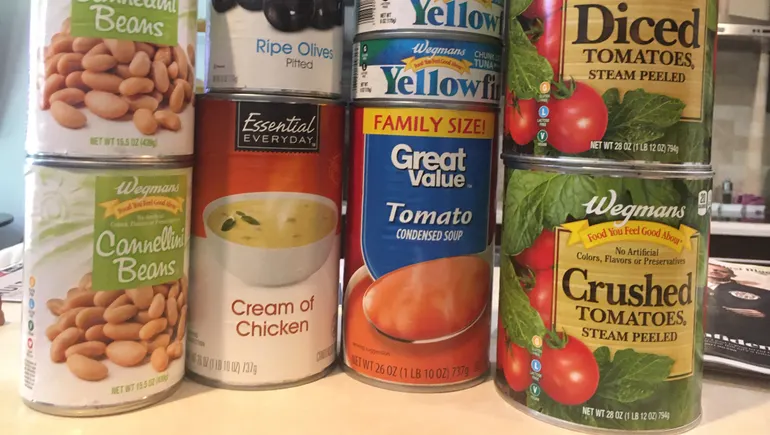
Affected by the pandemic, millions of Americans have lost their jobs, and sales of private label foods such as macaroni, sauces, and granola are surging. However, if the economic recession persists for a long time, the appeal of this category, which exceeds $90 billion, may further increase to consumers.
Krishnakumar Davey, president of strategic analysis at IRI, told sister publication Food Dive: "Consumers feel the need to be careful with their spending, which is a lesson everyone learned from the 'Great Recession' a decade ago. This means private labels will perform well. In the current environment, this is a tailwind for private labels."
Davey added: "Consumers feel the need to be careful with their spending because it's a lesson everyone learned from the 'Great Recession' a decade ago. This means private labels will do well. In the current environment, this is a nice tailwind for private labels."
Even before the pandemic shut down restaurants, sporting events, and social gatherings, prompting more people to cook at home, IRI predicted that private labels would perform strongly in 2020, with sales growth expected to outpace national brands for the fourth consecutive year. Once viewed by consumers as inferior, private labels have now become the go-to choice for many in their daily shopping—bringing billions of dollars in additional revenue to the companies that produce these products.
IRI estimates that in major retail channels such as grocery stores, Walmart, Target, and membership warehouse clubs, sales of private label food and beverages this year are expected to increase by $10 billion to $12 billion compared to last year—compared to a $2.5 billion increase last year—bringing the total to $93 billion to $95 billion.
In these channels, the market share of private labels in food and beverage consumption is expected to grow by about 0.5 percentage points to 19.2%, compared to a 0.4% increase in 2019. Davey said that if this trend continues, sales in this category could grow by another $10 billion next year.
Focusing on Washington policy trends
TreeHouse Foods, the largest manufacturer of private label products in the United States, said its sales accelerated in April as the unemployment rate soared to levels not seen since the 'Great Depression.' According to the Wall Street Journal, since February (the month before the pandemic prompted states to shut down parts of their economies), U.S. employment has fallen by about 20 million jobs, a decline of 13%.
To meet growing demand, TreeHouse (especially during the initial consumer stockpiling at the end of March) worked with retailers to identify the best-selling SKUs to streamline operations and increase output. Amit Philip, chief strategy officer of TreeHouse Foods, told Food Dive that the company extended production at some plants from five days a week to seven, and added shifts when needed.
"Consumers feel the need to be careful with their spending because it's a lesson everyone learned from the 'Great Recession' a decade ago. This means private labels will do well. In the current environment, this is a nice tailwind for private labels."
—Krishnakumar Davey, president of strategic analysis at IRI
Philip said that the growth of private labels during the pandemic was actually somewhat suppressed because the stimulus bill signed into law on March 31 increased state unemployment benefits by $600 per week for up to four months.
If Congress and the White House decide not to extend this benefit this summer—the program is set to end after July 31—consumers will have less disposable money. This would make private labels more attractive to value-seeking consumers. Philip said that if the benefits continue, private label market share will increase by about 0.5 percentage points in the second half of 2020; if not extended, their share growth could be two to three times that in the same period.
Philip said: "If the subsidies are removed, people will really be in trouble. Unfortunately, this means more people will turn to looking for value, and private labels provide exactly that value."
During the pandemic, private label sales jumped 34%, surpassing national brands. A report by Daymon showed that this indicates private labels are "resonating with consumers seeking alternatives." Similar data from Nielsen also showed that in the 14 weeks ending June 6, private label sales surged 23%, while branded goods grew slightly less, at 21%.

TreeHouse said that in recent months, meal preparation products such as pasta, broth, red sauce, and macaroni and cheese saw the largest increases. Pasta alone rose about 70% at the peak of the pandemic. Cookies and crackers also surged, but by relatively smaller margins. Philip noted that one category that "struggled somewhat" was energy bars, as consumers spent less time commuting or snacking at workplaces and gyms.
At 8th Avenue Food & Provisions, jointly owned by Post Holdings and private equity group Thomas H. Lee Partners, president and CEO Scott McNair told Food Dive in an email that the company saw "surging" demand for its pasta, nut butters, granola, and other products "as consumers gravitate toward easy-to-prepare foods."
Investing in private labels
Since the last economic recession more than a decade ago, retailers such as Kroger, Aldi, Costco, Wegmans, Publix, Trader Joe's, and even Dollar General have invested heavily in this area by improving packaging design, enhancing quality, and offering multi-tiered products.
Kroger CEO Rodney McMullen told analysts on the company's earnings call in December: "While many grocers offer private label products, (our private label products) are a true differentiator for Kroger. Our customers tell us through blind tests that the quality of Our Brands is not only superior to competitors' private label products, but also to many leading national brands."
TreeHouse's Philip said that "strong retail brands" are asking for private label products with better quality, organic, or healthier attributes. For them, simply offering products equivalent to national brands or slightly below national brand equivalents is no longer enough.
For supermarkets, private labels are a valuable way to build consumer loyalty and increase store traffic. Daymon said that more than half of shoppers said they would specifically choose a store to buy its private label products, and 89% said they trust private labels as much as traditional products. Meanwhile, more than 80% believe private labels offer better value for money.
According to a report last year by the Food Marketing Institute and IRI, U.S. private labels (including edible and non-edible products across multiple retail channels) generated $153 billion in sales in 2018. The report found that these products are reaching a broader range of audiences and generations. Kroger, the largest supermarket chain in the U.S., has annual sales of $122 billion, with about 20% coming from its private labels; at Albertsons, this category now accounts for more than a quarter of its total revenue.
Davey said: "Retailers are facing a lot of disruptions right now, but... once retailers get organized, I believe they will market private labels to financially strained consumers because their income is reduced and spending is reduced, so they will try to gain higher wallet share through private labels."
He said that retailers who have invested in private labels and successfully built a good reputation among consumers are "most likely to achieve growth" in the current environment.
Lessons from the 'Great Recession'
In the early days of the pandemic, consumers stockpiled goods, leading to shortages of various products on shelves. If consumers' favorite brands were out of stock, or if they wanted to fill their pantries, many turned to private labels to fill their carts. If consumers are impressed by quality and price, this could lead to long-term growth for the private label category, converting them into permanent buyers.
A consumer survey conducted by Magid in early April and May found that 68% said they would likely continue to buy private label products after the pandemic threat subsides.
McNair said: "The days of private labels as a substitute quality option are long gone."
The 'Great Recession' provides a case study of how private labels can benefit again in another economic downturn.
Neil Saunders, managing director of Global Data, told Food Dive: "There's no doubt that recession was a period of accelerated growth for private labels, and I think it was a real shock to many branded companies. There had been some growth in private labels before, but it was then that many consumers, especially the American middle class, really turned to private labels in greater numbers to save money."
For private labels, the 2008-2010 recession marked a 'coming-out party' for the category, which not only successfully increased market share and sales, but also used it as a springboard for expansion that has continued to this day.
"Even when the economy fully recovers, we believe there will be a new normal of work that allows more people to work from home—household consumption of private labels will increase because they fell in love with these brands while staying at home."
—Scott McNair, president and CEO of 8th Avenue Food & Provisions
TreeHouse's Philip said that in the recessions of the early 1990s and early 2000s (after the dot-com bubble burst and 9/11), private labels successfully gained market share but gave back most of it when the economy improved. But during the 'Great Recession,' millennials began entering the workforce, and now they and their Gen Z peers are more value-conscious, less brand-loyal, and more willing to try new things. Private labels have been one of the biggest beneficiaries.
McNair said: "Another recession would bring similar purchasing behavior. However, even when the economy fully recovers, we believe there will be a new normal of work that allows more people to work from home—household consumption of private labels will increase because they fell in love with these brands while staying at home."
According to IRI, the then-nascent private label category added $8 billion in sales between 2008 and 2010, with the largest increases in products like meat, salads, cheese, and sugar that already held strong positions in the category. Nearly $3 billion of the new revenue came from private labels taking market share from branded goods.
Saunders said that the 'trade-down' to private labels during the 'Great Recession' was primarily focused on value, with consumers seeking the lowest price points. Now, with private labels well-established, another recession might prompt shoppers to try new categories within the segment.
'Continued boom'
At TreeHouse, executives are closely monitoring changes in consumer eating habits as states gradually reopen businesses, to assess shifts in at-home eating habits and grocery shopping patterns. They are observing areas where the pandemic is improving to decide whether to restore SKUs, giving consumers the product choices they are accustomed to.
Even as the national situation improves, TreeHouse, after years of investing in improving its data analytics capabilities, is still monitoring case surges or declines county by county to prepare for future demand and understand which products might resonate with consumers.
For 8th Avenue Food & Provisions and TreeHouse, even as the economy improves and millions of Americans return to work, they remain optimistic about the long-term prospects of private labels. Similar to previous recessions, the industry hopes that more customers who tried private labels this time will become long-term buyers.
Philip said: "Through all of this, many people have been exposed to private labels, or were forced to switch because their usual brands were out of stock or they sought better value. We've gained a lot of triers, so private labels will continue to boom for years to come."