
Bi-Lo store sales pave the way for Southeastern Grocers to revitalize Winn-Dixie, but can competitive pressures be resolved?
Southeastern Grocers announced the sale of 62 Bi-Lo and Harveys stores to Food Lion to concentrate resources on revitalizing Winn-Dixie. Analysts see this as an opportunity, but competition in core markets like Florida is fierce, and Southeastern Grocers must quickly address challenges from Aldi, Lidl, dollar stores, and e-commerce costs, or it may face a survival crisis.
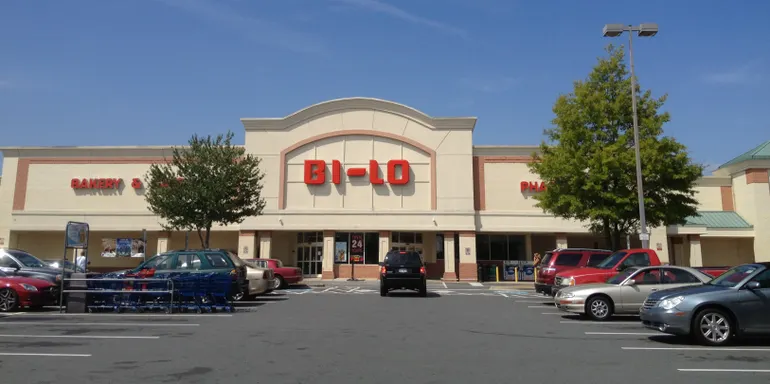
Industry analysts say Southeastern Grocers' Wednesday announcement that it will sell dozens of discount supermarkets to a rival chain provides a clear opportunity for the company to revitalize its flagship Winn-Dixie brand.
However, several retail experts interviewed by Grocery Dive noted that even withthe sale of 62 Bi-Lo and Harveys stores in Georgia, North Carolina, and South Carolina to Food Lionto slim down and free up capital, Southeastern Grocers still needs to prepare for intense competition from stronger rivals to improve its chances of success in the highly competitive regions where it operates.
A key issue facing Southeastern Grocers is that in recent years, its ability to invest in Winn-Dixie has been limited by major financial challenges, including a 2018 bankruptcy. This forced Southeastern Grocers toclose storesand left it trailing direct competitors like Publix in key regions such as Florida.
"Historically, Winn-Dixie has not performed as well as Publix on key dimensions like service, consistency of in-store experience, and facilities," industry consultant and former Marsh Supermarkets executive Mark Heckman said in an email. "With the Florida market growing in population, [Southeastern Grocers] may feel now is the right time to push forward."
Neil Saunders, managing director of GlobalData Retail, noted in an interview that while now may be a good time for Southeastern Grocers to push forward with Winn-Dixie, intense competition poses a serious challenge. He said the company must quickly address obstacles such as Aldi's continued expansion, Lidl's rise, dollar stores' growing focus on groceries, and the high costs associated with e-commerce.
"Winn-Dixie faces a series of headwinds that even a very strong company would find difficult, so Southeastern Grocers must move very, very quickly," Saunders said. "This is Southeastern Grocers' last chance. If they mess up Winn-Dixie, that's it, they'll disappear."

Southeastern Grocers bets its future on Winn-Dixie
For Southeastern Grocers, the good news is that the company has already made progress with Winn-Dixie. Phil Lempert, founder of SupermarketGuru.com, said Winn-Dixie has nearly a century of history and a deep brand foundation. Bi-Lo existed before Southeastern Grocers and in 2012merged with Winn-Dixie。
Southeastern Grocers has moved from closing Winn-Dixie stores to planning new locations. In February, the companyacquired five stores in Floridafrom bankrupt Lucky's Market and said it would convert them into Winn-Dixie stores. On May 28, Southeastern Grocers announcedit would convert four of those storesalong with four stores acquired from Earth Fare, which went bankrupt earlier this year, into Winn-Dixie stores.
Winn-Dixie has been updating its stores by strengthening the brand, adding new service departments, natural and organic products, and other trendy selections. The company'slatest advertising campaignfeatures the so-called "Winn Win Twinns" and consists of a series of lighthearted, well-produced ads that differ from traditional supermarket advertising styles.
"I think Winn-Dixie is on the right track," Lempert said in an interview. "They've accomplished quite a bit in a relatively short period of time."
Research shows that Florida'sstrong population growthprovides an opportunity for Winn-Dixie to catch up. However, rival chains have overtaken the grocer in the past and show no signs of letting up. Publix has long been known for its in-store service and trendy product mix, which is exactly what Winn-Dixie is now adding. Publix also offers omnichannel online shopping and is building a new specialty format, Greenwise Market, aimed at younger shoppers.
"Winn-Dixie really needs to step up its game to compete with Publix and others in the long run," Saunders said. "Publix has consistently invested in customer service, store environment, and private label products and is seen as a very strong grocer."
Another longtime competitor, Walmart, operates more than 350 stores in Florida and is rapidly expanding its fresh food offerings, while newer rivals like Aldi and Sprouts Farmers Market are investing millions in new and renovated stores. Kroger is currently building a large automated e-commerce fulfillment center west of Orlando, adding a new dimension to Florida's evolving online grocery landscape.
Meanwhile, the Bi-Lo brand, whose history dates back to 1961, has been weakened under Southeastern Grocers. Saunders said this has turned what was once a valuable asset into a liability.
"Bi-Lo was once a fairly strong player, but because Southeastern Grocers didn't invest in it and competition in the market became more intense on price, and Southeastern Grocers lacked the economies of scale to support it, that asset has become somewhat of a burden," Saunders said. "I think Southeastern Grocers just felt 'we can't do much with Bi-Lo, and it's not a format we think is sustainable,' so they want to exit the low-price market."
Southeastern Grocers also plans to focus on its Hispanic-focused format, Fresco y Más, which operates in South Florida. In recent years, as Hispanic consumer spending power has grown, the company has added stores andconverted some Winn-Dixie storesto the Hispanic format. Fresco y Más operates more than twenty stores in and around cities like Miami, Orlando, and Tampa.
"This is a very strong asset for them. It gives them the opportunity to strengthen that format and plan for Winn-Dixie's future," Tory Gundelach, vice president of grocery at Kantar Consulting, said in an interview.
"This is Southeastern Grocers' last chance. If they mess up Winn-Dixie, that's it, they'll disappear."

Neil Saunders
Managing Director, GlobalData Retail
Continuing Food Lion's momentum
Analysts say Southeastern Grocers' decision to divest Bi-Lo to focus on Winn-Dixie creates a favorable opportunity for Food Lion and its parent company, Dutch supermarket giant Ahold Delhaize.
"I think [Food Lion] has proven they can transform existing formats and earn strong community engagement. I have to think that's part of why they're taking on more stores when there isn't much acquisition activity," Gundelach said. "This is a continuation of Ahold Delhaize finding opportunity points and capitalizing on them."
Saunders said Food Lion has an advantage over Southeastern Grocers in the value segment of the grocery market due to its financial strength and economies of scale—assets Southeastern Grocers lacks because of its smaller size. "They have many ways to make these stores work that Southeastern Grocers couldn't and didn't have the energy to change."
Food Lion will add Southeastern Grocers' stores to itsnetwork of more than 1,000 stores across 10 Southeastern and Mid-Atlantic states. Neil Stern, senior partner at retail strategy and consulting firm McMillanDoolittle, said these stores have the advantage of being in desirable locations that can reach Food Lion's target customers.
"Because these stores have operated in these markets for so long, they often have very strong locations in key communities," Stern said in an interview. "What Food Lion needs to do is preserve what Bi-Lo was good at and known for," such as competitive prices and high-quality fresh produce.
In recent years, Food Lion's reputation has risen due to investments in store renovations and other improvements, solidifying its position as a low-price leader. Experts say the company has excelled in customer loyalty programs and strengthened its fresh produce, deli, and bakery departments, which could help fend off competitors like Aldi that are weaker in these areas.
But Burt Flickinger, managing director of supermarket consulting firm Strategic Resources Group, said intense competition means Food Lion needs to act quickly to put its own stamp on the Bi-Lo and Harveys stores and connect with customers whose everyday shopping destinations will be rebranded.
Flickinger noted that Southeastern Grocers and Food Lion expect the transfer of the Bi-Lo and Harveys stores won't be completed until next year, giving other retailers ample time to compete for the loyalty of customers who will lose their usual grocery provider. "If these stores are left hanging in the wind... the conversion will be very tricky because competitors may have already won over many loyal customers," Flickinger told Grocery Dive.
Jeff Wells contributed reporting to this article.