
Six Strategies for Grocers Preparing for a New E-commerce Future
The pandemic accelerated the adoption of grocery e-commerce, forcing retailers to compress three-year strategies into three-month actions. Grocery Dive interviewed multiple experts, including former executives from Amazon and Target, and distilled six key strategies to help grocers achieve profitability and win customer loyalty in the rapidly evolving e-commerce landscape.
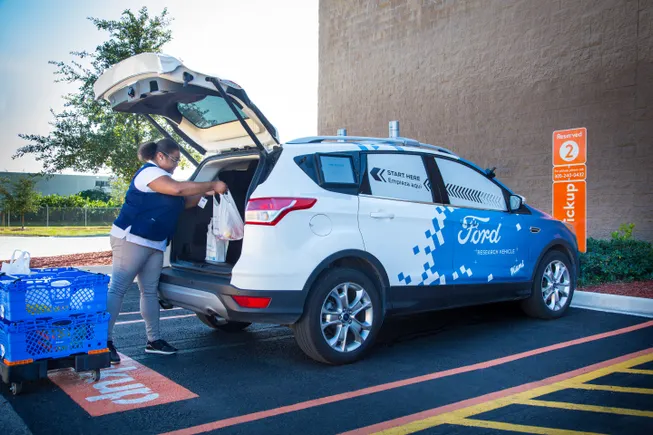
Before the outbreak, retailers had been steadily updating their operations in preparation for the distant point when e-commerce would become the mainstream shopping channel. They launched apps and websites, purchased software, and brought fulfillment staff into aisles and backrooms. Some companies had even begun investing in robots.
Yet, in an instant, that future arrived.
Over the past few weeks, as consumers shifted en masse to online grocery shopping, which they perceived as safer, companies rushed to expand their fulfillment capabilities. When retailers emerge from this survival mode and survey the landscape, the challenge they face is not just improving online fulfillment, but also achieving profitability in a shorter timeframe than most anticipated. What was once a three-year strategy has now been compressed into a three-month one.
To better understand this new e-commerce future and how retailers should prepare, Grocery Dive interviewed several experts, including former executives from Amazon and Target. Here are six core strategies from those conversations.
Start planning dedicated fulfillment space
Tom Furphy, a former Amazon executive and now CEO and managing director of Consumer Equity Partners, an investment firm focused on retail technology, said that in the past, grocers—especially smaller ones—might have struggled to justify the cost of building dedicated e-commerce order processing facilities, but the pandemic is changing that logic.
"For most retailers, e-commerce volumes previously weren't sufficient to support standalone fulfillment capabilities—whether building automated facilities or dark stores," he said. "Now we clearly have volumes that justify the investment."
Furphy noted that grocers previously could manage by having in-store employees pick items for online customers, but the cost of picking items from shelves has left little margin to cover fulfillment expenses. "Adding picking, packing, and delivery costs on top of products already displayed on shelves is a losing proposition," he said.
Chris Walton, a former Target vice president and now co-CEO of OmniTalk, said that even for smaller retailers, a good starting point is to build on in-store picking operations by adding dedicated space for staging and order consolidation. "People have been investing in in-store pickup and curbside capabilities, but what they really need to achieve faster is setting up a co-located warehouse at the store site."
Furphy added that when e-commerce volumes exceed 12% to 15% of total sales, the drawbacks of using stores as fulfillment centers are amplified, especially since the cost per item picked can reach 20 cents or more.
"Pick workers are in the aisles alongside customers, taking the best fresh produce from right under the noses of in-store shoppers. That really starts to impact the operating model," he said.
Experiment boldly while customers are understanding
Experts told Grocery Dive that for retailers grappling with the complexities and pitfalls of running efficient online sales operations, the pandemic offers a unique opportunity for experimentation. Grocers are at a rare juncture: they can test unproven concepts and, if an idea doesn't resonate, pivot relatively easily.
"Customers are more forgiving now than they will be in weeks or months," said Joel Rampoldt, managing director at AlixPartners, which helps grocery operators navigate change and risk. "Consumers overall recognize this is an unprecedented situation, and they're quite patient with things not working perfectly in their online grocery orders."
"Smart retailers will see now that customer habits are changing more than ever, so this is actually the biggest testing pass we've ever experienced."

Chris Walton
Co-CEO, OmniTalk
In fact, Walton believes the bigger risk is that retailers fail to change their strategies quickly enough as shopping habits shift.
"Smart retailers will see now that customer habits are changing more than ever, so this is actually the biggest testing pass we've ever experienced," Walton said. "Consumers are more forgiving of you than ever before."
Set strategy first, then buy robots
The surge in online sales has forced retailers to hire thousands of workers to pick and pack orders in stores and warehouses. In the long run, they know they need faster, more efficient fulfillment methods.
But Peter van Stolk, a former Amazon executive and now founder and CEO of Food-X, a technology company working with retailers like Walmart Canada, said that before spending millions on automating backrooms and warehouses, they first need to develop a strategy that includes realistic growth forecasts, store goals, customer data, and other factors.
"Automation doesn't solve the problem," he told Grocery Dive. "The real issue is the strategy you have for e-commerce. And everyone must remember that Amazon, which is rapidly entering this space, has a strategy."
Van Stolk said grocers need to think in terms of both short-term fixes and long-term profitability. In the coming months, they should take whatever measures are necessary to meet order demand and retain customers—even if that means losses. In the long term, they need a blueprint for making e-commerce profitable, and then—if necessary—invest in automation.
"I can guarantee those robots will be cheaper next year," van Stolk said. "What they need to invest in is strategy, software, and a solution that allows them to deploy robots when it's right for the business."
Be transparent with customers and learn from them
Furphy said that as retailers navigate the technical and logistical challenges of scaling e-commerce operations, one of the most important things they can do is go the extra mile to build goodwill with customers.
"We don't really know what the future holds, but we do know some things. We know who our customers are," Furphy said. "We also know who we want our customers to be, and we know who our suppliers are. I think retailers should connect with them more than ever."
He added that being candid with customers about potential issues—such as unexpected out-of-stocks or difficulty finding delivery slots—is also important, and even better is inviting them to help find solutions.
"There's no harm in communicating to customers the work you're doing, the innovations you're pursuing, and the investments you're making to improve their experience," Furphy said. "Make it part of a two-way conversation."
Integrate online and in-store experiences
E-commerce experts say that even as grocers look for ways to improve online processes, they should simultaneously develop avenues to offer customers as many aspects of the in-store experience as possible.
"You have to blend the in-store experience with the e-commerce experience. We've been saying this for a long time, but now shoppers are starting to demand it too," said Steven Boal, chairman and CEO of Quotient Technology, which helps retailers coordinate physical and online operations.
Rampoldt added that a core issue grocers face is this: shoppers can see with their own eyes whether an item is on the shelf, but when shopping online, they must rely on the website or app for the same information. This means grocers should prioritize developing reliable ways to convey real-time inventory information to consumers and offer attractive, accurate substitutes for out-of-stock items.
"From the consumer's perspective, you'd think, 'How can this be so hard?' But it really is very hard, so (stores) must get better at knowing their inventory... and what promises they can make to customers," he said.
Retail experts point out that, ultimately, grocery shopping is a practical, personal experience, and people are used to feeling in control no matter how they interact with the store.
"You have to do things in the e-commerce environment that still make shoppers feel the warmth of walking into a store," Boal said. "You show them through the content you provide that you know them, care about them, and are invested in their experience. If you give everyone who walks through your digital doors a one-size-fits-all experience, they'll quickly go elsewhere."
Prepare to overhaul marketing strategies
As online grocery becomes mainstream and here to stay, retailers need to prioritize marketing strategies that acknowledge the importance of e-commerce and keep the company ahead of the curve.
"I think we're going to see a massive transformation in marketing strategies and marketing investments as retailers work to stay top-of-mind with customers," Diana Medina, director of e-commerce solutions at Inmar Intelligence and former director of online merchandising at Lowes Foods, told Grocery Dive. "Grocers still rely heavily on traditional marketing like weekly circulars."
Medina said that if retailers haven't realized it yet, they will eventually see the value of targeted digital marketing. Tom Custer, vice president of client development at FRCH Nelson, an architecture and design firm working with retailers like Target and Kroger, agreed, saying grocers will ultimately need a marketing strategy that combines store and online efforts.
For example, if a retailer offers online cooking classes, they could offer the needed ingredients both online and in-store, tying the whole program together with consistent messaging. Custer said that when grocers expand into new categories like beauty in stores, they need to build omnichannel marketing plans to prevent shoppers from drifting online.
"They need to start thinking about how to keep that purchase within their own brand—whether online or in-store."