
The Halo of Specialty Grocers Fades: Model Dilemma Triggers Industry Scrutiny
The successive bankruptcies of Fairway Market, Lucky's Market, and Earth Fare have called the specialty grocer model into question. Industry experts point to overexpansion, private equity involvement, and homogenized competition as main causes, while smaller regional players may prove more resilient.
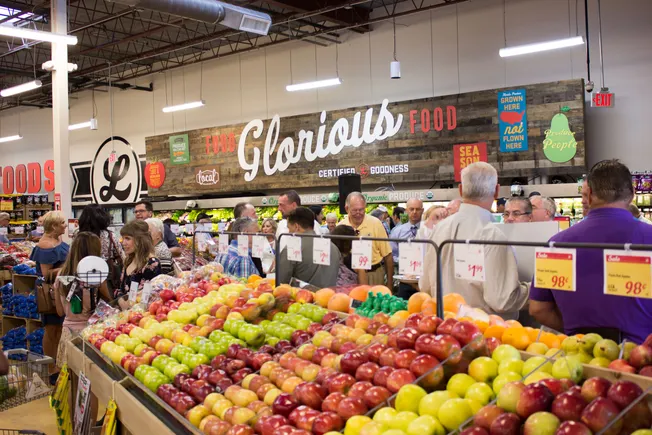
Specialty grocers are under intense scrutiny from investors and the industry just weeks after Fairway Market, Lucky's Market, and Earth Fare filed for bankruptcy in rapid succession.
Each chain faced its own unique challenges, but the commonalities were enough to raise serious questions about the model. They all struggled to expand beyond their core markets. Lucky's and Earth Fare, in particular, failed to effectively differentiate themselves from traditional competitors like Walmart and Aldi, as well as discount formats.
Investors are not optimistic about the outlook. Over the past year, shares of Sprouts Farmers Market and Natural Grocers by Vitamin Cottage, two leading specialty chains, have fallen about 30% and 50%, respectively.
Industry experts are not ready to give up on specialty grocers, but they say companies need to seriously examine their product mix and market positioning, and be willing to innovate. At the same time, they must realize that the rapid expansion strategy that worked for Whole Foods more than a decade ago should be replaced by a more cautious, rational approach.
Traditional retail metrics and the private equity trap
The turmoil among specialty players might suggest that consumers are growing tired of the format. But Kevin Kelley, founder and principal of retail architecture firm Shook Kelley, believes the problem lies elsewhere.
"Every piece of evidence we have indicates that consumers want smaller, healthier, more premium-feeling stores," Kelley told Grocery Dive. Shoppers, he said, want stores in prime locations that are convenient to shop.
He and several experts pointed out to Grocery Dive two key missteps that led to the recent downfall of specialty brands.
First, Kelley said, when these stores sought to accelerate growth, they often brought in traditional grocery experts who tried to professionalize the stores and mimic traditional retailers. These experts often evaluated specialty chains using metrics like traditional grocery sales and foot traffic.
"They compare them to full-size stores," Kelley said. "But specialty grocers should stick to their own positioning—small format."
"Behind every one of these stories, there is an angle of financial engineering strategy, private equity tactics, and the professionalization of grocery best practices."

Kevin Kelley
Founder and Principal, Shook Kelley
Second, when grocers turned to private equity, as Fairway and Earth Fare did, they risked expanding too quickly and losing control of their concept. Private equity can bring a cash infusion, but analysts note that it often pushes specialty retailers away from the business model that initially made them successful.
Kelley said Earth Fare, Lucky's, and even Dean & DeLuca started out strong, but once private equity was introduced, the look and operations of the stores quickly changed.
"Behind every one of these stories, there is an angle of financial engineering strategy, private equity tactics, and the professionalization of grocery best practices," Kelley said.
Jay Jacobowitz, president of Retail Insights, expressed similar views about Earth Fare and Fairway seeking equity investments. He noted that Earth Fare was one of the first companies to do so in 2006, with the goal of growing large enough to compete with Whole Foods.
As for Fairway, Jacobowitz said that when Sterling Investment Partners bought an 80% stake in the company in 2007, it tried to move a fashionable urban grocer to the suburbs, where its broad product assortment failed to resonate, and the company lost its way.
"For independents and small regional players, the advice is not to be too aggressive," Jacobowitz said. "If you take equity capital... be careful."
A specialty retail veteran who spoke on condition of anonymity due to industry relationships was more blunt: "Retailers should stay away from private equity. I think the decline of Fairway and Earth Fare is largely due to venture capital. They promise the moon, then they squeeze them dry."
Traditional retail vs. specialty grocery
While some high-end specialty grocers likeErewhon in Southern Californiaare thriving in their respective regions, others like Fresh Thyme Farmers Market and The Fresh Market face intense competition—not only from each other, but also from traditional grocers that have expanded their specialty, natural, and organic product assortments.
Tory Gundelach, vice president of grocery at Kantar Consulting, told Grocery Dive that she believes this year's bankruptcies prove that traditional grocers can offer these products at better prices and in more convenient settings. Most consumers do not buy exclusively natural and organic foods; at chains like Kroger and Safeway, they can find these items along with everyday staples like Cheerios and Coca-Cola in one stop.
"Ultimately, you ask yourself: 'If I were a shopper, why would I go to these specialty, natural and organic retailers?'" she said.
Gundelach also noted that there will always be a group of loyal shoppers seeking specialty brands.
"I would never say that specialty natural and organic players will disappear, but I think in the current retail landscape, there is limited space for them," Gundelach said.
Kowalski's Markets is a small-format grocer operating 11 stores in the Minneapolis-Saint Paul metropolitan area. CEO Kris Kowalski Christiansen said the company is known for providing an engaging shopping experience and maintaining a sense of community. Her parents founded the company in 1983.
"Our same-store sales are still growing year over year," she told Grocery Dive.
Christiansen said about 90% of the products in the store are made in-house to ensure quality. The grocer has a central kitchen, central bakery, and central meat facility, allowing it to manage supply and production independently. Additionally, most of its products are available in three options: conventional, natural, and specialty.
Boyd Oase, vice president of operations at Kowalski's, said the company focuses on measured, store-by-store growth rather than setting grand expansion targets.
"Sometimes we think certain short-term measures could boost sales or profit growth, but if they don't align with our fundamental positioning, we don't do them," he told Grocery Dive.
Store sizes range from 12,000 to 48,000 square feet, but most Kowalski's stores are about 25,000 square feet. Each store features a Starbucks as well as specialty departments like gifts and flowers. The company carefully plans store aesthetics, including flooring, wall colors, lighting, and the use of marble and stainless steel, to convey a high-end image.
Oase said the family-owned and operated structure makes the company flexible and agile, with room for creativity and innovation. Christiansen added that the company knows customers come to escape the traditional format.
Nevertheless, Kowalski's understands it needs to step out of its comfort zone to stay relevant. The company hassigned a leaseto open a 30,000-square-foot store in the local Rosedale Center mall, and expects to sign a second mall location, according to the Star Tribune. The first store is expected to open in 2022.
"I think we stay relevant by constantly evolving the brand," Christiansen said. "The brand is trusted, so customers stay with us through market changes."
Sprouts' place in the hybrid landscape
Sprouts has been one of the fastest-growing competitors in the specialty and natural grocery space in recent years, now operating 340 stores across 22 states. Many experts are watching how the chain adjusts its priorities under new leadership.
"I worry about Sprouts," Jacobowitz said. He noted that CEO Jack Sinclair, who took over last June after leading discount chain 99 Cents Only, has been seeking to cut costs and slow expansion, which could affect departments important to shoppers such as deli, prepared foods, and seafood.
Jacobowitz also said Sprouts stores have a lot of wasted floor space. Hard discounters like Aldi are expanding fresh food and produce, encroaching on Sprouts' territory, forcing the Phoenix-based retailer to lower prices and operating expenses.
Sprouts declined to be interviewed by Grocery Dive, citing the quiet period around its latest earnings release. On theearnings call, Sinclair said the company has recently focused on in-store displays to differentiate itself.
"If competitors march in lockstep, we take a different path. In our core fresh categories, we are reducing our focus on commodities and placing more emphasis on where we excel in our product mix," Sinclair said.
Gundelach believes Sprouts resonates with the general public and the "average consumer," which is crucial for long-term success.
"I'm fairly confident Sprouts can figure out what to do next," she said. "I don't think they're in dire straits. The key is to realign and understand how to drive incremental growth."
Natural Grocers by Vitamin Cottage has steadily grown its store count to over 150 and focuses on health services and incremental sales from its most loyal shoppers through the {N}power loyalty program. But as traditional chains strengthen their natural, organic, and gourmet product assortments, the company's sales growth has slowed.
"Growth is not as fast as it used to be," CEO Kemper Isely toldThe Wall Street Journal。
"I'm fairly confident Sprouts can figure out what to do next. I don't think they're in dire straits. The key is to realign and understand how to drive incremental growth."
Tory Gundelach
Vice President of Grocery, Kantar Consulting
Rational growth and maintaining shopper relevance
Given the obstacles and recent performance of rapidly expanding specialty brands, specialty grocers that operate fewer stores and grow steadily in specific regions may be more likely to succeed.
Gundelach said these smaller players are better able to provide tailored, localized experiences for each store, while large retailers like Kroger, even when selling natural, organic, and specialty items, struggle to adapt and customize the shopping experience.
"At a smaller scale, this is easier to achieve. Some chains with only a few stores may be in a favorable position," Gundelach said.
Kelley believes small formats should stay true to their niche and avoid overexpansion. At the same time, taking a concept-based approach is crucial if they want to stand out. He mentioned Kowalski's as one of the best small specialty formats.
"There aren't many small grocery stores on the market right now," Kelley said. "I don't see that as a negative, but as an opportunity worth seizing or investing in."
Specialty chains can still maintain relevance with shoppers, but they need to get closer to their service-oriented, natural and organic roots, said Tim Sperry, a former Whole Foods executive and now a specialty industry consultant.
Sperry mentioned a Vermont grocer where he currently serves on the board. The company had feared Trader Joe's opening across from one of its stores, but it did not dilute its high-end image and high product standards. In the end, it benefited from the increased foot traffic Trader Joe's brought.
"You have to truly understand your specific market and plan," Sperry told Grocery Dive. "The key is service and product, etc. This is where traditional chains often lose points. They are not close to the ground, for example, unable to distinguish between the southern Connecticut market and the northern Vermont market."
Jeff Wells contributed reporting to this article.