
Amazon Go Grocery: A Tool to Disrupt Grocery Retail, or a Technology Testing Ground?
Amazon's first cashierless grocery store, Go Grocery, opened in Seattle, drawing industry attention. Experts acknowledge its technological strength but have doubts about its potential to become an industry disruptor, the prospects for technology licensing, and the large-scale shopping experience.
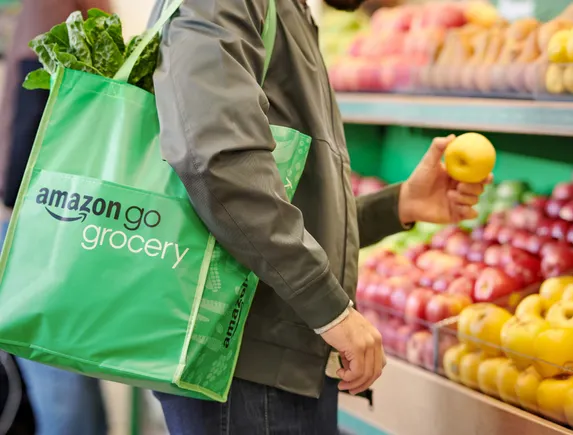
Experts agree that Amazon Go Grocery is impressive — a technological marvel that efficiently processes a massive amount of data as shoppers pick up fresh produce, grab donuts and fresh meals, pour their own coffee, and walk out with all their items.
However, sources interviewed by Grocery Dive say they are not ready to view this first cashierless grocery store as an inevitable industry disruptor, as they did when Amazon acquired Whole Foods or first announced the Go model.
They are cautious about Amazon's ability to license Go technology to other retailers and businesses, a strategy that has been reported by The Wall Street Journal and other media outlets.
Despite the fast and novel shopping experience, not to mention the complex technology running behind the scenes, sources say the store, which opened Tuesday in Seattle's Capitol Hill neighborhood, seems to lack the elements that would make it a sustained shopping destination.
David Bishop, a partner at consulting firm Brick Meets Click, said Amazon Go Grocery looks very "raw" and has some puzzling details. He pointed to a small bagging station in the store, promoted as a convenient space where customers can reorganize their items, but noted the area can only accommodate one customer and a small number of items at a time.
Requiring customers to bag their own items — a process typically handled by staff and cashiers, given the mix of boxed, refrigerated, and fragile goods — may offset the frictionless experience for many shoppers at the end of their trip. Chris Walton, a former Target executive and founder of Red Archer Retail, said the process seems to discourage large-volume shopping.
"When you have a large number of items, what is the operational flow for bagging and exiting?" he told Grocery Dive. "That's unresolved and needs experimentation."

Brian Walker, a former Amazon manager and now chief strategy officer at digital experience company Bloomreach, said he is not convinced Go Grocery is solving a real consumer problem. He said the original Amazon Go concept made more sense as a grab-and-go meal destination than as a grocery store model, where customer service and human interaction are central to the experience.
"I think this is more about cost than disrupting the customer experience," Walker said, specifically pointing to labor costs. "I think it's being packaged as a story about customer convenience innovation."
Bishop said the bigger question is whether shoppers will still value Amazon Go Grocery after the novelty of frictionless shopping wears off. He said Amazon is good at developing and integrating new technology, but has yet to prove itself as a physical retailer. He gave the company a "C" grade for its efforts at Whole Foods, Amazon Books, 4-Star, and other stores.
"There aren't many visual or sensory cues that really encourage customers to stay and shop," Bishop said of Go Grocery. "In my view, the focus on quick shopping reflects that they are good at helping people buy products, but not necessarily good at helping customers shop for products. There's a big difference between the two."
Blanketing the market
Experts are not entirely skeptical of Amazon Go Grocery. Bill Bishop, chief architect at Brick Meets Click, said Amazon Go Grocery targets "extreme convenience" shoppers who make frequent quick trips and place less value on customer service. He noted that Amazon "is dancing the steps but doesn't necessarily have the rhythm of physical retail," but praised the company's persistence and adaptability.
"They're still in the middle stages, but that should in no way diminish their effort, focus, and intensity in the grocery space," he added.
"This is more about cost than disrupting the customer experience. I think it's being packaged as a story about customer convenience innovation."

Brian Walker
Chief strategy officer, Bloomreach
On a broader level, Bill Bishop said Amazon Go Grocery is strategically part of a "blanket" plan to cover the market, combining online and physical food options. Amazon's upcoming supermarket in Woodland Hills, California (about 35,000 square feet) can cover the suburbs, while Go and Go Grocery can fill dense urban areas outside its reach. Amazon Fresh delivery and the supermarket brand's pickup services will cover online demand, he said.
Bill Bishop expects Amazon to target markets with dense Prime user bases.
"With multiple stores, they can thoroughly penetrate a market and suck out all the oxygen," he said.
Richard Crone, CEO of Crone Consulting and a close observer of the self-checkout space, said Go Grocery's computer vision technology collects a rich stream of data that will help Amazon optimize its merchandising. He said that, as with online shopping, the system can track not only what shoppers buy, but also where they move in the store, what they pick up, and what they put down. Computer vision systems can also effectively identify and deter shoplifting, as they closely monitor every item shoppers pick up.
The consumer data Amazon collects at Go Grocery will also feed back into its broader retail ecosystem. David Bishop said this gives the company a more granular measure of success, meaning Amazon may be willing to lose money on the format.
"Right now, it's hard to see how Amazon can be profitable at the level of investment it's making in grocery, which is very concerning for retailers that depend on grocery for their livelihood," he said.

Cameron Janes, Amazon's vice president of physical stores, emphasized the company's test-and-learn retail approach. Go Grocery launched with a curated selection of specialty and everyday items chosen using online and in-store sales data. It also leverages existing supply chain protocols, stocking some of the same produce, fresh meat, and grocery products as Whole Foods and Amazon Fresh.
"We're trying to find the balance between local preferences and the products customers expect," Janes told Grocery Dive.
Technology licensing
Grocery competitors will be closely watching Amazon Go Grocery's progress. Not only because the e-commerce giant is a major competitor, but also because it is the first real test of cashierless grocery retail. Chains across the industry are experimenting with frictionless checkout, wondering if it will become a significant part of their store strategies. Some companies, such as Ahold Delhaize and Walmart, have developed in-house technology, while others, like Giant Eagle, have signed on with third-party technology firms.
If Go Grocery works as intended and customers like it, retailers may be able to integrate the technology into their own stores. The Wall Street Journal reported that Amazon has been in talks with companies to license the hardware and software of Amazon Go, and, according to unnamed sources, has "multiple revenue models," including "fixed licensing fees or revenue-sharing agreements."
Dilip Kumar, Amazon's vice president of retail and technology, declined to comment to The Wall Street Journal on the matter. An Amazon spokesperson did not respond to Grocery Dive's requests for comment and further details.

A licensing strategy would bring Amazon additional revenue and possibly data. But sources are skeptical about whether grocers would be willing to partner with a company that is trying to significantly disrupt their industry.
Walker believes mainstream, regional, or mom-and-pop grocers would not be willing to partner with Amazon, given competitive concerns and the cost of building new cashierless stores. Meanwhile, Walton said partnering with merchants is in Amazon's DNA, given its online marketplace and deals with retailers like Kohl's and Rite Aid, both of which accept Amazon package returns. But these partnerships may benefit Amazon more, he said. Amazon once hosted e-commerce platforms for companies like Target, Toys 'R' Us, and Borders — arrangements that ultimately made Amazon a stronger competitor.
"That didn't go well," Walton said.
Toys 'R' Us sued Amazon in 2004 to terminate its e-commerce agreement, and Target terminated its contract in 2009, vowing to build its own e-commerce platform.
Heidi Liebenguth, managing partner and director of research at Crone Consulting, said regional and independent grocers that do not directly compete with Amazon may be more willing to adopt Go technology. She said Amazon could offer flexible licensing agreements to accommodate these smaller operators.
"Amazon might offer [the hardware and software] for free, only asking for data," Liebenguth said.
Sharing data might give retailers pause, but Crone said such arrangements could provide a boost for these stores, noting that Amazon's cashierless technology is "far ahead" of startups in the space.
"For many grocers, Amazon could become their white knight," Crone said.
Bill Bishop said Amazon Go technology should appeal to grocers that need a technology upgrade and are not engaged in an arms race with Amazon over grocery dominance. He added that the Seattle-based company may pursue both growth and licensing deals for Go Grocery, and could succeed at both.
"They can actually have their cake and eat it too," he said.